BMO Field: The Smallest Stage, the Biggest Dream
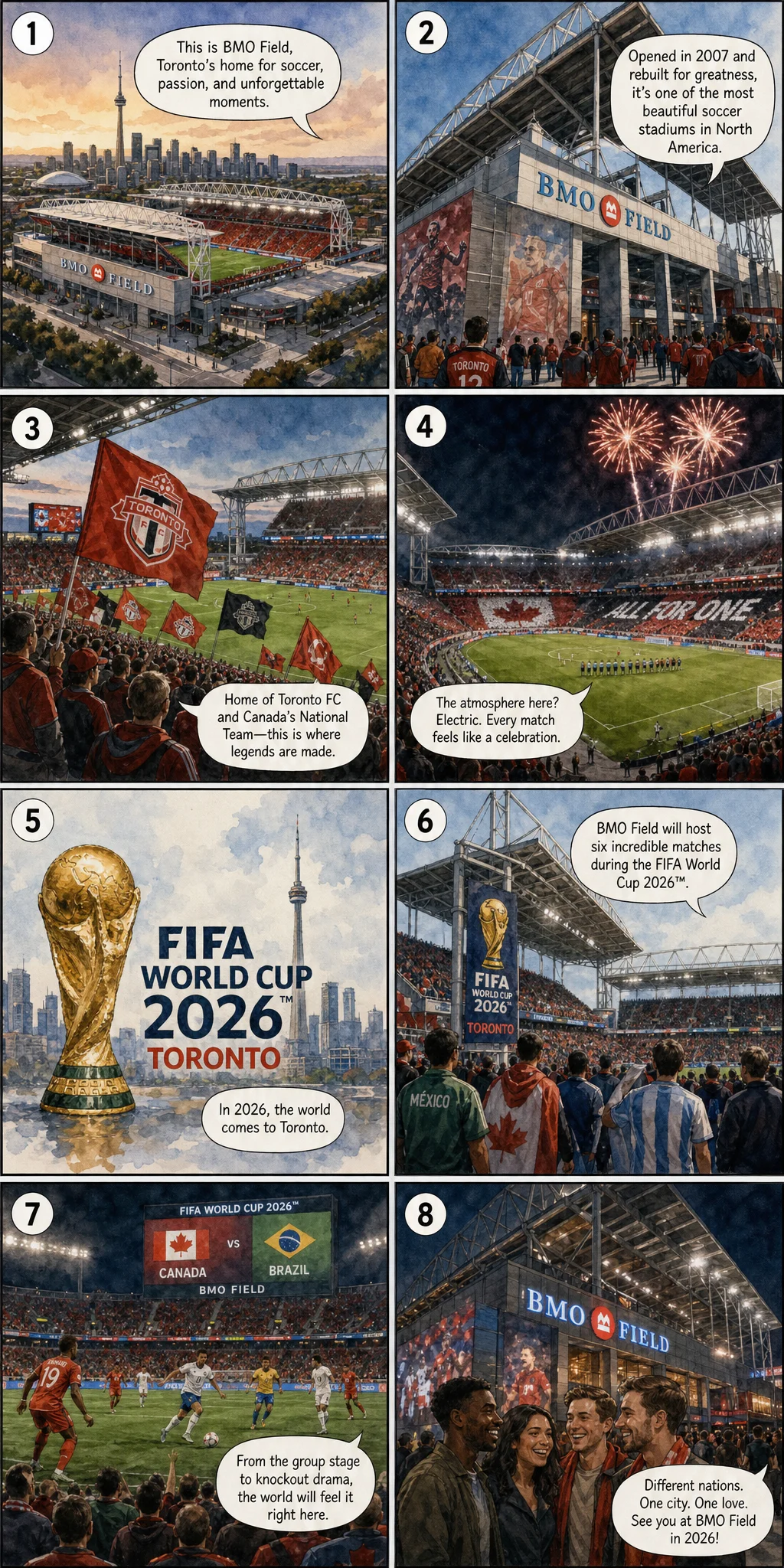
The smallest 2026 World Cup venue (45,736 seats). Fifth stadium built on this exact site on the shores of Lake Ontario. Home of Toronto FC, site of the 2017 MLS domestic treble, and venue for Canada's historic opening World Cup match on June 12, 2026.
Published: June 6, 2026
BMO Field: The Smallest Stage, the Biggest Dream
The first thing you need to understand is the size.
BMO Field is not a World Cup stadium. Not really. Not the way you imagine a World Cup stadium. There is no retractable roof. No 80,000-seat bowl. No architectural metaphor about flight or water or national identity. It is a 45,736-seat rectangle of red seats on the shore of Lake Ontario, built for $62.9 million Canadian — roughly the cost of the parking garage at SoFi Stadium. Seventeen thousand of those seats are temporary. They didn't exist a year ago. They were bolted together this spring by workers in orange vests who paused sometimes to look out at the lake, because the view from the top of the temporary north stand is, unexpectedly, beautiful.
This is the smallest venue at the 2026 FIFA World Cup. By a lot. The next smallest is Estadio Akron in Guadalajara at 48,000, and that stadium has a volcano in its logo. BMO Field has a bank logo and a lake breeze. On June 12, 2026, Canada will play Bosnia and Herzegovina here in the opening match of the host nation's World Cup. The CN Tower will be visible through the open north end, and 45,000 Canadians will sing O Canada, and the smallest stadium at the tournament will carry the biggest dream in Canadian soccer history.
But size isn't the story. The story is that this is the fifth stadium built on this exact piece of land.
The Exhibition Place grounds, where BMO Field now stands, have been hosting sport since 1879. The first stadium here — the original Exhibition Stadium, known as the CNE Grandstand — was a wooden structure that burned down. The second was larger. The third hosted the Argonauts through the mid-century decades. The fourth was Exhibition Stadium proper, the one people remember: a cavernous, windy, deeply unloved multipurpose venue where the Blue Jays played baseball and the Argonauts played football and nobody was particularly happy about either. It was cold in July. The wind came off the lake in gusts that made pitchers weep and kickers reconsider their career choices. When the Blue Jays finally moved to SkyDome in 1989, Exhibition Stadium's fate was sealed. It was demolished in 1999, and for eight years, the ground lay fallow, waiting for its fifth life.
BMO Field opened in 2007. But here is what they don't tell you: the stadium was built too small for Canadian football. The CFL field requires 20-yard end zones. BMO Field, constrained by its site — Lake Ontario on one side, the CNE grounds on the other, the Prince's Gates to the east — could only give the end zones 18 yards. Two yards short. Two yards that locked the Toronto Argonauts out of their ancestral home for a full decade. The Argos didn't move in until 2016, after a renovation stretched the field as far as physics would allow. Even now, the end zones are cramped. Even now, a punt returner backing up to field a kick has to be careful. The stadium is a compromise. It has always been a compromise. But it works.
May 12, 2007. Danny Dichio scores the first goal in Toronto FC history. The north stand — the same stand that would later be torn down and replaced with temporary seats for the World Cup — erupts. Nobody in Toronto knew if this city would care about soccer. Hockey is the religion. The Leafs are the church. But Dichio's goal landed like a flare in the dark, and suddenly thousands of people who had never cared about the beautiful game were singing, standing, stamping their feet on aluminum benches. A soccer culture was born in a hockey town. It happened in the 24th minute of a regular-season MLS game against the Chicago Fire. Danny Dichio. Remember the name.
December 9, 2017. MLS Cup final. Toronto FC versus the Seattle Sounders. Snow flurries. Subzero temperatures. Every red seat filled. The Toronto team that had been the league's laughingstock for its first eight seasons — the team that had once lost a game 5-0 and had its own supporters walk out in protest — was now the best team in MLS history. Sebastian Giovinco, the Atomic Ant, orchestrating the attack. Michael Bradley, the captain, controlling the midfield. Jozy Altidore scoring the goal that made it 2-0. When the final whistle blew, Toronto FC became the first Canadian MLS Cup champion. They also completed the first domestic treble in league history: MLS Cup, Supporters' Shield, and Canadian Championship. The little stadium that nobody took seriously had just hosted the culmination of the greatest season in MLS history. The players lifted the trophy toward a sky spitting snow, and 30,000 people who had once been told their city didn't matter in this sport screamed until they lost their voices.
There have been other moments. The 2007 FIFA U-20 World Cup final, where Argentina beat the Czech Republic 2-1 — a young Sergio Aguero scoring the winner. The 104th Grey Cup in 2016, the CFL championship, finally back where it belonged. The NHL Centennial Classic on January 1, 2017: the Maple Leafs beating the Detroit Red Wings 5-4 in overtime, 40,148 fans in subzero temperatures, outdoor hockey at a soccer stadium on New Year's Day, so perfectly Canadian it hurt. The 2015 Pan American Games rugby sevens. And one single concert: Genesis, September 2007, Phil Collins doing things with a drum kit that made the red seats bounce. Only one concert ever. The stadium's neighbors — the residents of Liberty Village and Parkdale — made sure of that.
Now it is June 2026. The $157.9 million in World Cup upgrades are complete. The temporary north stand rises where the old one stood. The rooftop patio — a uniquely Toronto touch — offers views of the lake and the action simultaneously. New video boards hang at both ends. The dugouts have been expanded and modernized. FIFA calls it "Toronto Stadium," because FIFA cannot abide corporate names, but everyone in the city still calls it BMO Field. Everyone will keep calling it BMO Field until the end of time, or at least until the bank's naming rights expire.
Six World Cup matches will be played here. The opener: Canada vs Bosnia and Herzegovina, June 12, Group B. Then five more group stage matches involving teams from Groups E, I, and L. No knockout games. This is not a stadium built for finals. This is a stadium built for beginnings.
And that is fitting, because BMO Field has always been about beginnings. The beginning of Toronto FC. The beginning of a soccer culture in Canada's largest city. The beginning of Canada's World Cup journey on home soil. A stadium built for $62.9 million, expanded with temporary seats, sitting on land that has hosted sport for 147 years, about to host the biggest event in the history of sport.
On June 12, the sun will set over Lake Ontario at approximately 9:00 PM. The CN Tower will light up red. The breeze will come off the water, the way it always does. And 45,000 people — Canadians, Bosnians, neutrals, dreamers — will fill every red seat, including the 17,756 that didn't exist a year ago. They will sing anthems and wave flags and watch football. And for 90 minutes, the smallest stadium at the World Cup will feel like the center of the universe.
The little stadium that could. The little stadium that did. The little stadium that is about to do something even bigger.
Walk across the Lake Shore bridge at sunset and look east. You'll see it. A red rectangle glowing against blue water. Forty-five thousand seats. Most of them temporary. All of them ready.
Welcome to Toronto Stadium. Welcome to BMO Field. Welcome to the smallest stage, and the biggest dream.