

16개 도시, 그중 11곳은 미국… 캐나다의 침묵
2026년 월드컵은 세 나라에 걸쳐 16개 도시의 16개 경기장에서 열린다. 태평양 연안의 밴쿠버에서 대서양 연안의 폭스버러까지, 캐나다 순상지 근처의 토론토에서 멕시코시티까지, 그 지리적 범위는 실로 광활하다.
게시일: June 6, 2026
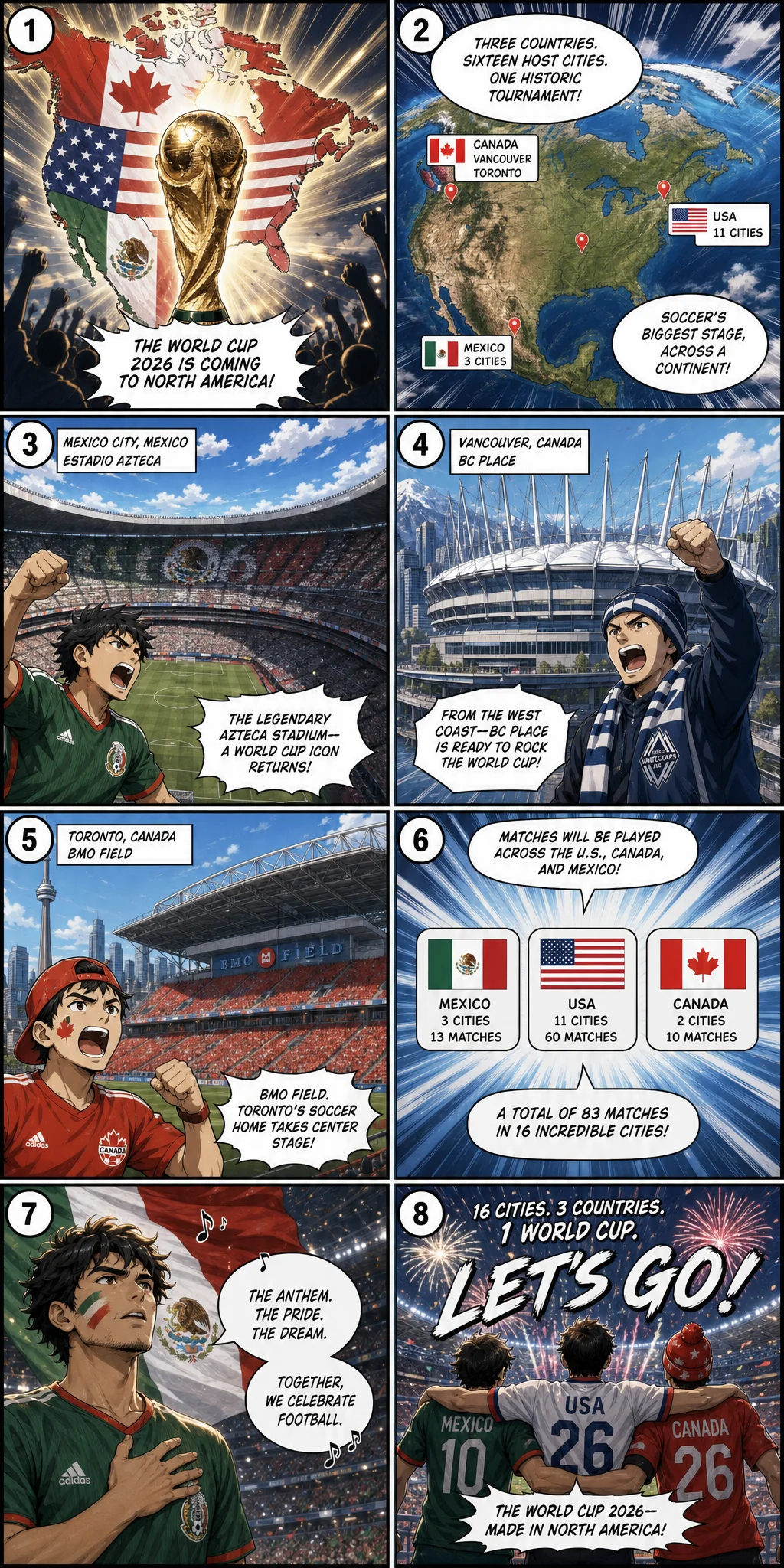
만화 콘텐츠와 경기 통계는 오락 목적으로만 제공되며 부정확한 내용이 포함될 수 있습니다. 정확한 데이터는 참조 출처의 공식 웹사이트를 확인하시기 바랍니다.
2026년 월드컵은 태평양 연안의 밴쿠버에서 대서양 연안의 폭스버러까지, 캐나다 순상지 인근의 토론토에서 멕시코 계곡 해발 2천 미터의 멕시코시티까지, 세 나라에 걸친 16개 도시 16개 경기장에서 열린다. 이전 월드컵 중 이렇게 먼 거리를 이동하고, 이렇게 많은 국경을 넘고, 단일 대회 안에서 이토록 극명하게 다른 기후, 고도, 문화 환경에 적응해야 했던 대회는 없었다. 경기장 지도는 단순히 축구 경기가 열리는 장소의 목록이 아니다. 이는 타협의 결과물이자, 상업적 계산의 산물이며, 인프라 현실의 기록이다. 이 지도는 북미가 어떻게 월드컵을 유치했고, 그 유치를 통해 무엇을 이루려 하는지 그 이야기를 들려준다.
16개 경기장 중 11개는 미국, 3개는 멕시코, 2개는 캐나다에 있다. 이는 권력, 인구, 그리고 미국 스포츠 경제의 강력한 흡인력을 반영한다. 멕시코시티의 에스타디오 아스테카는 1970년과 1986년 결승전을 개최한 유일한 월드컵 경기장이다. 나머지 모든 경기장은 NFL을 위해 지어졌다. NFL 경기장의 설계 철학은 세계 축구의 그것과 근본적으로 다르다. NFL 경기장은 수 분마다 광고가 나가는 TV 중계, 고수익을 창출하는 럭셔리 스위트, 수만 대의 자가용을 수용할 주차장을 염두에 두고 설계되었다. 반면 유럽과 남미 전통의 FIFA 경기장은 끊김 없는 90분의 압도적인 분위기 속에 몰입할 수 있도록, 입석 관중과 대중교통 접근성을 고려해 설계된다. 이 두 건축 철학 사이의 긴장감이 2026년 팬 경험을 규정할 것이다.
경기장 수용 규모의 차이는 엄청나다. 토론토의 BMO 필드는 임시 증축 후 약 4만 5천 석으로 대회 최소 규모인 반면, 텍사스 알링턴의 AT&T 스타디움은 9만 4천 석으로 두 배가 넘는다. 대부분의 경기장은 6만 5천에서 7만 5천 석 사이로, 현대 월드컵 기준에는 부합하지만 마라카낭과 아스테카 시대의 8만 석 이상을 기록했던 대회들보다는 눈에 띄게 작다. 더 작은 경기장들은 대규모 수용 인원보다 프리미엄 좌석을 선호하는 북미의 취향을 반영한다. 럭셔리 박스, 클럽석, 환대 공간이 많을수록 일반 입장석은 줄어들지만, 티켓당 수익은 훨씬 높아진다. FIFA는 상업적 수익이 이를 정당화하기 때문에 이 타협을 받아들였다. 2026년 월드컵은 이전 어떤 대회보다 더 많은 티켓 수익을 창출할 것인데, 이는 주로 수용 인원 때문이 아니라 가격 책정 때문이다.
잔디 문제는 어떤 단일 경기장 이슈보다 더 많은 계획 시간을 소모했다. NFL 경기장은 인조잔디(필드터프, 슬릿필름, 하이브리드 시스템 등)를 사용하지만, FIFA 규정은 모든 월드컵 경기에 천연잔디를 요구한다. 전환 과정은 수개월간 현장 외부에서 재배된 임시 잔디를 거대한 트레이에 실어 운반하고, 배수 및 뿌리 관리 시스템을 갖춘 인조잔디 위에 까는 작업을 수반한다. 물류적 복잡성은 상당하다. 잔디는 햇빛이 필요하지만, 여러 경기장은 고정식 또는 개폐식 지붕을 갖추고 있어 자연광 노출이 제한된다. 실내에서 잔디를 기르는 기술에 정통한 유럽 경기장에서 수입된 거대한 이동식 재배 조명이 대회 기간 내내 배치될 것이다. 2026년 월드컵의 잔디는 대부분의 엘리트 선수들보다 더 많은 과학적 관심을 받게 될 것이다.
지리적으로 16개 경기장은 세 개의 느슨한 클러스터로 나뉜다. 동부 해안 회랑은 폭스버러에서 뉴욕, 뉴저지를 거쳐 필라델피아까지 이어지며, 네 개의 경기장이 서로 차로 몇 시간 거리에 있어 경기장 간 이동이 가장 용이한 지역이다. 내륙 클러스터는 애틀랜타, 댈러스, 휴스턴, 캔자스시티를 포함하며, 주요 공항 허브로 연결되지만 육로 이동이 비현실적일 정도로 거리가 멀다. 서부 해안 클러스터는 밴쿠버에서 시애틀, 베이 에어리어를 거쳐 로스앤젤레스와 과달라하라까지 이어지며, 멕시코시티는 고지대의 이례적인 위치에 있다. 몬테레이는 북부 멕시코에 고립되어 있으며, 주로 텍사스 경기장들과 연결된다. 토론토는 북쪽에 단독으로 위치하며, 캐나다 내 다른 도시보다 동부 해안 경기장들과 더 가깝다. 이 지도는 어떤 우아한 조직 원리에도 저항한다. 우아함은 결코 우선순위가 아니었기 때문이다. 우선순위는 기존 인프라였다.
개폐식 지붕 문제는 경기장을 두 가지 범주로 나눈다. 경기장 위로 지붕을 닫을 수 있는 곳과 그렇지 않은 곳이다. 댈러스, 애틀랜타, 휴스턴, 밴쿠버는 개폐식 지붕을 갖추고 있어 6월과 7월(북미의 한여름으로 텍사스와 미국 남부의 기온이 섭씨 38도를 넘고 습도로 인해 공기가 무겁게 느껴지는 시기)에 열리는 대회에서 악천후에 영향을 받지 않는다. 지붕이 있는 경기장은 기후가 통제된 환경이 되어 그 안에서 치러지는 경기의 신체적 요구 조건 자체를 바꾼다. 로스앤젤레스, 뉴저지, 폭스버러, 멕시코시티의 야외 경기장은 선수들과 팬들을 태평양 연안의 안개부터 동부 해안의 습기, 늦은 오후에 예고 없이 찾아오는 멕시코 계곡의 뇌우까지 여름이 가져오는 모든 것에 노출시킨다. 단일 대회 내에서 실내 축구와 실외 축구가 공존하는 이 상호작용은 경기 분석가와 스포츠 과학자들이 이미 강박적으로 정밀하게 모델링하고 있는 변수이다.
세 국가 구조는 이전 월드컵이 경험하지 못한 이민 관련 복잡성을 도입한다. 미국, 멕시코, 캐나다의 경기장을 오가는 팬들은 여러 번 국경을 넘어야 하며, 매번 여권 심사, 세관 신고, 그리고 국적에 따라 잠재적으로 비자까지 필요로 한다. 미국의 유치 제안은 간소화된 월드컵 비자 절차를 약속했지만, 세 개의 주권적인 이민 시스템이 FIFA의 각서 하나로 통일될 수는 없다. 대회의 운영 성공은 그 어떤 주요 스포츠 행사도 이 규모로 요구한 적이 없는 국경 통과 효율성에 달려 있다. 경기장 자체는 준비되어 있다. 대부분이 슈퍼볼, 대학 미식축구 선수권 대회, 주요 콘서트를 개최한 곳들이다. 2026년 월드컵이 실제로 펼쳐질 무대는 경기장이 아니라 경기장 사이의 공간, 즉 16개 도시와 3개국을 연결하는 공항, 국경 검문소, 고속도로이다. 경기장은 무대일 뿐이다. 그 사이의 인프라가 바로 그 공연 그 자체이다.