

2026년을 향해 트로피를 안고 있는 남자
2022년 12월 18일 카타르에서 열린 결승전에서, 널리 그리고 합당하게 역대 최고의 경기 중 하나로 평가받는 그 경기에서 황금 트로피를 차지한 디펜딩 챔피언 아르헨티나의 대표가 월드컵 트로피를 안고 개막식에 등장합니다.
게시일: June 6, 2026
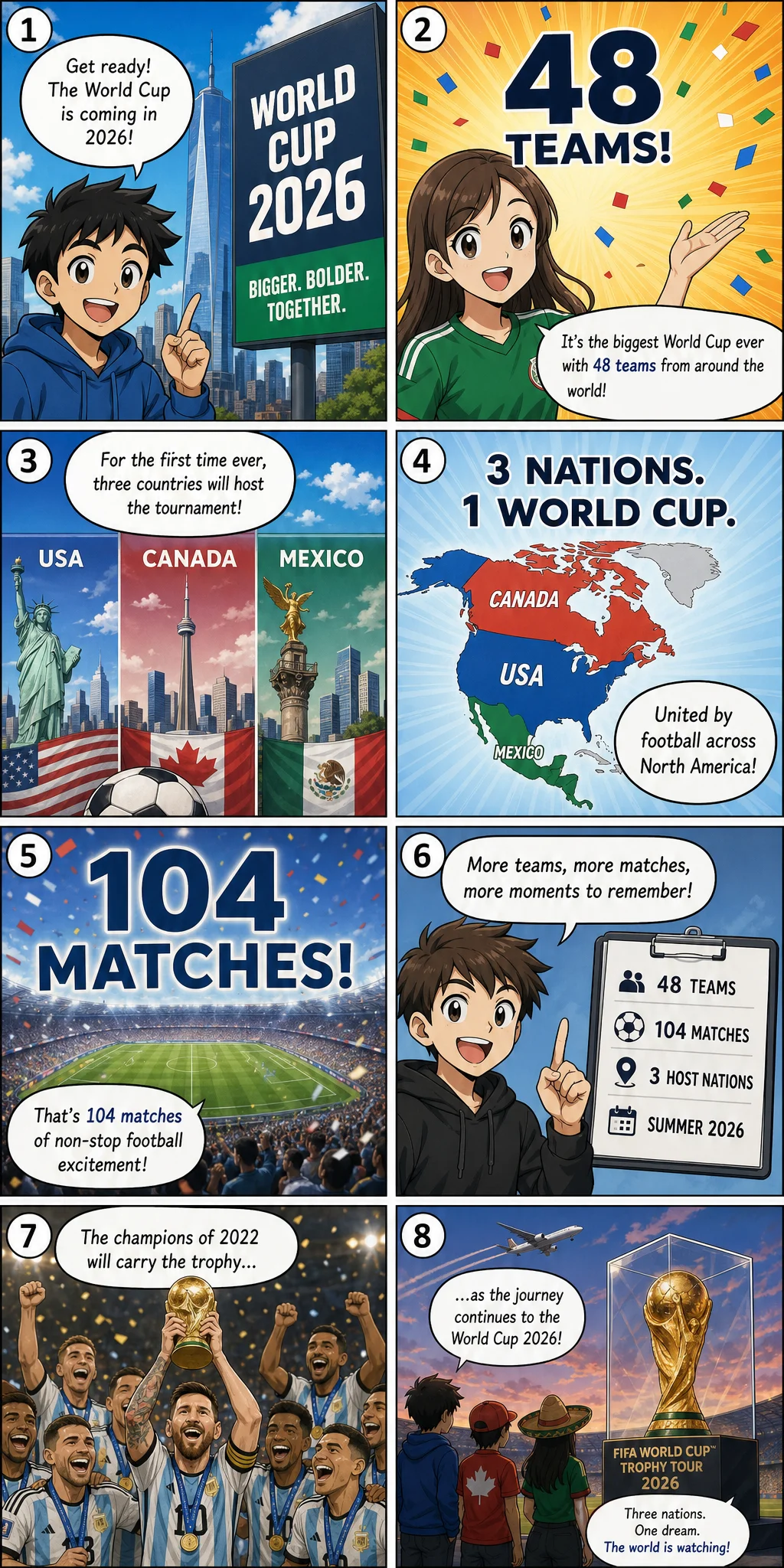
만화 콘텐츠와 경기 통계는 오락 목적으로만 제공되며 부정확한 내용이 포함될 수 있습니다. 정확한 데이터는 참조 출처의 공식 웹사이트를 확인하시기 바랍니다.
월드컵 트로피가 개막식장에 도착한다. 2022년 12월 18일 카타르에서 황금 조각상을 차지한 국가, 곧 전 세계가 널리 그리고 합리적으로 역대 최고의 월드컵 결승전이라 부르는 경기에서 우승한 국가, 아르헨티나의 대표가 품에 안고 등장하는 것이다. 이 영예를 안은 선수는 에스타디오 아스테카의 잔디를 밟을 것이다. 1970년 펠레가 줄리메 트로피를 들어 올렸고, 1986년 마라도나의 아르헨티나가 현재의 트로피를 차지했던 바로 그 경기장이다. 그리고 그 선수는 트로피를 전 세계에 선보인 후, 7월 19일 결승전까지 FIFA에 안전하게 보관하도록 넘겨줄 것이다. 이 의식이 전하는 메시지는 명확하고, 고대적이며, 한때 챔피언으로서 타이틀을 방어한 적이 있는 모든 문화권에서 보편적으로 이해된다. "이것은 여전히 우리 것이다. 가져올 수 있다면 와서 가져가라." 이 메시지는 세계를 정복한 국가의 자신감과 함께, 의식의 화려함 아래에 감춰진 지식, 즉 월드컵 방어가 스포츠에서 가장 어려운 업적 중 하나라는 사실을 담고 있다. 이는 제2차 세계대전 이후 단 두 번만 달성된 위업이다.
디펜딩 챔피언의 짐은 세계 스포츠에서 독특하다. 월드컵 주기는 4년의 리듬으로 돌아가며, 이는 클럽 대항전의 연간 리듬이나 대륙 선수권 대회의 2년 리듬과 근본적으로 다르기 때문이다. 4년이면 상대팀이 전술적 준비를 철저히 하기에 충분한 시간이다. 챔피언의 이전 캠페인의 모든 경기는 전 세계 축구 연맹 사무실의 경기 분석가들에 의해 프레임 단위로 분석되고, 승리를 이끈 특정 패턴이 이해되고, 역전략이 세워지며, 챔피언이 방어를 시작하기도 전에 무력화된다. 2026년 아르헨티나가 맞붙는 모든 상대는 스칼로니의 팀이 카타르에서 어떻게 이겼는지 정확히 연구하는 데 4년을 보냈을 것이다. 미드필드 로테이션, 측면 과부하, 미적 화려함보다는 경쟁적 고통을 통해 패배할 뻔한 경기를 버텨낸 특정 순간들까지 말이다. 2022년 아르헨티나 팀은 그 대회에서 가장 재능 있는 팀은 아니었다. 브라질과 프랑스는 각각 선발 11명에서 더 뛰어난 개인 기량을 내세울 수 있었다. 아르헨티나는 가장 결속된 팀이었다. 2021년 코파 아메리카 우승, 웸블리에서 유럽 챔피언 이탈리아를 상대로 한 피날리시마, 그리고 사우디아라비아에게 첫 경기에서 패배한 특별한 트라우마를 통해 단련된 생존자들이 하나의 집단으로 굳어져, 그 회복탄력성이 각 부분의 합을 초월한 팀이었다. 아르헨티나가 프랑스와의 결승전에 도달했을 때, 그들은 어떤 시뮬레이션도 재현할 수 없는 방식으로 시험을 받았고, 메시의 천재성, 미드필드의 근면성, 그리고 붕괴가 불가피해 보일 때조차 무너지지 않은 수비진의 결의를 통해 모든 시험을 통과했다.
디펜딩 챔피언에 대한 역사적 기록은 냉혹하며, 현대에 들어 더욱 그러해졌다. 브라질은 1958년과 1962년에 연속 우승을 차지했으며, 이는 대회가 거의 한 세기 동안 이어져 온 가운데 유일하게 월드컵 방어에 성공한 국가다. 이탈리아는 1934년과 1938년에 우승했는데, 이는 전쟁 전 시기에 걸친 더블로, 돌이켜 보면 다른 규칙 아래 다른 스포츠가 치른 다른 대회처럼 느껴진다. 1962년 이후로 어떤 국가도 월드컵을 방어하지 못했다. 최근 대회의 패턴은 아르헨티나에게 특히 불길하다. 프랑스는 1998년에 우승하고 2002년에 단 한 골도 넣지 못하고 조별 리그에서 탈락했다. 이탈리아는 2006년에 우승하고 2010년에 조별 리그에서 탈락했으며, 파라과이, 슬로바키아, 뉴질랜드가 속한 조에서 꼴찌를 기록했다. 독일은 2014년에 우승하고 2018년에 조별 리그에서 탈락했으며, 한국에게 패배한 경기는 독일 축구를 여러 세대 동안 괴롭힐 것이다. 2008-2012년 시대의 지배적인 국제 팀이었던 스페인은 2014년 조별 리그에서 탈락했고, 네덜란드에게 5대1로 패배한 경기는 4년간의 상대 분석이 식별한 모든 취약점을 드러냈다. 디펜딩 챔피언의 저주는 미신이 아니다. 이는 상대팀이 챔피언을 연구하는 데 4년을 주는 반면, 챔피언의 선수단은 나이를 먹고, 결속력은 약해지며, 승리로 이끈 갈망이 방어를 방해하는 안일함으로 변하는 대회 주기의 구조적 특징이다.
2026년의 아르헨티나는 진화했으며, 이 진화는 카타르의 승리 이후 스칼로니의 가장 인상적인 성과다. 북미에 도착하는 팀은 메시 의존도가 낮아지고, 구조적으로 더 일관성 있으며, 엔소 페르난데스, 알렉시스 맥 알리스터, 로드리고 데 폴로 구성된 미드필드 트리오를 중심으로 구축되었다. 이들은 개인적 천재성이나, 38세의 메시가 뛴다면 여전히 제공할 수 있지만 39일 동안 7경기에서 안정적으로 제공할 수 없는 초월적 순간보다는 위치적 지능과 집단적 압박을 통해 경기를 통제한다. 의존에서 독립으로의 진화는 카타르 이후 어떤 국가 대표팀보다도 가장 중요한 전술적 궤적이었으며, 메시의 존재—그가 선발 출전하든, 이용 가능하든, 대회가 그의 마지막 무대가 되든—가 계획이 될 수 없다는 완전한 인식 하에 수행되었다. 계획은 그 없이도 작동해야 하며, 그에 의해 강화되어야 하고, 그에게 의존해서는 안 된다. 아르헨티나가 경쟁적 정체성—거리 싸움의 강도, 경기 관리 지능, 무너지지 않고 고통을 견디는 능력—을 유지하면서 이 진화를 달성했다는 것은 스칼로니의 지도력과, 타이틀을 방어하려면 그것을 획득한 팀과는 다른 팀이 되어야 한다는 선수단의 이해에 경의를 표하는 것이다.
아르헨티나가 64년 만에 처음으로 월드컵을 방어하는 국가가 될 수 있을지가 개막식 트로피 프레젠테이션이 제기하는 질문이며, 북미 전역의 경기장에서 이어지는 5주가 그 답을 줄 것이다. 대회 형식은 7경기에서 7승을 요구한다. 대륙의 지리는 이전 어떤 챔피언도 단일 대회에서 견뎌낸 적이 없는 킬로미터 이상의 이동을 요구한다. 상대는 1962년 이후 어떤 디펜딩 챔피언도 유지하지 못한 경기력을 요구한다. 디펜딩 챔피언의 짐은 단지 기대의 압박만이 아니다. 그것은 모든 상대의 4년간의 준비, 당신을 위해 특별히 설계된 모든 전술적 조정, 당신이 챔피언이기 때문에 상대가 수준을 끌어올리는 모든 경기—챔피언을 이기는 것이 다른 누군가를 이기는 것보다 더 큰 의미를 가지기 때문이다—의 누적된 무게다. 트로피는 아르헨티나의 손에 의해 멕시코시티에 도착한다. 같은 손에 의해 떠날지, 아니면 4년 주기의 교체가 또 다른 디펜딩 챔피언을 집어삼킬지는, 2026년 대회의 서사가 첫 킥오프부터 스스로를 조직할 질문이다. 아스테카는 아르헨티나가 트로피를 들어 올리는 것을 전에 보았다. 그들이 다시 들어 올리는 모습을 보게 될지는 1986년에 아직 태어나지 않은 아르헨티나 축구 선수 세대에 달려 있다. 이 성당은 대관식 또는 인계식을 목격할 것이다. 축구가 그 결과를 결정할 것이다.