

Het verkeersdebacle van Foxborough: wanneer het WK de Amerikaanse buitenwijken treft
Het Gillette Stadium, dat in 2026 zes WK-wedstrijden zal hosten, waaronder een kwartfinale, ligt niet in Boston. Het bevindt zich in Foxborough, Massachusetts — een plaats met ongeveer achttienduizend inwoners, gelegen op achtenveertig kilometer ten zuidwesten van
Gepubliceerd: June 6, 2026
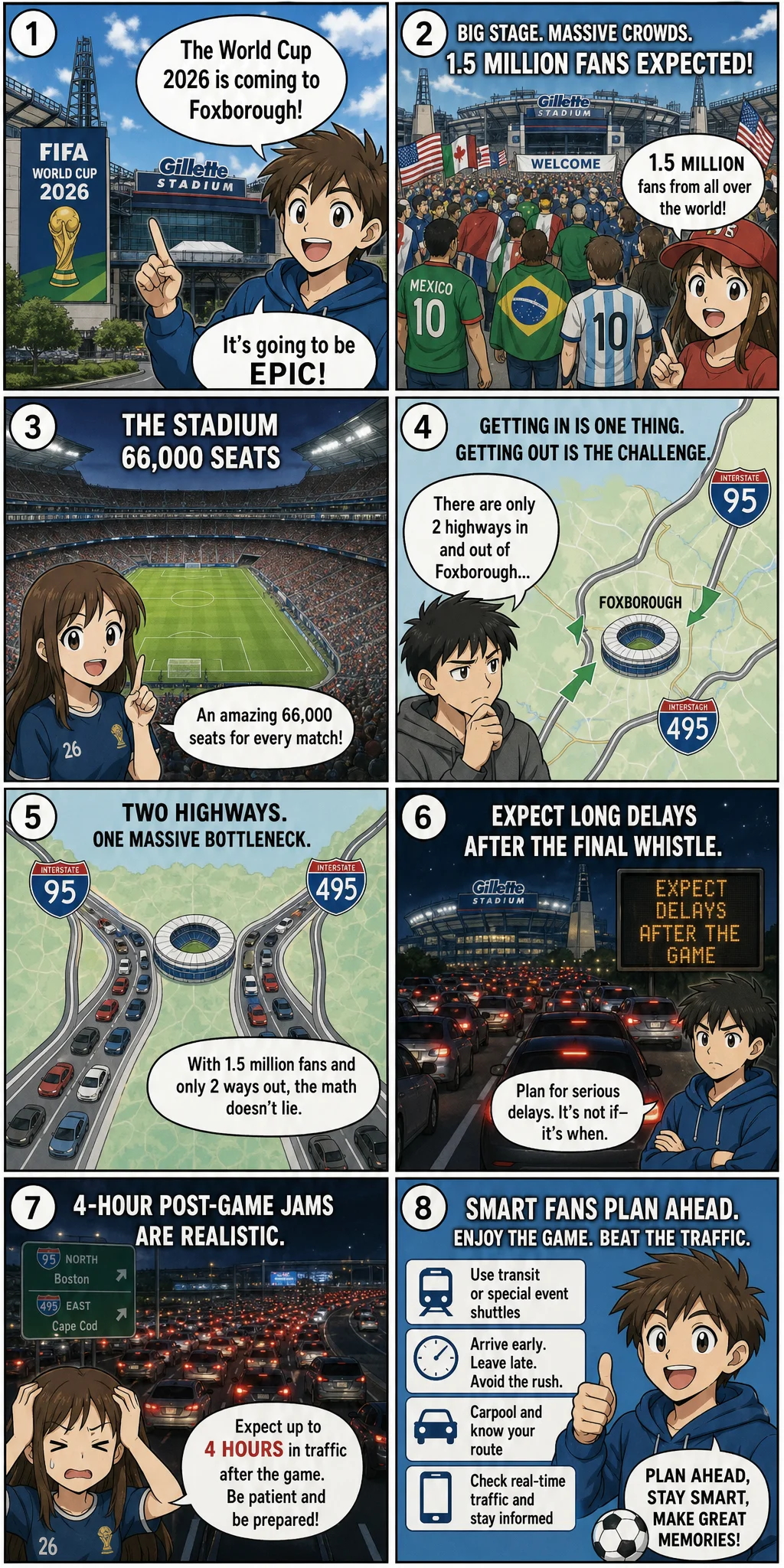
Stripinhoud en wedstrijdstatistieken zijn uitsluitend voor entertainmentdoeleinden en kunnen onnauwkeurigheden bevatten. Raadpleeg de officiële website van de referentie voor nauwkeurige gegevens.
吉列体育场将承办2026年世界杯的六场比赛,包括一场四分之一决赛,但它并不在波士顿。它位于马萨诸塞州的福克斯堡——一个约有一万八千居民的小镇,距离波士顿市中心西南方向四十八公里,主要依靠1号公路通行。这条郊区公路在最好的情况下每个方向有两条车道,一到施工季节就只剩一条车道,其交通模式二十年来一直是新英格兰爱国者队球迷黑色幽默的素材。世界杯比赛日,七万名球迷将试图通过一条设计容量约两万辆车的道路,抵达被停车场环绕的体育场。交通工程师们一直以专业的好奇心模拟这一场景,而且可以猜想,其中也夹杂着一些私下的绝望。福克斯堡的情况并非个例。它是2026年多个场馆中反复出现的模式的最极端例子,暴露了美国职业体育基础设施假设与全球足球文化期望之间的根本矛盾。
NFL的体育场模式定义了十六个世界杯场馆中的十一个,这种模式围绕汽车展开。NFL体育场位于郊区,被巨大的停车场环绕,通过高速公路而非公共交通与人口中心相连,因为NFL的商业模式依赖于季票持有者——他们绝大多数是本地人、拥有汽车、习惯开车参加体育赛事——他们乘坐私家车抵达、停车、在赛前赛后花数小时在停车场进行美国式“车尾派对”。停车场在NFL体育场设计中并非事后考虑。它是收入模式的一部分,通过停车费创收,也是体验的一部分,为赛前社交提供空间,这种社交替代了欧洲足球的酒吧文化和街头氛围。这套系统对NFL及其国内观众行之有效。但它从未在世界杯的规模下接受过考验,世界杯的观众绝大多数是国际人士,大多没有车,文化上习惯于期待位于城市中心、可通过步行、地铁或密集公共交通网络到达的体育场——这些正是欧洲和南美比赛日的体验特征。
这两种模式之间的文化摩擦将在2026年赛事期间显现。从布宜诺斯艾利斯、伦敦或拉各斯抵达的球迷不会想到要租车去看足球比赛。他们期望从市中心坐火车,穿过酒吧和咖啡馆里挤满身着国家队颜色球迷的街区,沿着暂时属于足球而非交通的街道走向体育场。这种体验——赛前的朝圣之旅,与比赛本身一样是世界杯文化的基础——在吉列体育场、阿灵顿的AT&T体育场、圣克拉拉的李维斯体育场、新泽西梅多兰兹的大都会人寿体育场并不存在。这些体育场是沥青海洋中的孤岛,只能通过车辆到达,被停车场而非酒吧环绕,与名义上的主办城市之间的距离使步行不可能、公共交通不切实际。在集体记忆中定义世界杯氛围的体验——里约热内卢的街道、马德里的广场、柏林的球迷区——发生在市中心和体育场之间。当体育场距离波士顿市中心四十八公里,而两者之间的空间是一条郊区公路时,这种氛围就无法形成。
组织者并非没有意识到这个问题。在每个依赖汽车的场馆,临时快速公交系统、接驳车网络和停车换乘设施正在部署。比赛日将运营从波士顿到福克斯堡的特别活动列车服务,以增加运力和班次,补充现有的单一通勤铁路线。拼车接送区、行人通道和指定的球迷步行路线正在纳入场馆交通计划。这些措施将把人们运送到体育场并送离。但它们无法创造世界杯赖以营造氛围和身份的城市足球文化。从郊区购物中心到体育场停车场的接驳车效率很高,但并不浪漫。它永远不会产生城市广场上自发爆发的国歌合唱、地铁站里即兴的鼓圈、或整个城市暂时被足球占据的感觉。世界杯不仅仅是一系列比赛。它是一个为期一个月的集体身份庆典,而庆典需要城市。
汽车基础设施与步行文化之间的差距是变成危机还是仅仅带来不便,取决于组织者为应对这种不兼容性做了多少准备。1994年完全在美国举办的世界杯面临了类似的挑战,并成功举办了一届在后勤上运转正常的赛事,尽管场馆依赖汽车。但1994年是一届规模较小的赛事,国际球迷较少,对球迷体验的期望也较低。2026年是有史以来规模最大的世界杯,拥有赛事历史上最多的国际观众,他们抵达的国家,其体育基础设施是为一项完全不同运动、完全不同观众设计的。世界杯的期望与美国体育场提供的条件之间的紧张关系,将是赛事最具挑战性的运营问题之一。停车场会停满。接驳车会运行。比赛会进行。但从波士顿市中心步行到吉列体育场的球迷将不存在,因为这段步行距离长达四十八公里,而且大部分是高速公路。这段距离——世界杯承诺的与基础设施提供的之间的差距——正是组织者多年来试图弥合的鸿沟。有些差距以公里衡量,有些则以文化衡量。