

Три страны, один стол и беспрецедентный праздник
Чемпионат мира по футболу 2026 года впервые в истории будет проведён тремя странами — США, Канадой и Мексикой — под единой организационной структурой. Логистическая архитектура, необходимая для проведения турнира на территории трёх суверенных государств,
Опубликовано: June 6, 2026
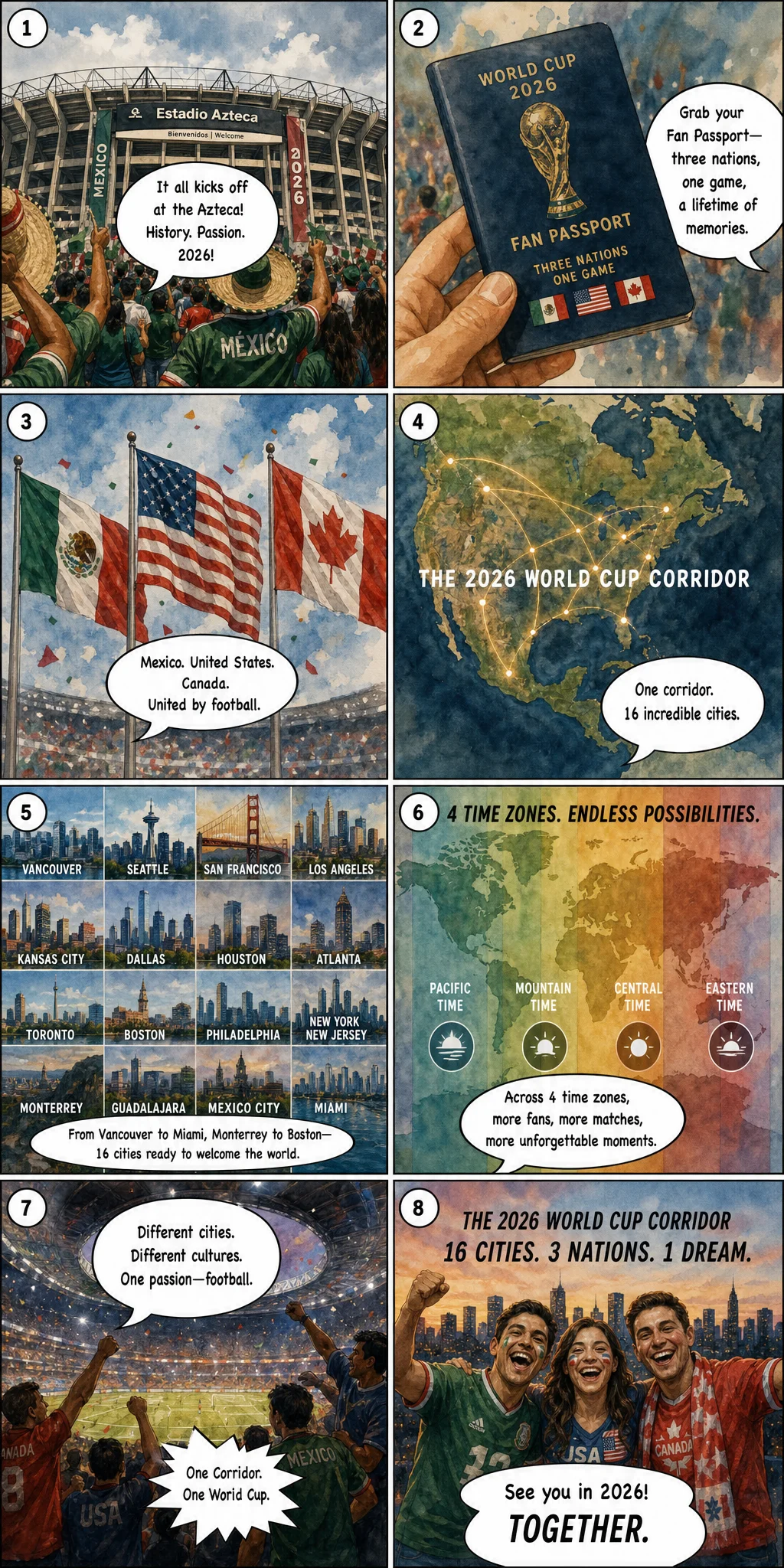
Содержание комиксов и статистика матчей предназначены только для развлекательных целей и могут содержать неточности. Для получения точных данных обращайтесь к официальному сайту источника.
# Три нации, один турнир: беспрецедентная архитектура совместного проведения
Чемпионат мира по футболу 2026 года станет первым в истории, который примут три страны — США, Канада и Мексика — под единой организационной структурой. Логистическая архитектура, необходимая для проведения турнира на территории трех суверенных государств с тремя различными иммиграционными системами, тремя сводами трудового законодательства, тремя национальными вещательными экосистемами и шестнадцатью стадионами, разбросанными по целому континенту, не имеет аналогов в истории спорта. Является ли эта архитектура будущим проведения мега-событий или разовым приспособлением к уникальным географическим и политическим условиям Северной Америки — один из ключевых вопросов, на который ответит турнир.
Объединенная заявка, официально представленная ФИФА в марте 2018 года под лозунгом «United 2026», основывалась на простой предпосылке: Северная Америка обладает существующей инфраструктурой для проведения чемпионата мира с участием 48 команд без многомиллиардных проектов строительства стадионов, которые ложились бременем на предыдущих хозяев. Документ заявки насчитывал 534 страницы, охватывающих спецификации стадионов, транспортную инфраструктуру, протоколы безопасности, вместимость объектов размещения и прогнозы экономического воздействия. В нем утверждалось, что непревзойденное сочетание на континенте крупных арен — большинство из шестнадцати отобранных стадионов были существующими объектами НФЛ или крупных студенческих футбольных программ, требующими лишь скромной модернизации для футбола, — sophistication вещательного рынка, экосистемы корпоративного спонсорства и продемонстрированная способность проводить огромные спортивные мероприятия делают его единственным кандидатом, способным обеспечить коммерчески успешный расширенный турнир. Оценочная комиссия ФИФА оценила объединенную заявку в 4,0 из 5,0 — наивысший балл, когда-либо присуждавшийся. Марокко, единственный другой кандидат, получило 2,7. Конгресс ФИФА проголосовал 134 голосами против 65 в пользу Северной Америки 13 июня 2018 года, за день до открытия чемпионата мира 2018 года в России.
Распределение матчей внутри партнерства с математической точностью отражает динамику сил между тремя хозяевами. Шестьдесят из восьмидесяти матчей группового этапа и ранних стадий плей-офф пройдут в США. По десять — в Канаде и Мексике. Все матчи, начиная с четвертьфиналов, будут сыграны на американских стадионах — решение, отражающее как непревзойденный запас крупных арен в США, так и коммерческую логику, размещающую самые ценные матчи турнира в принимающей стране с крупнейшим внутренним вещательным рынком. Стадион «Ацтека» в Мехико примет матч открытия — символический жест в сторону единственного стадиона в мировом футболе, который принимал два предыдущих финала чемпионата мира, священной земли, где Пеле завоевал свой третий титул в 1970 году, а Марадона забил «Гол столетия» в 1986 году. Финал пройдет на стадионе «MetLife» в Нью-Джерси — решение, продиктованное математикой вещательного расписания, соображениями часовых поясов для европейской телеаудитории и близостью стадиона к медиа-рынку Нью-Йорка, а не какими-либо особыми архитектурными или историческими достоинствами.
Структура управления, необходимая для проведения турнира тремя странами, сама по себе является примером институциональной сложности. Каждая принимающая страна имеет свой собственный местный организационный комитет, правительственную связь и структуру координации безопасности, все они действуют под центральным комитетом ФИФА, базирующимся в Майами. Три отдельные иммиграционные системы будут обрабатывать миллионы международных посетителей — болельщик, имеющий билеты на матчи во всех трех странах, должен пройти через три различных визовых режима, три различных системы электронного разрешения на поездки и три различных бюрократических структуры пограничного контроля. ФИФА согласовала специальные турнирные визовые договоренности с каждым правительством-хозяином, но практический опыт пересечения границы из Сан-Диего в Тихуану для матча группового этапа или из Детройта в Торонто включает протоколы безопасности и пограничные формальности, которых не требовал от зрителей ни один предыдущий чемпионат мира.
Трехнациональная структура также создает трудовые и кадровые сложности, которых избегают турниры в одной стране. Работники стадионов в Далласе действуют в соответствии с трудовым законодательством Техаса; работники стадионов в Ванкувере — в соответствии с трудовыми стандартами Британской Колумбии; работники стадионов в Мехико — в соответствии с федеральным трудовым законодательством Мексики. Волонтеры — десятки тысяч неоплачиваемых работников, составляющих операционный костяк каждого чемпионата мира — подпадают под разные юридические определения статуса волонтера в каждой стране, с разными правилами, регулирующими, что можно просить делать волонтеров, сколько часов они могут работать и на какие защиты они имеют право. Юридический отдел ФИФА потратил годы на гармонизацию этих договоренностей между юрисдикциями, и сами усилия по гармонизации являются значительным институциональным достижением, но остаточные напряжения и несоответствия станут заметны только тогда, когда операционные требования турнира столкнутся одновременно с тремя различными правовыми системами.
Вопрос, который ставит чемпионат мира 2026 года — является ли проведение тремя странами воспроизводимой моделью для будущих турниров или разовым приспособлением к уникальным обстоятельствам Северной Америки — зависит от операционного успеха турнира. Если границы будут функционировать, если рейсы будут соединяться, если инфраструктура выдержит, трехнациональная модель станет шаблоном, на который смогут ссылаться будущие заявки. Если логистика даст трещину — если задержки на границах оставят зрителей в затруднительном положении, если переходы между площадками провалятся, если расстояния между городами-хозяевами приведут к конкурентным искажениям, которых избегают турниры в одной стране — турнир 2026 года запомнится как амбициозный эксперимент, чьи амбиции превысили его исполнение. Объединенная заявка была построена на способности Северной Америки реализовать задуманное. Будет ли способность переведена в реализацию, определят не документы заявки, а само лето 2026 года.
География чемпионата мира 2026 года ошеломляет своими масштабами и создает операционные проблемы, с которыми не сталкивался ни один предыдущий турнир. Шестнадцать стадионов-хозяев простираются примерно на 4500 километров от стадиона «Ацтека» на юге до BC Place в Ванкувере на севере и почти на 4000 километров с востока на запад через континентальную часть США. Это не турнир, ограниченный одним столичным регионом, как Катар-2022, или даже одной среднестатистической европейской страной. Это турнир, проводимый на целом континенте, и расстояния между площадками создают логистические требования, которые организаторы турнира моделировали и к которым готовились годами. Болельщик, пытающийся следить за своей национальной командой через групповой этап, может оказаться путешествующим из Мехико в Сиэтл, затем в Торонто в течение десяти дней — путешествие, охватывающее более 7000 километров по воздуху, пересекающее две международные границы и проходящее через три отдельных таможенных и иммиграционных пункта. Углеродный след такого передвижения, умноженный на миллионы зрителей, представляет собой экологический расчет, который ФИФА публично признала и с которым, как сообщается, частным образом боролась, пытаясь примирить его со своими заявленными обязательствами по устойчивому развитию. Оценка воздействия турнира на окружающую среду, заказанная ФИФА и опубликованная в 2024 году, прогнозировала, что авиаперелеты зрителей составят более восьмидесяти процентов общих выбросов углерода турнира — цифра, подчеркивающая напряжение между расширенным географическим охватом турнира и его экологической риторикой.
Сам процесс отбора стадионов выявил политико-экономические факторы, действующие внутри трехнационального партнерства. США предоставили одиннадцать из шестнадцати площадок — доминирование, отражающее как их непревзойденный запас крупных стадионов, так и коммерческую логику, движущую прогнозами доходов ФИФА. Стадионы НФЛ, такие как AT&T Stadium в Арлингтоне, SoFi Stadium в Лос-Анджелесе и Mercedes-Benz Stadium в Атланте, предлагают вместимость, превышающую 70 000 мест, люксы премиум-класса, генерирующие доход от гостеприимства, и инфраструктуру — парковки, соединения с общественным транспортом, прилегающие развлекательные районы — которую требуют коммерческие партнеры ФИФА. Затраты на реконструкцию этих объектов минимальны по сравнению с миллиардами, потраченными на строительство новых стадионов для Катара-2022 или Бразилии-2014, — факт, который был центральным в экономическом аргументе объединенной заявки. Турнир может быть проведен без наследия «белых слонов», потому что стадионы уже имеют постоянных арендаторов, постоянные потоки доходов и постоянные роли в своих сообществах. Это одновременно величайшая сила заявки — избежание расточительных строительных расходов — и источник ее наиболее острой критики: турнир проводится на объектах, спроектированных для американского футбола, модернизированных для футбола, и специфический характер этих пространств принципиально отличается от специализированных футбольных стадионов, принимавших предыдущие турниры.
Вклад Канады в проведение представляет собой нечто качественно иное, чем вклад Америки. Страна провела ровно один предыдущий матч мужского чемпионата мира — матч группового этапа во время турнира в Мексике в 1986 году — и ее футбольная инфраструктура отражает нацию, где этот вид спорта исторически занимал второстепенную культурную позицию после хоккея с шайбой. Стадион BMO Field в Торонто потребовал значительного расширения для достижения минимальной вместимости в 45 000 мест, которую ФИФА требует для объектов чемпионата мира, а BC Place в Ванкувере, хотя и архитектурно выдающийся, является крытым стадионом, спроектированным в первую очередь для канадского футбола. Включение Канады в партнерство по проведению связано не столько со стадионной инфраструктурой. Это связано с политическим партнерством, континентальной солидарностью и символической ценностью расширения географического охвата чемпионата мира на страну «Большой семерки», где культурное присутствие футбола растет быстрее, чем где-либо в развитом мире. Канадская футбольная аудитория — мультикультурная, молодая и все более вовлеченная в глобальную игру — представляет именно ту демографическую группу, на которую коммерческая стратегия ФИФА нацелена для долгосрочного роста.
Вклад Мексики несет исторический вес, который не может уловить ни одна таблица спецификаций стадионов. Стадион «Ацтека» — реконструированный и расширенный для турнира 2026 года — является священной землей в истории футбола. Это стадион, где Пеле выиграл свой третий и последний чемпионат мира в 1970 году, стадион, где Диего Марадона забил «Гол столетия» и «Руку Бога» в одном и том же четвертьфинале в 1986 году, единственный стадион на Земле, ставший свидетелем двух финалов чемпионата мира. Решение отдать матч открытия Мехико, а не Лос-Анджелесу или Нью-Йорку, было жестом в сторону этой истории — признанием того, что возвращение чемпионата мира в Северную Америку также является возвращением на его самый легендарный объект, и что историческая преемственность турнира имеет значение наряду с его коммерческими амбициями. Символический резонанс матча открытия, сыгранного на «Ацтеке», в стране, которая принимала два предыдущих чемпионата мира и которая на протяжении поколений была самым страстным футбольным рынком Северной Америки, превосходит любой экономический расчет.