

Югославия 9-0 Заир: Первая африканская мечта, разбитая вдребезги
Матч группового этапа чемпионата мира 1974 года между Югославией и Заиром носит позорное звание самого крупного поражения Африки в истории турнира. 9-0. Этот счёт до сих пор шокирует — цифра, указывающая на несостоятельность в соревновании такого масштаба, что…
Опубликовано: June 6, 2026
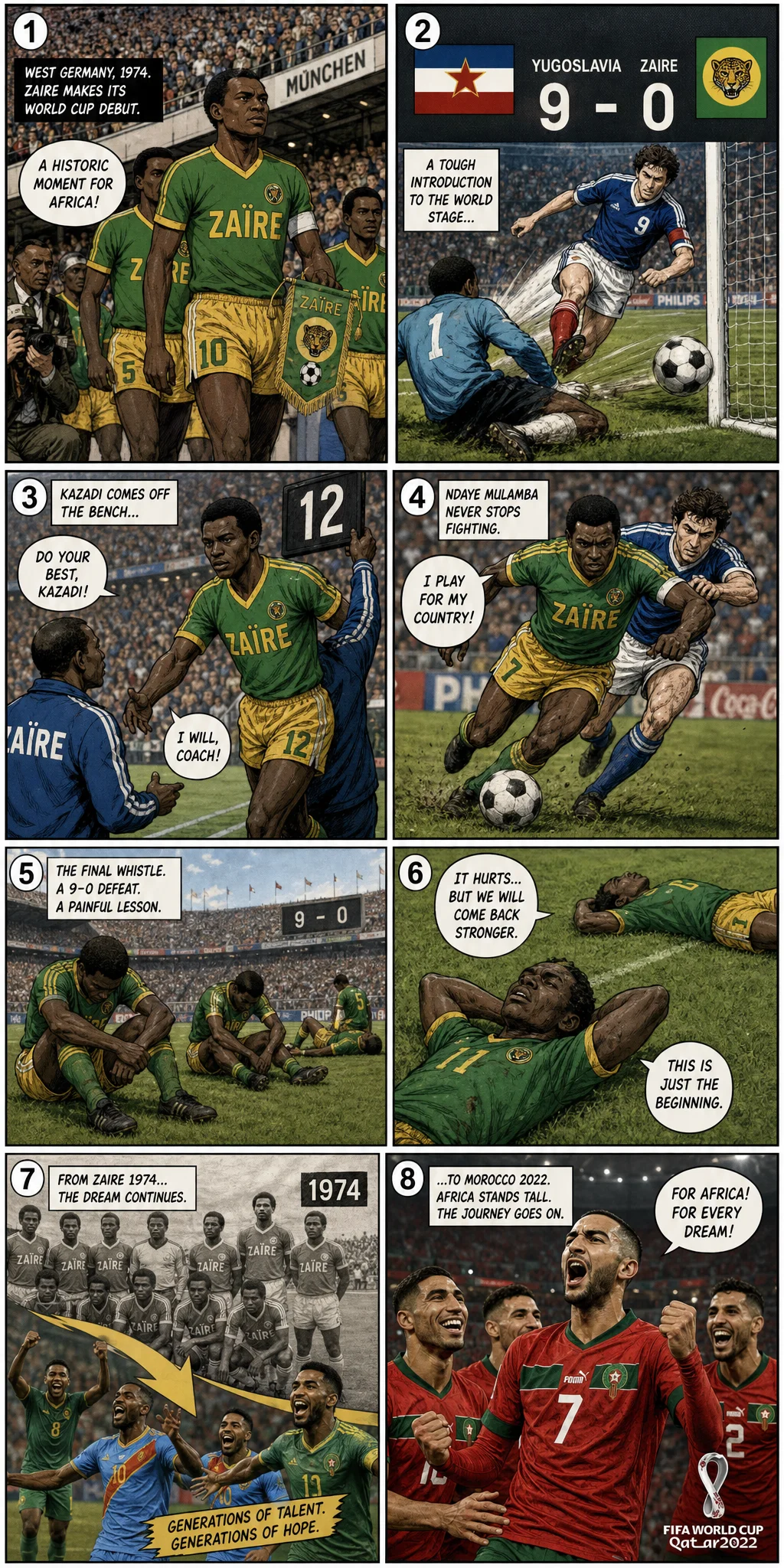
Содержание комиксов и статистика матчей предназначены только для развлекательных целей и могут содержать неточности. Для получения точных данных обращайтесь к официальному сайту источника.
# Югославия 9-0 Заир: Счёт, скрывший институциональное предательство
Матч группового этапа чемпионата мира 1974 года между Югославией и Заиром носит позорное звание самого крупного поражения Африки в истории турниров. 9-0. Этот счёт остаётся шокирующим — цифра, указывающая на такую степень неконкурентоспособности, которую, по идее, должны предотвращать сами структуры международного футбола. Но счёт, как это часто бывает с результатами чемпионатов мира, скрывает больше, чем раскрывает. Обстоятельства, приведшие к девяти голам Югославии в ворота Заира, представляют собой одно из самых сокрушительных обвинений в адрес институционального управления футболом в современную эпоху этого вида спорта, и история за этим счётом заслуживает такой же широкой известности, как и сам счёт.
Заир прибыл в Западную Германию в 1974 году как первая страна Африки к югу от Сахары, прошедшая квалификацию на чемпионат мира. Значение этого достижения выходило далеко за пределы футбола. Движения за независимость Африки 1950-х и 1960-х годов породили новые государства, чей политический суверенитет ещё не был подкреплён институциональным присутствием в глобальных структурах, включая спорт. Квалификация Заира отмечалась на всём континенте как общеафриканское достижение — Джулиус Ньерере, президент-философ Танзании, был среди африканских лидеров, публично приветствовавших это как доказательство того, что Африка может конкурировать на важнейших мировых аренах. Сборная несла надежды целого континента. Чего сборная не несла — так это институциональной поддержки, необходимой для превращения этих надежд в конкурентную реальность.
Футбольная федерация Заира, действовавшая при авторитарном правительстве президента Мобуту Сесе Секо, пообещала игрокам существенные бонусные выплаты за выход на чемпионат мира — финансовый стимул, который для спортсменов из страны, где зарплаты профессиональных футболистов были скромными по мировым меркам, являлся основной мотивацией для участия в турнире, откуда их команда не имела реалистичных ожиданий выйти дальше. Бонусы так и не были выплачены. Федерация изъяла паспорта игроков по прибытии в Западную Германию — якобы для предотвращения дезертирства, но на деле для контроля над спортсменами, которые всё больше осознавали, что данные им обещания не будут выполнены. К моменту встречи Заира с Югославией во втором матче группы команда была психологически раздроблена — спортсмены, эксплуатируемые собственной федерацией, несущие бремя континентальных ожиданий и соревнующиеся без финансовой безопасности, которая была им контрактно обещана.
Югославия забила девять голов сопернику, который по сути перестал функционировать как конкурентоспособная единица. Голы не были результатом югославского мастерства — хотя сборная Югославии 1974 года была действительно талантливой, включая игроков, которые составили костяк национального футбола на десятилетие. Голы стали результатом оборонительного коллапса, отражавшего институциональный, а не спортивный провал. Игроки, лишённые обещанной компенсации, с конфискованными паспортами, представляющие федерацию, которая их предала, не защищаются с той самоотдачей, которую требует элитный спорт. 9-0 не было футбольным результатом. Это было проявление институциональной коррупции на табло.
Неизгладимый образ кампании Заира 1974 года — защитник Мвепу Илунга, выбегающий из стенки, чтобы выбить мяч до того, как Бразилия смогла бы выполнить штрафной удар, — подавался миру как комичная наивность, образ африканского футболиста, не понимающего правил игры, в которую он играет. Илунга в редком интервью десятилетия спустя раскрыл правду: этот поступок был осознанным протестом. Футболист, использующий единственную доступную ему платформу, чтобы привлечь международное внимание к коррупции и эксплуатации, которые опустошили опыт его команды на чемпионате мира изнутри. Жест, над которым смеялся мир, был актом сопротивления, и этот смех отражал отказ мира понять, что он видит. Счёт 9-0 фиксирует футбольный результат. История за ним фиксирует предательство спортсменов институтами, которые должны были их защищать, и эта история важнее счёта.
Политический контекст участия Заира в чемпионате мира необходим для понимания того, почему поражение 9-0 было не просто футбольным несоответствием, но проявлением специфической дисфункции режима Мобуту. Мобуту захватил власть в 1965 году в результате военного переворота, переименовав страну из Конго в Заир в рамках своей кампании «аутентичности» — проекта культурного национализма, стремившегося стереть колониальное влияние, одновременно обогащая президента и его ближний круг за счёт систематической добычи минеральных богатств страны. Футбол был центральным элементом политического проекта Мобуту: национальная сборная «Леопарды» подавалась как свидетельство превращения Заира в современное государство, а выход на чемпионат мира 1974 года праздновался через подконтрольные государству СМИ как достижение Мобуту, а не спортивное. Игроки, прошедшие квалификацию на чемпионат мира, были не спортсменами, представляющими футбольную федерацию; они были политическими реквизитами в режиме, который использовал их для легитимности и отбрасывал, когда они становились неудобными. Бонусные выплаты, которые были обещаны и не выплачены, паспорта, которые были конфискованы, специфическая эксплуатация спортсменов, не имевших институциональной защиты — это были не отклонения в системе Мобуту. Это была система, работающая именно так, как была задумана, извлекая ценность из своих граждан и распределяя доходы среди бенефициаров режима. 9-0 было не просто футбольным унижением. Это был предсказуемый результат политической системы, которая относилась к своим спортсменам как к ресурсам для эксплуатации, а не как к представителям, нуждающимся в поддержке.
Сборная Югославии, забившая девять голов, сама была продуктом политической системы, которая, иначе, была столь же дисфункциональна, как и заирская — многоэтническая федерация, скреплённая авторитарным руководством Иосипа Броза Тито, чья футбольная команда отражала этнические напряжения, которые в конечном счёте разорвут страну на части. Состав Югославии 1974 года включал игроков из Сербии, Хорватии, Боснии и других союзных республик, и напряжения между этими этническими группами управлялись, а не разрешались, подавлялись, а не устранялись. Команда, разгромившая Заир, через два десятилетия стала бы невозможной — нации, её составлявшие, погрузились в войны, последовавшие за распадом Югославии, футболисты, делившие раздевалку, стали гражданами взаимно враждебных государств. 9-0 был футбольным результатом, произведённым одной политической конструкцией против другой, и последующая история обеих стран — Заир стал Демократической Республикой Конго после свержения Мобуту, Югославия распалась на семь государств-преемников после десятилетия катастрофических войн — раскрывает матч таким, каким он был: состязанием между двумя нациями, существовавшими только благодаря специфическим политическим договорённостям своего исторического момента, обеим суждено было измениться до неузнаваемости в течение жизни игроков, участвовавших в нём.
Более широкое значение поражения 9-0 для африканского футбола сложно и спорно. С одной стороны, результат подтвердил все европейские предрассудки о неконкурентоспособности африканского футбола — счёт использовался как доказательство того, что африканским странам не место на чемпионате мира, что их участие снижает конкурентные стандарты турнира, что институциональные инвестиции, необходимые для того, чтобы сделать африканский футбол конкурентоспособным, не оправдывают отдачи. С другой стороны, результат вскрыл специфические институциональные провалы — коррупцию, эксплуатацию, отсутствие структур поддержки, которые европейские и южноамериканские футболисты считали само собой разумеющимися, — которые мешали африканскому футболу соревноваться на равных, и это разоблачение, каким бы болезненным оно ни было, было необходимо для реформ. Истина сложнее, чем допускает любое из этих прочтений. 9-0 было одновременно свидетельством неконкурентоспособности и свидетельством институциональных провалов, породивших эту неконкурентоспособность, и африканские футбольные институты, возникшие в последующие десятилетия — улучшенные структуры управления, инвестиции в развитие молодёжи, особое внимание к системам поддержки, которых не хватало игрокам Заира, — были сформированы, отчасти, конкретной травмой того послеполуденного часа в Гельзенкирхене. 9-0 было унижением. Это было также катализатором, и африканские футбольные команды, впоследствии участвовавшие в чемпионатах мира — Алжир в 1982 году, Камерун в 1990 году, Сенегал в 2002 году, Гана в 2010 году, Марокко в 2022 году — представляют собой урожай реформ, которые унижение помогло мотивировать. Игроки Заира, пережившие 9-0, не воспользовались этими реформами. Но страдания, которые они вынесли, способствовали условиям, сделавшим возможными последующие африканские достижения, и конкретная несправедливость их опыта — спортсмены, отдавшие всё и не получившие ничего, преданные институтами, которые должны были их поддерживать, чьи имена забыты, в то время как их счёт помнят — заслуживает признания, которое исторические записи редко предоставляли.