

Yugoslavia 9-0 Zaire: El primer sueño africano, hecho añicos
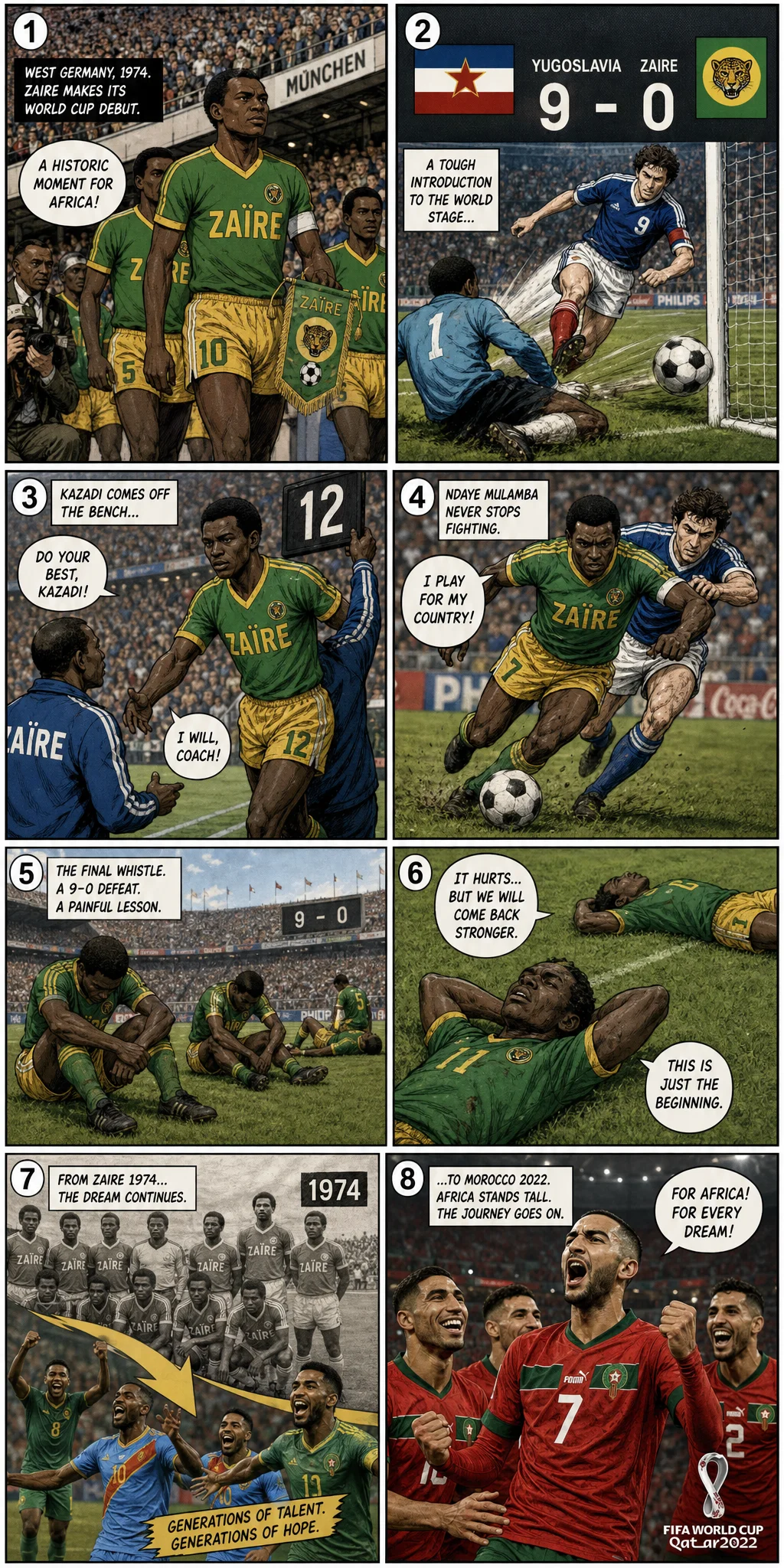
El partido de la fase de grupos del Mundial de 1974 entre Yugoslavia y Zaire tiene el dudoso honor de ser la derrota más abultada de África en la historia del torneo. 9-0. El marcador sigue siendo impactante, una cifra que sugiere una falta de competitividad a una escala que inte...
Publicado: June 6, 2026
El contenido del cómic y las estadísticas de los partidos son solo para fines de entretenimiento y pueden contener imprecisiones. Para datos precisos, consulte el sitio web oficial de la referencia.
# Yugoslavia 9-0 Zaire: El Marcador Que Ocultó una Traición Institucional
El partido de grupo del Mundial de 1974 entre Yugoslavia y Zaire ostenta la ignominiosa distinción de ser la derrota más abultada de África en la historia del torneo. 9-0. El marcador sigue siendo impactante, una cifra que sugiere una insuficiencia competitiva a una escala que las estructuras del fútbol internacional deberían prevenir. Pero el marcador, como suele ocurrir con los resultados mundialistas, oculta más de lo que revela. Las circunstancias que produjeron los nueve goles de Yugoslavia contra Zaire constituyen una de las acusaciones más condenatorias contra la gobernanza institucional del fútbol en la era moderna del deporte, y la historia detrás del marcador merece ser tan conocida como el marcador mismo.
Zaire llegó a Alemania Occidental en 1974 como la primera nación del África subsahariana en clasificarse para un Mundial. La importancia de este logro resonó mucho más allá del fútbol. Los movimientos independentistas africanos de las décadas de 1950 y 1960 habían producido nuevas naciones cuya soberanía política aún no se correspondía con una presencia institucional en los organismos globales, incluido el deporte. La clasificación de Zaire fue celebrada en todo un continente como un logro panafricano: Julius Nyerere, el presidente filósofo de Tanzania, fue uno de los líderes africanos que la aclamó públicamente como prueba de que África podía competir en los escenarios más importantes del mundo. El equipo llevaba las esperanzas de todo un continente. Lo que el equipo no llevaba era el apoyo institucional necesario para transformar esas esperanzas en realidad competitiva.
La federación de fútbol de Zaire, que operaba bajo el gobierno autoritario del presidente Mobutu Sese Seko, había prometido a los jugadores pagos de bonificaciones sustanciales por la clasificación al Mundial — el incentivo financiero que representaba, para atletas de una nación donde los salarios del fútbol profesional eran modestos según los estándares globales, la motivación principal para participar en un torneo del que su equipo no tenía expectativas realistas de avanzar. Las bonificaciones nunca se materializaron. La federación confiscó los pasaportes de sus jugadores al llegar a Alemania Occidental, supuestamente para evitar deserciones, pero en la práctica para controlar a atletas que eran cada vez más conscientes de que las promesas que se les habían hecho no iban a cumplirse. Cuando Zaire se enfrentó a Yugoslavia en su segundo partido de grupo, el equipo estaba psicológicamente fracturado: atletas que habían sido explotados por su propia federación, cargando con el peso de las expectativas continentales y compitiendo sin la seguridad financiera que se les había prometido contractualmente.
Yugoslavia marcó nueve goles contra un oponente que esencialmente había dejado de funcionar como unidad competitiva. Los goles no fueron producto del brillo yugoslavo — aunque el equipo yugoslavo de 1974 era genuinamente talentoso, con jugadores que formarían la columna vertebral del fútbol de la nación durante una década. Los goles fueron producto de un colapso defensivo que reflejaba un fracaso institucional más que atlético. Los jugadores a quienes se les ha negado la compensación prometida, cuyos pasaportes han sido confiscados y que representan a una federación que los ha traicionado, no defienden con el compromiso que exige la competencia de élite. El 9-0 no fue un resultado futbolístico. Fue la manifestación en el marcador de la corrupción institucional.
La imagen perdurable de la campaña de Zaire en 1974 — el defensor Mwepu Ilunga saliendo de la barrera para patear el balón antes de que se ejecutara un tiro libre de Brasil — fue retratada globalmente como ingenuidad cómica, la imagen de un futbolista africano que no entendía las reglas del deporte que practicaba. Ilunga, en una rara entrevista décadas después, reveló la verdad: el acto fue una protesta deliberada. Un futbolista usando la única plataforma disponible para llamar la atención internacional sobre la corrupción y la explotación que habían vaciado desde dentro la experiencia mundialista de su equipo. El gesto que el mundo ridiculizó fue un acto de resistencia, y la risa reflejó la negativa del mundo a entender lo que estaba viendo. El marcador 9-0 registra un resultado futbolístico. La historia detrás de él registra la traición de atletas por parte de las instituciones que se suponía debían protegerlos, y la historia importa más que el marcador.
El contexto político de la participación de Zaire en el Mundial es esencial para entender por qué la derrota 9-0 no fue simplemente un desajuste futbolístico, sino una manifestación de la disfunción específica del régimen de Mobutu. Mobutu había tomado el poder en 1965 mediante un golpe militar, renombrando el país de Congo a Zaire como parte de su campaña de "autenticidad" — un proyecto nacionalista cultural que buscaba borrar la influencia colonial mientras simultáneamente enriquecía al presidente y su círculo íntimo mediante la extracción sistemática de la riqueza mineral de la nación. El fútbol era central para el proyecto político de Mobutu: la selección nacional, los Leopardos, se presentaba como evidencia del surgimiento de Zaire como nación moderna, y la clasificación al Mundial de 1974 fue celebrada a través de los medios controlados por el Estado como un logro de Mobutu más que deportivo. Los jugadores que se clasificaron para el Mundial no eran atletas representando a una federación de fútbol; eran accesorios políticos en un régimen que los usaba para legitimidad y los descartaba cuando se volvían inconvenientes. Los pagos de bonificaciones que fueron prometidos y retenidos, los pasaportes que fueron confiscados, la explotación específica de atletas que no tenían protección institucional — estos no fueron aberraciones dentro del sistema de Mobutu. Eran el sistema operando exactamente como fue diseñado para operar, extrayendo valor de sus ciudadanos y distribuyendo las ganancias a los beneficiarios del régimen. El 9-0 no fue meramente una humillación futbolística. Fue la consecuencia predecible de un sistema político que trataba a sus atletas como recursos para explotar en lugar de representantes a quienes apoyar.
El equipo yugoslavo que marcó los nueve goles era en sí mismo producto de un sistema político que era, de manera diferente, tan disfuncional como el de Zaire — una federación multiétnica mantenida unida por el liderazgo autoritario de Josip Broz Tito, cuyo equipo de fútbol reflejaba las tensiones étnicas que eventualmente desgarrarían a la nación. El equipo yugoslavo de 1974 contaba con jugadores de Serbia, Croacia, Bosnia y las otras repúblicas constituyentes, y las tensiones entre estos grupos étnicos eran gestionadas más que resueltas, suprimidas más que abordadas. El equipo que desmanteló a Zaire sería, en dos décadas, imposible — las naciones que lo componían habrían descendido a las guerras que siguieron a la disolución de Yugoslavia, los futbolistas que habían compartido vestuario convirtiéndose en ciudadanos de estados mutuamente hostiles. El 9-0 fue un resultado futbolístico producido por una construcción política contra otra, y la historia subsiguiente de ambas naciones — Zaire convirtiéndose en la República Democrática del Congo tras el eventual derrocamiento de Mobutu, Yugoslavia fragmentándose en siete estados sucesores después de una década de guerra catastrófica — revela el partido por lo que fue: un concurso entre dos naciones que existían solo a través de los arreglos políticos específicos de su momento histórico, ambas destinadas a transformarse más allá del reconocimiento dentro de las vidas de los jugadores que lo disputaron.
La importancia más amplia de la derrota 9-0 para el fútbol africano es compleja y disputada. En una lectura, el resultado confirmó todos los prejuicios europeos sobre la insuficiencia competitiva del fútbol africano — el marcador utilizado como evidencia de que las naciones africanas no pertenecían al Mundial, que su participación disminuía los estándares competitivos del torneo, que la inversión institucional necesaria para hacer competitivo al fútbol africano no estaba justificada por los retornos. En otra lectura, el resultado expuso los fracasos institucionales específicos — la corrupción, la explotación, la ausencia de las estructuras de apoyo que los futbolistas europeos y sudamericanos daban por sentadas — que impedían al fútbol africano competir en igualdad de condiciones, y la exposición, por dolorosa que fuera, era necesaria para la reforma. La verdad es más complicada de lo que permite cualquiera de las dos lecturas. El 9-0 fue simultáneamente evidencia de insuficiencia competitiva y evidencia de los fracasos institucionales que produjeron esa insuficiencia, y las instituciones del fútbol africano que surgieron en décadas posteriores — las estructuras de gobernanza mejoradas, la inversión en desarrollo juvenil, la atención específica a los sistemas de apoyo de los que carecieron los jugadores de Zaire — fueron moldeadas, en parte, por el trauma específico de esa tarde en Gelsenkirchen. El 9-0 fue una humillación. También fue un catalizador, y los equipos africanos que posteriormente compitieron en Mundiales — Argelia en 1982, Camerún en 1990, Senegal en 2002, Ghana en 2010, Marruecos en 2022 — representan la cosecha de reformas que la humillación ayudó a motivar. Los jugadores de Zaire que sufrieron el 9-0 no se beneficiaron de esas reformas. Pero el sufrimiento que soportaron contribuyó a las condiciones que hicieron posibles los logros africanos posteriores, y la injusticia específica de su experiencia — atletas que lo dieron todo y no recibieron nada, que fueron traicionados por las instituciones que se suponía debían apoyarlos, cuyos nombres son olvidados mientras su marcador es recordado — merece un reconocimiento que el registro histórico rara vez ha proporcionado.