

4,500킬로미터의 광기
2026년 월드컵은 태평양 연안의 밴쿠버에서 고지대의 멕시코시티까지, 남서부의 로스앤젤레스에서 북동부의 폭스버러까지, 4,500킬로미터가 넘는 지리적 범위에 걸쳐 개최될 예정이다. 이것은 단순한
게시일: June 6, 2026
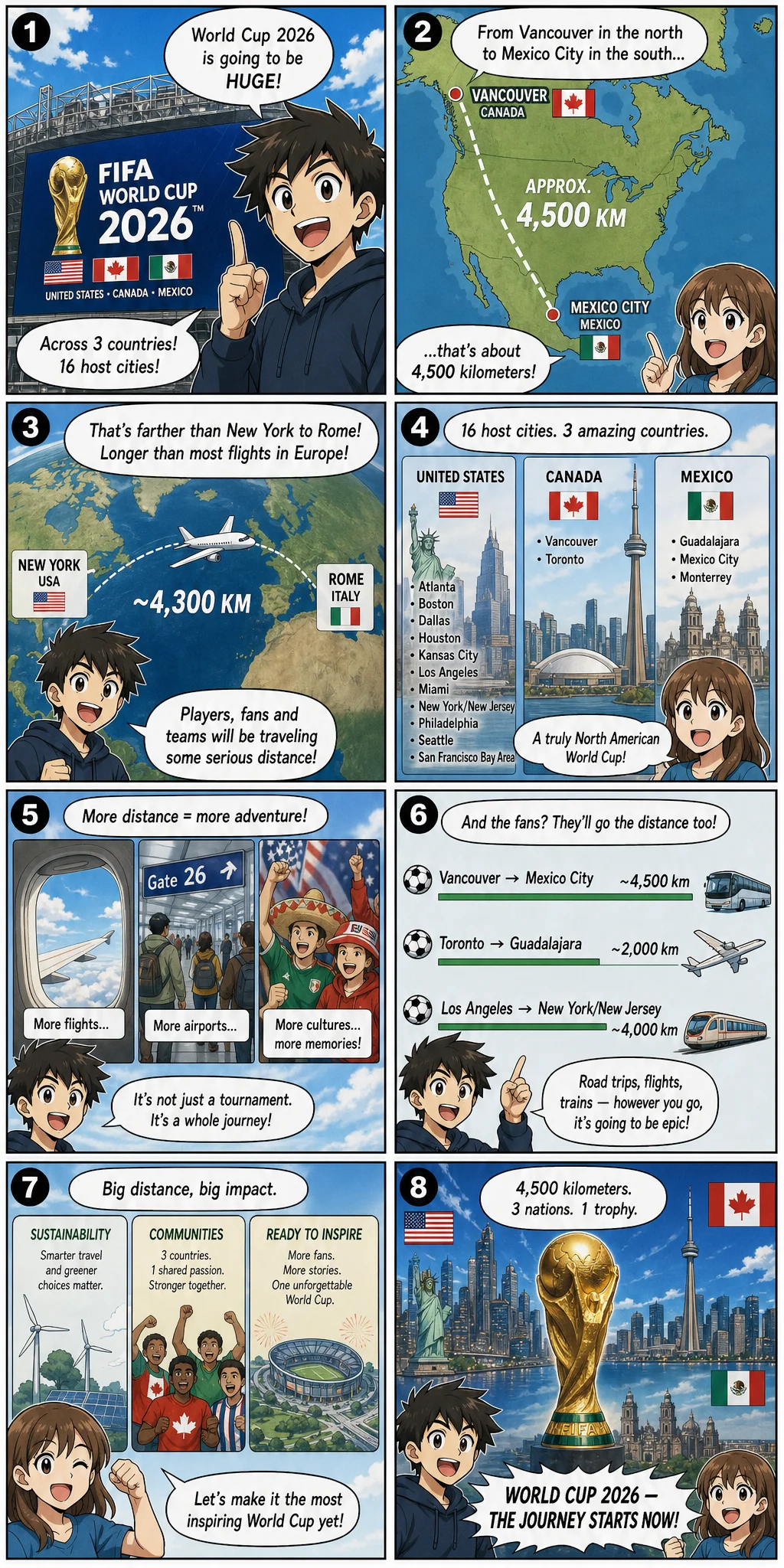
만화 콘텐츠와 경기 통계는 오락 목적으로만 제공되며 부정확한 내용이 포함될 수 있습니다. 정확한 데이터는 참조 출처의 공식 웹사이트를 확인하시기 바랍니다.
2026年世界杯的赛程将横跨超过四千五百公里的地理跨度——从太平洋沿岸的温哥华到高海拔的墨西哥城,从西南部的洛杉矶到东北部的福克斯堡。这并非传统欧洲或南美意义上的赛事,那些地方的世界杯场馆往往集中在数百公里范围内,球队乘坐大巴往返于比赛之间,球迷们也能在多个比赛日里聚集在同一个广场喝咖啡。这是一场大陆远征,一场遍布于比西欧面积还大的陆地上的锦标赛,而旅行负担将不均等地落在参赛队伍身上,直接影响比赛结果。最远场馆——温哥华与福克斯堡——之间的距离,超过了伦敦到巴格达的距离。此前没有任何一届世界杯要求足球运动员在单个赛事日程中跨越如此遥远的距离参赛。
运动科学家已对精英运动员乘坐飞机旅行的生理成本进行了大量量化研究,结果对那些淘汰赛赛程将迫使他们在北美大陆来回穿梭的球队并不乐观。巡航高度的机舱气压通常相当于海拔约两千四百米,会使飞行期间的血氧饱和度降低百分之五到十——这实际上给运动员的身体施加了轻度高原压力,而他们的身体本已在不到七十二小时前刚结束一场世界杯比赛的消耗中恢复。干燥的机舱空气(湿度通常低于百分之二十)会导致脱水,通过减少血浆容量和减缓疲劳组织中代谢废物的清除速度,损害肌肉恢复。三到五小时飞行(2026年赛程中大多数场馆间旅行的最短时长)带来的长时间不动状态,会损害血液循环,延缓高强度运动中积累的炎症因子的清除。运动科学家估计,每飞行三千公里,大约会损失一天的恢复质量。一支在淘汰赛阶段飞行一万五千公里(半决赛球队可能达到的数字)的球队,将比地理位置更有利的对手少大约五天的恢复时间。
这种竞争不公是结构性的,且基本无法纠正。国际足联的区域化小组抽签——旨在通过按地理位置分组、将球队分配到特定区域集群而非允许随机跨大陆小组赛旅行,来最小化小组赛阶段的旅行——为赛事开局阶段提供了部分缓解。被分到太平洋集群的球队可能在一个时区内打完所有三场小组赛,以南加州或湾区为基地,仅比赛日出行。中央集群的球队可能以达拉斯或休斯顿为基地,在可控半径内活动。但淘汰赛赛程并不尊重地理因素,也无法在不损害抽签竞争公正性的前提下如此设计。一支在洛杉矶赢得小组头名的球队,可能要在迈阿密打三十二强赛,在福克斯堡打十六强赛,再回达拉斯打四分之一决赛,最后在亚特兰大打半决赛。五个城市,四个时区,五周比赛期间约一万五千公里的行程。而一支淘汰赛路径只经过单一区域集群的球队,其负担可能只有这个距离的三分之一。
基地营策略已成为每个晋级国家队赛前规划的核心要素。球队会选择一处训练基地——包括酒店、训练设施和当地基础设施——从那里出发前往比赛场馆,停留最短必要时间,通常提前两天抵达比赛地,赛后立即离开。目标是建立单一的昼夜节律、单一的睡眠时间表、单一的饮食和恢复模式,无论比赛在哪里进行都保持一致。以中部地区(达拉斯、堪萨斯城、亚特兰大)为基地的球队,能最大化前往多个区域场馆的便利,同时最小化旅行时间。以沿海地区为基地的球队,则可能面临前往遥远场馆的更长时间飞行。基地营的决定在赛事开始前数月做出,其对球队在淘汰赛阶段身体状况的影响,可能不亚于比赛期间任何战术决策。
与往届赛事的对比凸显了2026年旅行挑战的前所未有。2022年卡塔尔世界杯是历史上最紧凑的一届——所有八座场馆均位于多哈市中心五十五公里半径内,球队无需在比赛间飞行,恢复因距离近而得到优化。2018年俄罗斯世界杯将场馆分布在一个幅员辽阔的国家内,但集中在欧洲西部,仅叶卡捷琳堡深入亚洲俄罗斯。2014年巴西世界杯需要大量国内航空旅行,但都在单一国家的基础设施、单一货币、单一语言、单一移民体系内进行。2026年世界杯则将俄罗斯或巴西的地理跨度与三个主权国家、三个移民体系、三种货币和四个时区的跨境复杂性结合在一起。2026年的地理因素并非命运注定,但它是一个可量化的变量。捧起奖杯的球队不仅要战胜对手,还要征服整个大陆。而最接近胜利却未能夺冠的球队,将永远思考抽签——不是足球抽签,而是地理抽签——是否决定了最终结果。