

El hombre que lleva el trofeo hacia 2026
El trofeo de la Copa del Mundo llega a la ceremonia inaugural en brazos de un representante de Argentina, el campeón defensor, la nación que se adjudicó la estatuilla dorada en Catar el 18 de diciembre de 2022, en lo que es amplia y razonablemente considerado el mejor...
Publicado: June 6, 2026
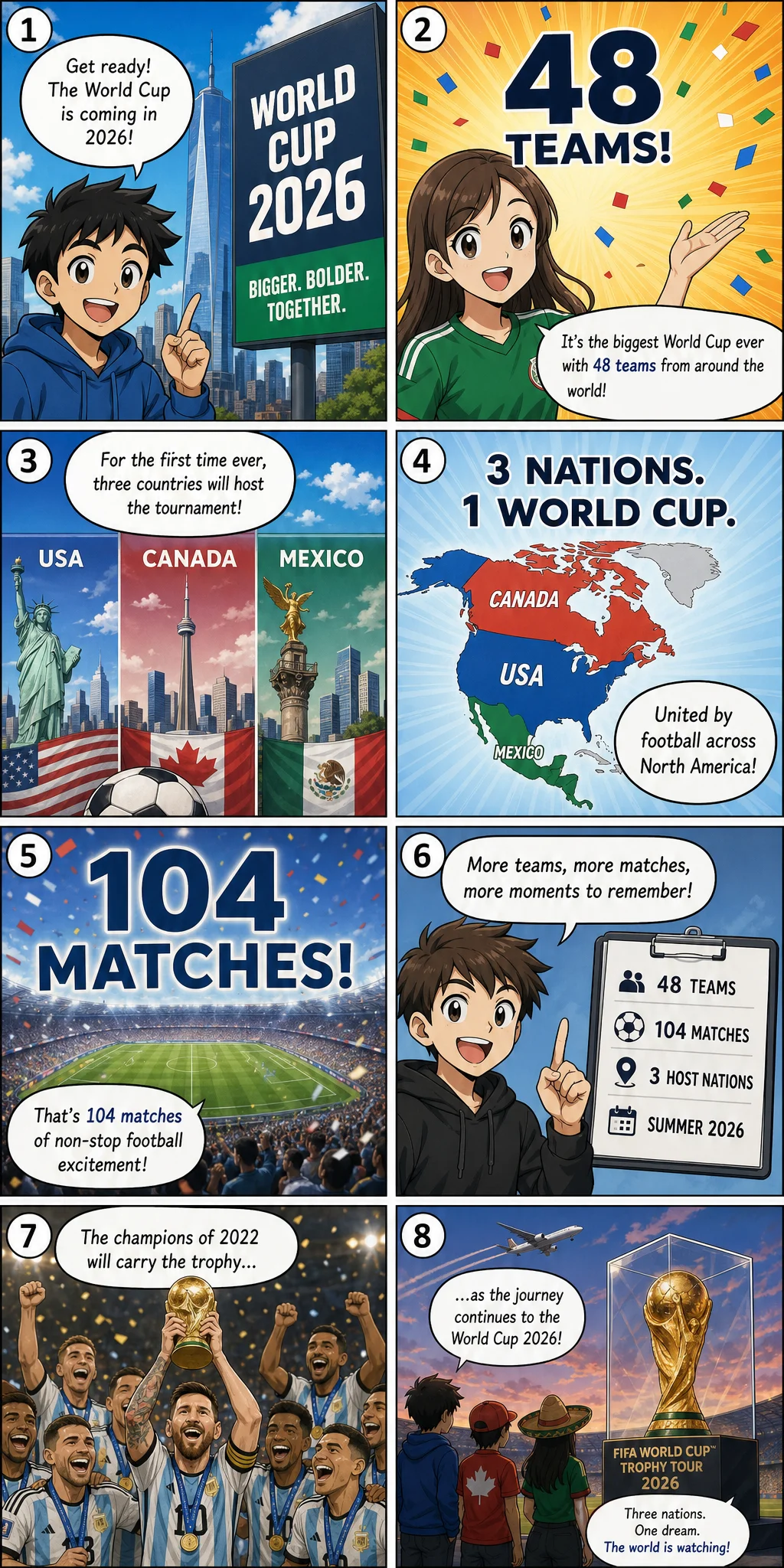
El contenido del cómic y las estadísticas de los partidos son solo para fines de entretenimiento y pueden contener imprecisiones. Para datos precisos, consulte el sitio web oficial de la referencia.
La Copa del Mundo llega a la ceremonia de apertura en brazos de un representante de Argentina, la campeona defensora, la nación que se adjudicó la estatuilla dorada en Catar el 18 de diciembre de 2022, en lo que es amplia y razonablemente considerado la mejor final de la historia de los Mundiales. El jugador elegido para este honor caminará sobre el césped del Estadio Azteca — el mismo estadio donde Pelé levantó el trofeo Jules Rimet en 1970 y donde la Argentina de Maradona alzó el trofeo actual en 1986 — y presentará el premio al mundo antes de entregarlo a la FIFA para su custodia hasta el partido final del 19 de julio. El mensaje de la ceremonia es explícito, antiguo y universalmente comprendido en todas las culturas que alguna vez han producido un campeón defendiendo un título: esto sigue siendo nuestro. Vengan a buscarlo si pueden. El mensaje se transmite con la confianza de una nación que conquistó el mundo y con el conocimiento, oculto bajo la pompa de la ceremonia, de que defender una Copa del Mundo es uno de los logros más difíciles en el deporte — una hazaña lograda solo dos veces desde la Segunda Guerra Mundial.
La carga del campeón defensor es única en el deporte global porque el ciclo de la Copa del Mundo opera con un ritmo de cuatro años que es fundamentalmente diferente de los ritmos anuales de las competiciones de clubes o los ritmos bienales de los campeonatos continentales. Cuatro años es tiempo suficiente para que la preparación táctica de un oponente sea exhaustiva, para que cada partido de la campaña anterior del campeón sea analizado fotograma a fotograma por analistas de rendimiento en las federaciones de todo el mundo futbolístico, para que los patrones específicos que produjeron la victoria sean comprendidos, contrarrestados y neutralizados antes de que el campeón siquiera comience su defensa. Cada oponente que Argentina enfrente en 2026 habrá pasado cuatro años estudiando exactamente cómo el equipo de Scaloni ganó en Catar — las rotaciones en el mediocampo, las sobrecargas en las bandas, los momentos específicos en los que un partido que pudo haberse perdido fue en cambio sobrevivido a través del sufrimiento competitivo más que del brillo estético. El equipo argentino de 2022 no fue la plantilla más talentosa de ese torneo. Brasil y Francia podían reclamar una calidad individual superior en un once inicial. Argentina fue el equipo más conectado — un grupo forjado a través de una victoria en la Copa América en 2021, una Finalissima contra el campeón europeo Italia en Wembley, y el trauma específico de la derrota en el partido inaugural ante Arabia Saudita que endureció a los sobrevivientes en un colectivo cuya resiliencia superó la suma de sus partes. Para cuando Argentina llegó a la final contra Francia, habían sido probados de maneras que ninguna simulación podría replicar y habían superado cada prueba mediante una combinación del genio de Messi, la laboriosidad del mediocampo y la negativa de la defensa a derrumbarse cuando el colapso parecía inevitable.
El registro histórico de los campeones defensores es implacable y se ha vuelto aún más en la era moderna. Brasil ganó títulos consecutivos en 1958 y 1962, la única nación en defender con éxito la Copa del Mundo en casi un siglo de competición del torneo. Italia ganó en 1934 y 1938, un doblete que abarca la era de preguerra y que, en retrospectiva, parece una competición diferente jugada bajo reglas diferentes por un deporte diferente. Desde 1962, ninguna nación ha defendido la Copa del Mundo. El patrón de los torneos recientes es particularmente ominoso para Argentina: Francia ganó en 1998 y salió en la fase de grupos en 2002 sin anotar un gol. Italia ganó en 2006 y salió en la fase de grupos en 2010, terminando última en un grupo que contenía a Paraguay, Eslovaquia y Nueva Zelanda. Alemania ganó en 2014 y salió en la fase de grupos en 2018, derrotada por Corea del Sur en un partido que perseguirá al fútbol alemán por generaciones. España, el equipo internacional dominante de la era 2008-2012, salió en la fase de grupos en 2014, despachada cinco goles a uno por Países Bajos en un partido que expuso cada vulnerabilidad que cuatro años de análisis de la oposición habían identificado. La maldición del campeón defensor no es una superstición. Es una característica estructural de un ciclo de torneo que da a los oponentes cuatro años para estudiar al campeón mientras la propia plantilla del campeón envejece, su cohesión se erosiona y el hambre que lo impulsó a la victoria se convierte en la complacencia que impide su defensa.
La iteración de Argentina en 2026 ha evolucionado, y la evolución es el logro más impresionante de Scaloni desde el triunfo en Catar. El equipo que llega a Norteamérica es menos dependiente de Messi, más coherente estructuralmente, construido alrededor de un trío de mediocampo formado por Enzo Fernández, Alexis Mac Allister y Rodrigo De Paul que controla los partidos mediante inteligencia posicional y presión colectiva, en lugar de a través del genio individual o los momentos de trascendencia que un Messi de treinta y ocho años, si juega, aún puede proporcionar pero no puede proporcionar de manera confiable a lo largo de siete partidos en treinta y nueve días. La evolución de la dependencia a la independencia ha sido el arco táctico más significativo de cualquier selección nacional desde Catar, y se emprendió con plena conciencia de que la presencia de Messi — ya sea que sea titular, que esté disponible, que el torneo se convierta en su acto final — no puede ser el plan. El plan debe funcionar sin él, y debe ser potenciado por él, en lugar de depender de él. Que Argentina haya logrado esta evolución mientras retiene su identidad competitiva — la intensidad de pelea callejera, la inteligencia en la gestión del partido, la capacidad de sufrir sin romperse — es un tributo al entrenamiento de Scaloni y a la comprensión del grupo de jugadores de que defender un título requiere convertirse en un equipo diferente al que lo ganó.
Si Argentina puede convertirse en la primera nación en defender la Copa del Mundo en sesenta y cuatro años es la pregunta que plantea la presentación del trofeo en la ceremonia de apertura, y las cinco semanas que siguen en estadios de toda Norteamérica la responderán. El formato del torneo exige siete victorias en siete partidos. La geografía del continente exige viajar a través de más kilómetros de los que cualquier campeón anterior haya soportado en un solo torneo. La oposición exige niveles de rendimiento que ningún campeón defensor ha mantenido desde 1962. La carga del campeón defensor no es meramente la presión de las expectativas. Es el peso acumulado de la preparación de cuatro años de cada oponente, cada ajuste táctico diseñado específicamente para ti, cada partido en el que el oponente eleva su nivel porque eres el campeón y vencer al campeón significa más que vencer a cualquier otro. El trofeo llega a la Ciudad de México en manos argentinas. Si sale en las mismas manos, o si el ciclo de rotación de cuatro años se cobra a otro campeón defensor, es la pregunta en torno a la cual se organizará la narrativa del torneo de 2026 desde el pitido inicial. El Azteca ha visto a Argentina levantar el trofeo antes. Que los vea levantarlo de nuevo depende de una generación de futbolistas argentinos que aún no habían nacido en 1986. La catedral será testigo de una coronación o de una entrega. El fútbol decidirá cuál.