

El balón con la hoja de arce de Canadá, el águila de México y las estrellas de Estados Unidos
El balón oficial del Mundial 2026 lleva tres emblemas nacionales distribuidos en su superficie, un desafío de diseño que ningún balón de torneos anteriores había enfrentado. Desde que la era moderna de balones oficiales con nombre, marca y una meticulosa estrategia de marketing comenzó con
Publicado: June 6, 2026
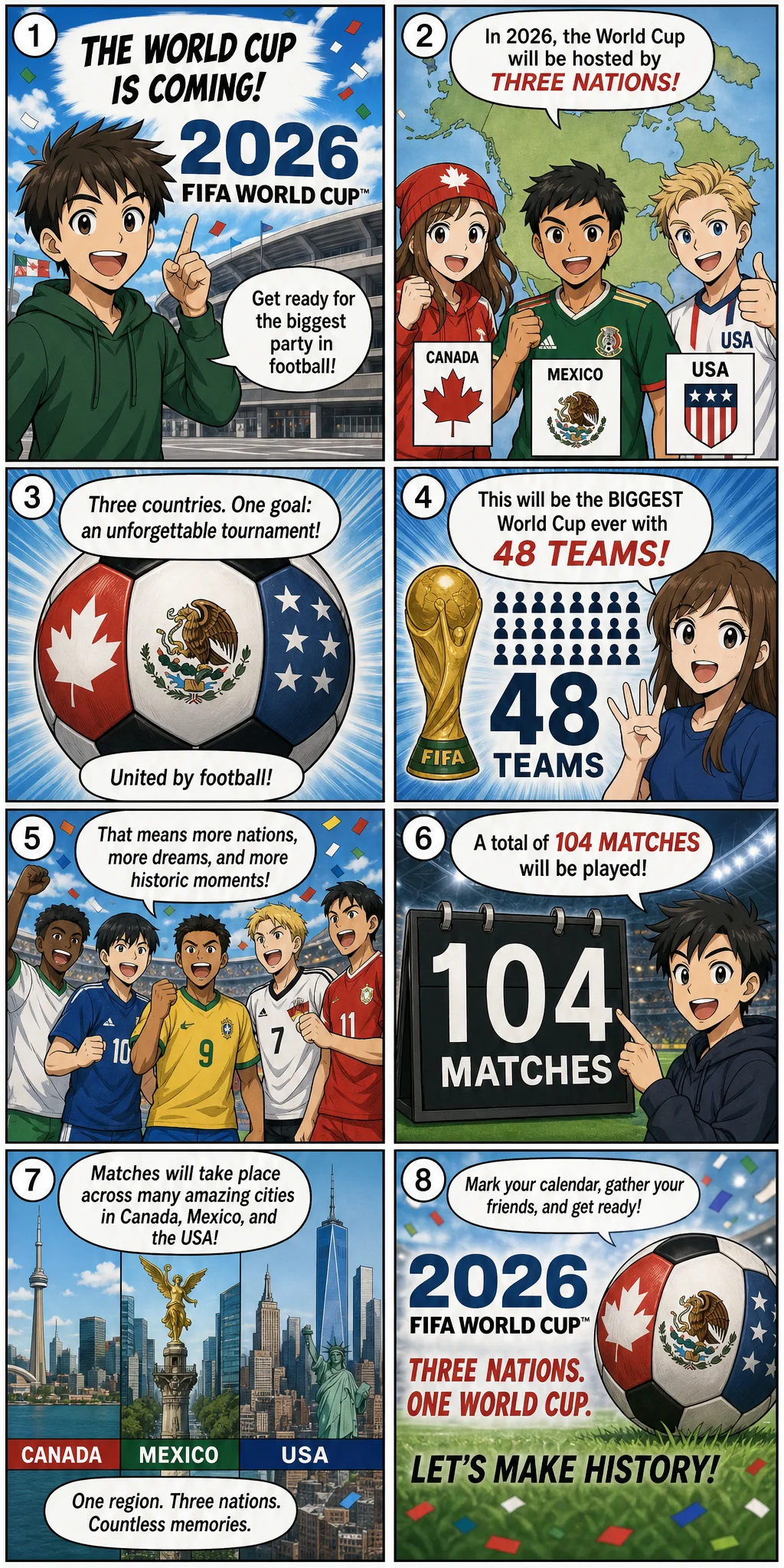
El contenido del cómic y las estadísticas de los partidos son solo para fines de entretenimiento y pueden contener imprecisiones. Para datos precisos, consulte el sitio web oficial de la referencia.
El balón oficial de la Copa Mundial 2026 lleva tres emblemas nacionales distribuidos en su superficie, un desafío de diseño que ningún balón de torneos anteriores ha enfrentado. Desde que comenzó la era moderna de balones con nombre, marca y meticulosa comercialización con el Adidas Telstar en 1970 —el icónico diseño de paneles blancos y negros creado específicamente para mejorar la visibilidad en transmisiones de televisión en blanco y negro que aún llegaban a la mayoría de la audiencia global—, cada balón de la Copa Mundial ha representado a una sola nación anfitriona, traduciendo sus colores, iconografía e identidad visual en un lienzo esférico. El balón de 2026 debe representar a tres anfitriones simultáneamente: la hoja de arce de Canadá, el emblema del águila y la serpiente de México, y las estrellas de Estados Unidos. Tres lenguajes visuales nacionales distintos, tres paletas de colores distintas, tres conjuntos de significados simbólicos distintos, todos exigiendo igual peso visual y presencia simbólica dentro de las limitaciones de un objeto de aproximadamente veintidós centímetros de diámetro y dividido en un número finito de paneles.
La solución de diseño es sutilmente inteligente y recompensa un examen detenido. Los tres símbolos no compiten por el dominio en la superficie del balón ni luchan por posición como lo harían emblemas nacionales dispuestos en un objeto compartido si el diseñador hubiera intentado una colocación simétrica o un área visual igual. En cambio, están dispuestos a lo largo de las costuras estructurales del balón —las ranuras aerodinámicas que definen la configuración moderna de paneles—, cada uno ocupando su propio panel, cada uno con su propio espacio, conectados por una línea fluida que sugiere, según la interpretación y disposición del espectador, ya sea fronteras continentales compartidas, un viaje futbolístico compartido, o simplemente la lógica de diseño de un objeto esférico cuya superficie debe acomodar movimiento e impacto junto con simbolismo. Los símbolos están representados en dorado sobre el fondo blanco tradicional, una elección de color que los conecta visualmente con el trofeo mismo y afirma su equivalencia en la empresa compartida de ser anfitrión: tres socios iguales, ninguno subordinado a los demás, ninguno con primacía visual sobre el resto. El diseño argumenta implícitamente lo que el acuerdo de organización de tres naciones afirma explícitamente: este torneo pertenece a las tres naciones, no a un socio dominante con dos invitados cuya participación es tolerada en lugar de celebrada.
Las características técnicas del balón representan la continuación de la evolución de décadas de Adidas, desde las esferas de cuero cosido de la era premoderna hasta las construcciones sintéticas termounidas del juego contemporáneo. El Telstar de 1970 introdujo la configuración de treinta y dos paneles de hexágonos y pentágonos que se convirtió en el vocabulario de diseño predeterminado para balones de fútbol durante las siguientes cuatro décadas, un patrón tan universal que apareció en escudos de clubes de fútbol y se convirtió en la abreviatura visual genérica del deporte mismo. El Teamgeist de 2006 redujo el número de paneles a catorce e introdujo la termounión como alternativa al cosido, produciendo un balón cuya superficie era más suave y cuyo comportamiento aerodinámico era más predecible. El Jabulani de 2010 redujo el número de paneles a ocho y se convirtió en el balón de la Copa Mundial más controvertido desde la década de 1960, con su trayectoria de vuelo impredecible en el aire fino de las sedes de altitud sudafricanas generando quejas de los porteros de que las pruebas aerodinámicas de Adidas no habían replicado las condiciones reales. El Brazuca de 2014 volvió a una configuración de paneles más convencional y restauró en gran medida la confianza de los porteros. El Telstar 18 de 2018 y el Al Rihla de 2022 continuaron la tendencia hacia un mayor texturizado de la superficie y optimización aerodinámica, cada iteración produciendo mejoras marginales en la consistencia del vuelo del balón a través de velocidades de golpeo y tasas de giro variables.
El balón de 2026 incorpora tecnología de balón conectado: sistemas de sensores integrados en la estructura del balón que transmiten datos sobre posición, velocidad, aceleración e impacto en tiempo real a los oficiales del partido y sistemas de transmisión. Esta tecnología, introducida experimentalmente en el balón Al Rihla del torneo de 2022, contribuyó directamente a las decisiones de fuera de juego y determinaciones de línea de gol que definieron varios partidos de la fase eliminatoria. La iteración de 2026 refina el paquete de sensores, mejora la tasa de transmisión de datos e integra la tecnología de manera más fluida en el diseño estructural del balón, reduciendo las variaciones de peso y equilibrio que exhibían los primeros prototipos. Los sensores no afectan las características de vuelo del balón. Rastrean su movimiento con suficiente precisión para determinar, dentro de milímetros, el momento exacto de contacto entre el botín y el balón, información que el sistema semiautomatizado de fuera de juego utiliza para determinar si un atacante estaba en posición adelantada en el momento en que se jugó el pase. Esta tecnología ha eliminado una categoría de controversia arbitral que plagó la Copa Mundial durante décadas. También ha introducido una categoría de debate filosófico sobre si un deporte cuyas leyes fueron escritas para el juicio humano debería ser arbitrado por sistemas cuya precisión supera la percepción humana.
El desafío de diseño del balón trinacional se extiende más allá de la disposición de los emblemas hacia la paleta de colores, la textura de la superficie y la identidad visual que el balón proyecta cuando gira a alta velocidad —la condición en la que la mayoría de los espectadores, viendo por televisión desde ángulos de cámara que enfatizan el movimiento sobre el detalle, lo percibirán realmente. Un balón cubierto con tres esquemas de color en competencia se leería como ruido visual al girar, un caos borroso de colores que oscurece en lugar de comunicar la identidad del torneo. La moderación del diseño —emblemas dorados sobre blanco, conectados por una sola línea fluida, evitando la tentación de llenar cada panel con simbolismo nacional— no es meramente una elección estética. Es un requisito funcional para un objeto cuya identidad debe ser legible en movimiento, desde la distancia, a través de cámaras de televisión, pantallas de teléfonos inteligentes y líneas de visión del estadio, por audiencias que verán el balón más a menudo como un borrón que como un objeto estacionario. El balón no puede hablar. Si pudiera, diría lo que el diseño ya comunica a través de la disposición de sus símbolos y la moderación de su paleta: todos son bienvenidos aquí, nadie es secundario, y el torneo pertenece a las tres naciones por igual. El fútbol determinará si esa promesa —tres socios iguales, organizando juntos, compartiendo el escenario— sobrevive la presión competitiva de un torneo en el que las naciones compiten por la primacía por definición. El balón hace la promesa. Los partidos pondrán a prueba si se puede cumplir.