

Tre Paesi, un Tavolo e una Festa Senza Precedenti
I Mondiali del 2026 sono i primi nella storia a essere ospitati da tre nazioni — Stati Uniti, Canada e Messico — sotto un unico cappello organizzativo. L’architettura logistica necessaria per realizzare un torneo attraverso tre Paesi sovrani,
Pubblicato: June 6, 2026
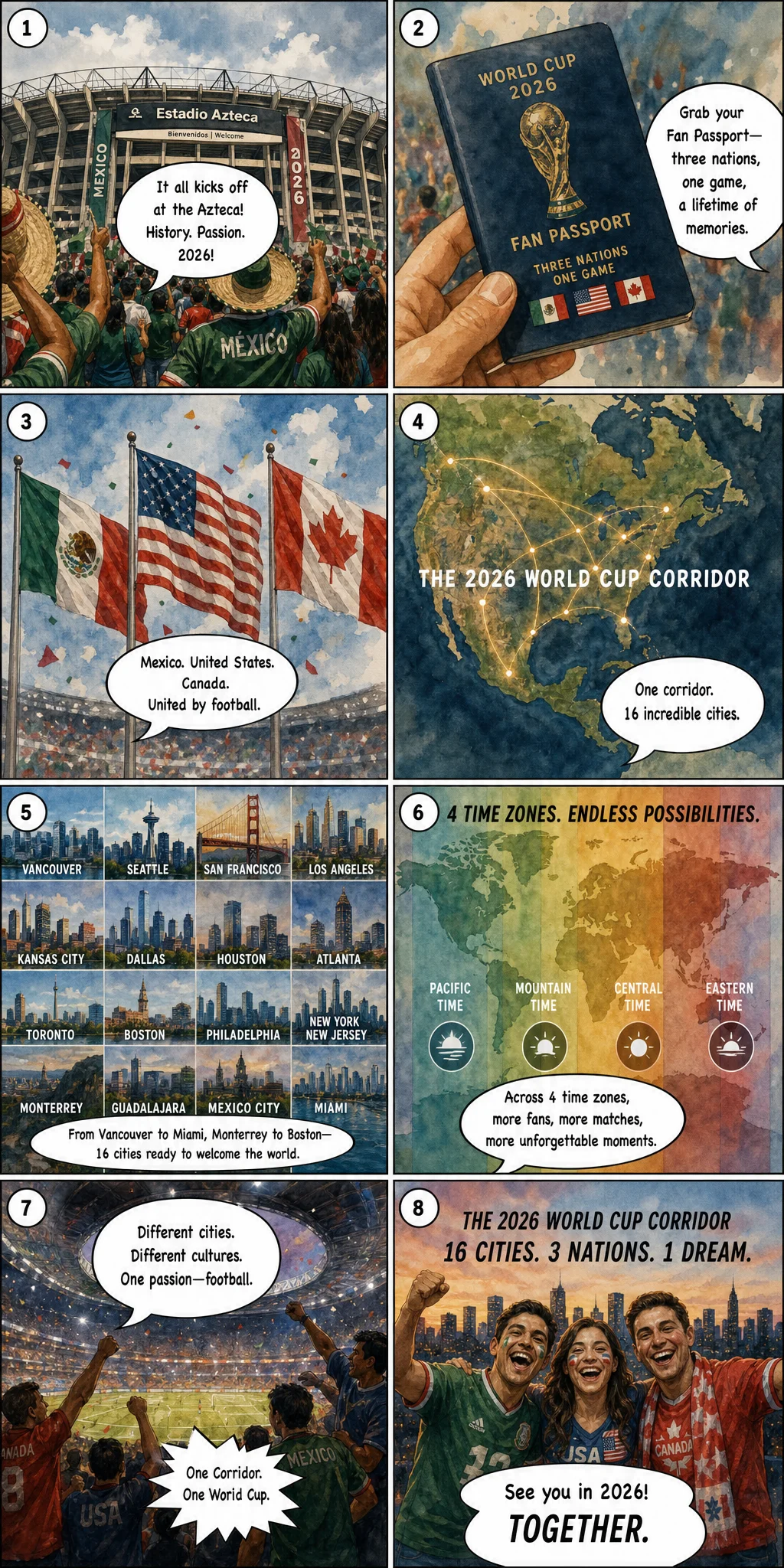
I contenuti dei fumetti e le statistiche delle partite sono solo a scopo di intrattenimento e possono contenere inesattezze. Per i dati precisi, consultare il sito ufficiale di riferimento.
# Tre Nazioni, Un Torneo: L'Architettura Senza Precedenti del Co-Hosting
I Mondiali del 2026 sono i primi nella storia a essere ospitati da tre nazioni — Stati Uniti, Canada e Messico — sotto un unico ombrello organizzativo. L'architettura logistica necessaria per realizzare un torneo in tre paesi sovrani, con tre sistemi di immigrazione separati, tre insiemi di leggi sul lavoro, tre ecosistemi di trasmissione nazionale e sedici stadi sparsi in un continente, è senza precedenti nella storia dello sport. Se questa architettura rappresenti il futuro dell'organizzazione di mega-eventi o un accomodamento una tantum delle circostanze geografiche e politiche uniche del Nord America è una delle domande centrali a cui il torneo risponderà.
La candidatura Unita, presentata formalmente alla FIFA nel marzo 2018 sotto lo slogan "United 2026", si basava su una premessa semplice: il Nord America possiede le infrastrutture esistenti per ospitare un Mondiale a quarantotto squadre senza i progetti di costruzione di stadi da miliardi di dollari che hanno gravato sui precedenti ospitanti. Il documento di candidatura contava 534 pagine che coprivano specifiche degli stadi, infrastrutture di trasporto, protocolli di sicurezza, capacità ricettiva e proiezioni di impatto economico. Sosteneva che la combinazione senza pari del continente di impianti di grande capienza — la maggior parte dei sedici stadi selezionati erano strutture esistenti della NFL o di grandi college di football americano che richiedevano solo modesti adattamenti per il calcio — sofisticazione del mercato di trasmissione, ecosistemi di sponsorizzazione aziendale e capacità dimostrata di ospitare enormi eventi sportivi lo rendevano l'unico candidato in grado di realizzare un torneo ampliato commercialmente di successo. Il comitato di valutazione della FIFA ha assegnato alla candidatura Unita un punteggio di 4.0 su 5.0, il più alto mai assegnato. Il Marocco, l'unico altro candidato, ha ottenuto 2.7. Il Congresso FIFA ha votato 134 a 65 a favore del Nord America il 13 giugno 2018, il giorno prima dell'apertura dei Mondiali 2018 in Russia.
La distribuzione delle partite all'interno della partnership riflette le dinamiche di potere tra i tre ospitanti con precisione matematica. Sessanta delle ottanta partite della fase a gironi e dei primi turni a eliminazione diretta si giocheranno negli Stati Uniti. Dieci ciascuno in Canada e Messico. Tutte le partite dai quarti di finale in poi si giocheranno in stadi americani, una decisione che riflette sia l'inventario senza pari degli Stati Uniti di impianti di grande capienza sia la logica commerciale che colloca le partite di maggior valore del torneo nella nazione ospitante con il più grande mercato di trasmissione nazionale. L'Estadio Azteca a Città del Messico ospiterà la partita inaugurale — un gesto simbolico verso l'unico stadio nel calcio mondiale che ha ospitato due precedenti finali di Coppa del Mondo, il terreno sacro dove Pelé ha vinto il suo terzo titolo nel 1970 e Maradona ha segnato il Gol del Secolo nel 1986. La finale si giocherà al MetLife Stadium nel New Jersey, una decisione guidata dalla matematica della programmazione delle trasmissioni, dalle considerazioni sui fusi orari per il pubblico televisivo europeo e dalla vicinanza dello stadio al mercato mediatico di New York, piuttosto che da qualsiasi particolare distinzione architettonica o storica.
La struttura di governance necessaria per gestire un torneo a tre nazioni è, di per sé, un caso di studio nella complessità istituzionale. Ogni nazione ospitante mantiene il proprio comitato organizzatore locale, il proprio collegamento governativo e la propria struttura di coordinamento della sicurezza, tutti operanti sotto un comitato centrale FIFA con sede a Miami. Tre sistemi di immigrazione separati elaboreranno milioni di visitatori internazionali — un tifoso con biglietti per partite in tutti e tre i paesi deve navigare tre diversi regimi di visto, tre diversi sistemi di autorizzazione elettronica di viaggio e tre diverse burocrazie di controllo di frontiera. La FIFA ha negoziato accordi speciali per visti del torneo con ciascun governo ospitante, ma l'esperienza pratica di attraversare da San Diego a Tijuana per una partita della fase a gironi, o da Detroit a Toronto, comporta protocolli di sicurezza e formalità di frontiera che nessun precedente Mondiale ha richiesto agli spettatori.
La struttura a tre nazioni crea anche complessità lavorative e occupazionali che i tornei a nazione singola evitano. I lavoratori degli stadi a Dallas operano sotto la legge del lavoro del Texas; i lavoratori degli stadi a Vancouver operano sotto gli standard occupazionali della Columbia Britannica; i lavoratori degli stadi a Città del Messico operano sotto le normative federali del lavoro messicane. I volontari — le decine di migliaia di lavoratori non retribuiti che formano la spina dorsale operativa di ogni Mondiale — sono soggetti a diverse definizioni legali di status di volontario in ciascun paese, con regole diverse che governano cosa si può chiedere ai volontari, quante ore possono lavorare e a quali tutele hanno diritto. Il dipartimento legale della FIFA ha passato anni ad armonizzare questi accordi tra le giurisdizioni, e lo sforzo di armonizzazione è di per sé un significativo risultato istituzionale, ma le tensioni e le incongruenze residue diventeranno visibili solo quando le richieste operative del torneo si scontreranno simultaneamente con tre diversi quadri giuridici.
La domanda che i Mondiali del 2026 pongono — se l'ospitalità a tre nazioni sia un modello replicabile per tornei futuri o un accomodamento una tantum delle circostanze uniche del Nord America — dipende dal successo operativo del torneo. Se i confini funzionano, se i voli si collegano, se le infrastrutture reggono, il modello a tre nazioni diventa un modello che le future candidature potranno citare. Se la logistica si frantuma — se i ritardi di frontiera bloccano gli spettatori, se le transizioni tra le sedi falliscono, se la distanza tra le città ospitanti produce distorsioni competitive che i tornei a nazione singola evitano — il torneo del 2026 sarà ricordato come un esperimento ambizioso la cui ambizione ha superato la sua esecuzione. La candidatura Unita si basava sulla capacità del Nord America di realizzare. Se la capacità si tradurrà in realizzazione sarà determinato non dai documenti di candidatura ma dall'estate del 2026 stessa.
La geografia dei Mondiali del 2026 è sbalorditiva per scala e pone sfide operative che nessun torneo precedente ha affrontato. I sedici stadi ospitanti si estendono per circa 4.500 chilometri dall'Estadio Azteca a sud fino al BC Place a Vancouver a nord, e quasi 4.000 chilometri da est a ovest attraverso gli Stati Uniti continentali. Questo non è un torneo contenuto in una singola regione metropolitana, come il Qatar 2022, o anche all'interno di una singola nazione europea di medie dimensioni. Questo è un torneo giocato attraverso un continente, e le distanze tra le sedi creano richieste logistiche che gli organizzatori del torneo hanno passato anni a modellare e preparare. Un tifoso che cerca di seguire la propria nazionale attraverso la fase a gironi potrebbe trovarsi a viaggiare da Città del Messico a Seattle a Toronto nell'arco di dieci giorni — un viaggio che copre più di 7.000 chilometri in aereo, attraversando due confini internazionali e passando attraverso tre diversi posti di controllo doganali e di immigrazione. L'impronta di carbonio di tale movimento, moltiplicata per milioni di spettatori, rappresenta un calcolo ambientale che la FIFA ha pubblicamente riconosciuto e privatamente faticato a conciliare con i suoi impegni dichiarati di sostenibilità. La valutazione dell'impatto ambientale del torneo, commissionata dalla FIFA e pubblicata nel 2024, ha proiettato che il trasporto aereo degli spettatori rappresenterebbe più dell'ottanta percento delle emissioni totali di carbonio del torneo — una cifra che evidenzia la tensione tra l'impronta geografica ampliata del torneo e la sua retorica ambientale.
Il processo di selezione degli stadi stesso ha rivelato le economie politiche in gioco all'interno della partnership a tre nazioni. Gli Stati Uniti hanno contribuito con undici dei sedici impianti, una dominanza che riflette sia il suo inventario senza pari di stadi di grande capienza sia la logica commerciale che guida le proiezioni di entrate della FIFA. Stadi della NFL come l'AT&T Stadium ad Arlington, il SoFi Stadium a Los Angeles e il Mercedes-Benz Stadium ad Atlanta offrono capacità superiori a 70.000, suite di lusso che generano entrate premium di ospitalità e il tipo di infrastrutture — parcheggi, collegamenti di trasporto pubblico, distretti di intrattenimento adiacenti — che i partner commerciali della FIFA richiedono. I costi di ristrutturazione per questi impianti sono minimi rispetto ai miliardi spesi per costruire nuovi stadi per il Qatar 2022 o il Brasile 2014, un fatto che era centrale nell'argomento economico della candidatura Unita. Il torneo può essere organizzato senza un'eredità di stadi elefante bianco perché gli stadi hanno già inquilini permanenti, flussi di entrate permanenti e ruoli permanenti nelle loro comunità. Questo è simultaneamente il più grande punto di forza della candidatura — l'evitamento di spese di costruzione dispendiose — e la fonte della sua critica più puntuale: il torneo si svolge in impianti progettati per il football americano, adattati per il calcio, e il carattere specifico di questi spazi differisce fondamentalmente dagli stadi specifici per il calcio che hanno ospitato tornei precedenti.
Il contributo ospitante del Canada rappresenta qualcosa di qualitativamente diverso da quello americano. La nazione ha ospitato esattamente una precedente partita di Coppa del Mondo maschile — una partita della fase a gironi durante il Messico 1986 — e la sua infrastruttura calcistica riflette una nazione dove lo sport ha storicamente occupato una posizione culturale secondaria dietro l'hockey su ghiaccio. Il BMO Field di Toronto ha richiesto un'espansione significativa per raggiungere il minimo di 45.000 posti che la FIFA impone per gli stadi del Mondiale, e il BC Place di Vancouver, sebbene architettonicamente distinto, è uno stadio coperto progettato principalmente per il football canadese. L'inclusione del Canada nella partnership ospitante non riguarda principalmente l'infrastruttura degli stadi. Riguarda la partnership politica, la solidarietà continentale e il valore simbolico di espandere l'impronta geografica della Coppa del Mondo in una nazione del G7 dove la presenza culturale del calcio sta crescendo più velocemente che in qualsiasi parte del mondo sviluppato. Il pubblico calcistico canadese — multiculturale, giovane e sempre più coinvolto con il gioco globale — rappresenta esattamente il gruppo demografico che la strategia commerciale della FIFA mira per la crescita a lungo termine.
Il contributo del Messico porta un peso storico che nessun foglio di calcolo delle specifiche degli stadi può catturare. L'Estadio Azteca — rinnovato ed espanso per il torneo del 2026 — è terreno sacro nella storia del calcio. È lo stadio dove Pelé ha vinto la sua terza e ultima Coppa del Mondo nel 1970, lo stadio dove Diego Maradona ha segnato il "Gol del Secolo" e la "Mano de Dios" nello stesso quarto di finale nel 1986, l'unico stadio sulla terra ad aver assistito a due finali di Coppa del Mondo. La decisione di assegnare la partita inaugurale a Città del Messico piuttosto che a Los Angeles o New York è stato un gesto verso questa storia — un riconoscimento che il ritorno della Coppa del Mondo in Nord America è anche un ritorno al suo impianto più leggendario, e che la continuità storica del torneo conta accanto alle sue ambizioni commerciali. La risonanza simbolica della partita inaugurale giocata all'Azteca, nella nazione che ha ospitato due precedenti Coppe del Mondo e che è stata il mercato calcistico più appassionato del Nord America per generazioni, trascende qualsiasi calcolo economico.