

L’uomo che porta il trofeo verso il 2026
La Coppa del Mondo arriva alla cerimonia d’apertura tra le braccia di un rappresentante dell’Argentina, la nazionale campione in carica, che si è aggiudicata la statuetta d’oro in Qatar il 18 dicembre 2022, in quella che è ampiamente e giustamente considerata la più grande
Pubblicato: June 6, 2026
I contenuti dei fumetti e le statistiche delle partite sono solo a scopo di intrattenimento e possono contenere inesattezze. Per i dati precisi, consultare il sito ufficiale di riferimento.
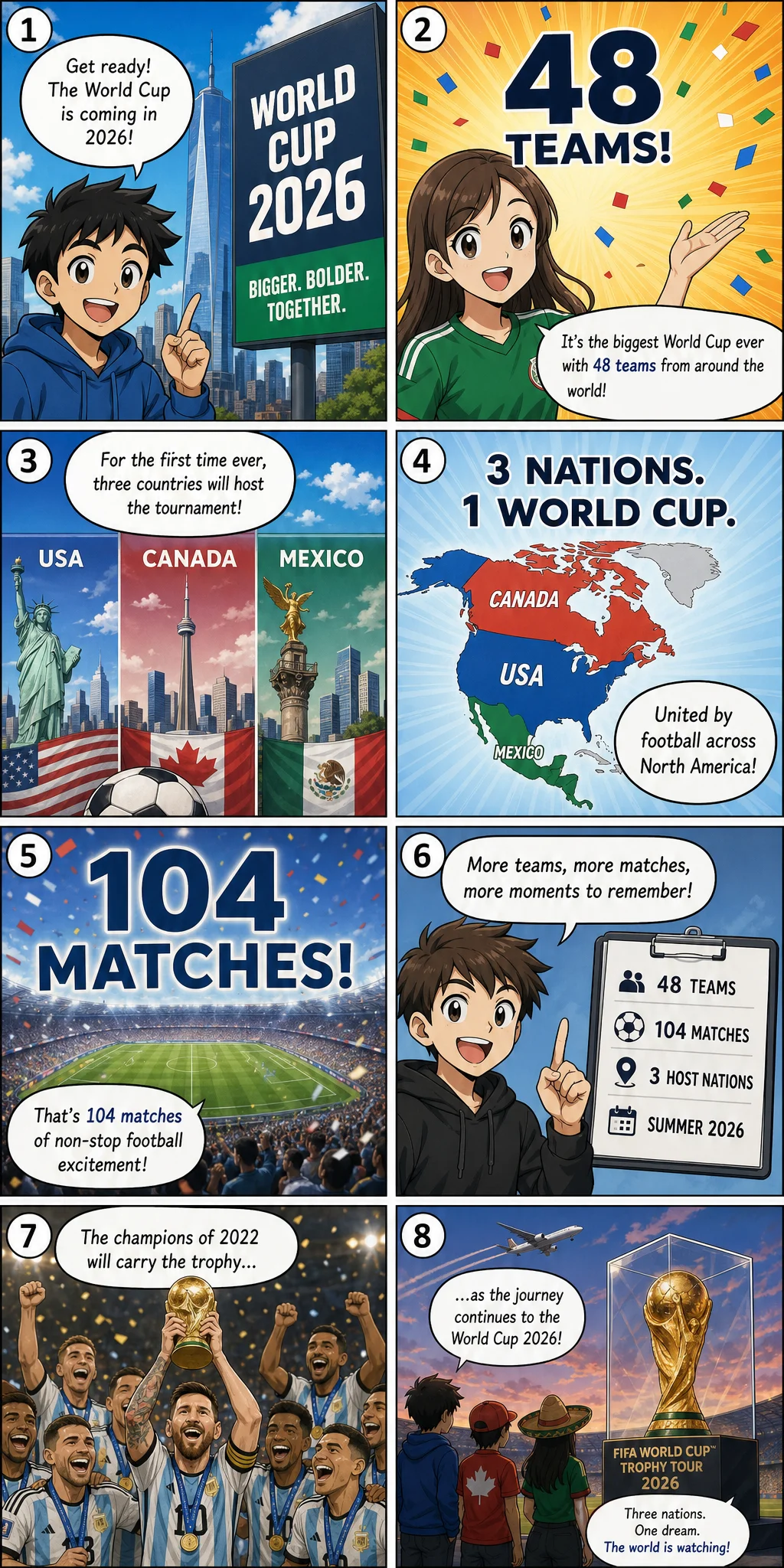
La Coppa del Mondo arriva alla cerimonia d'apertura tra le braccia di un rappresentante dell'Argentina, la campionessa in carica, la nazione che si è aggiudicata il trofeo d'oro in Qatar il 18 dicembre 2022, in quella che è ampiamente e ragionevolmente considerata la più grande finale di Coppa del Mondo mai giocata. Il giocatore scelto per questo onore camminerà sul campo dell'Estadio Azteca — lo stesso stadio dove Pelé sollevò la Coppa Jules Rimet nel 1970 e dove l'Argentina di Maradona sollevò l'attuale trofeo nel 1986 — e presenterà il premio al mondo prima di consegnarlo alla FIFA per la custodia fino alla finale del 19 luglio. Il messaggio della cerimonia è esplicito, antico e universalmente compreso in ogni cultura che abbia mai prodotto un campione che difende un titolo: questo è ancora nostro. Venite a prenderlo, se ci riuscite. Il messaggio è pronunciato con la sicurezza di una nazione che ha conquistato il mondo e con la consapevolezza, sepolta sotto la pompa della cerimonia, che difendere una Coppa del Mondo è tra le imprese più difficili nello sport — un'impresa riuscita solo due volte dalla Seconda Guerra Mondiale.
Il fardello del campione in carica è unico nello sport globale perché il ciclo della Coppa del Mondo opera su un ritmo quadriennale fondamentalmente diverso dai ritmi annuali delle competizioni di club o dai ritmi biennali dei campionati continentali. Quattro anni sono abbastanza perché la preparazione tattica di un avversario sia esaustiva, perché ogni partita della precedente campagna del campione venga analizzata fotogramma per fotogramma dagli analisti delle prestazioni nelle federazioni di tutto il mondo calcistico, perché gli schemi specifici che hanno prodotto la vittoria vengano compresi, contrastati e neutralizzati prima ancora che il campione inizi la sua difesa. Ogni avversario che l'Argentina affronterà nel 2026 avrà passato quattro anni a studiare esattamente come la squadra di Scaloni ha vinto in Qatar — le rotazioni a centrocampo, i sovraccarichi sulle fasce, i momenti specifici in cui una partita che avrebbe potuto essere persa è stata invece superata attraverso la sofferenza competitiva più che attraverso la brillantezza estetica. La squadra argentina del 2022 non era la rosa più talentuosa di quel torneo. Brasile e Francia potevano ciascuna rivendicare una qualità individuale superiore in un undici titolare. L'Argentina era la squadra più coesa — un gruppo forgiato attraverso una vittoria in Copa America nel 2021, una Finalissima contro il campione d'Europa Italia a Wembley, e il trauma specifico della sconfitta all'esordio contro l'Arabia Saudita che ha temprato i sopravvissuti in un collettivo la cui resilienza superava la somma delle sue parti. Quando l'Argentina è arrivata in finale contro la Francia, era stata messa alla prova in modi che nessuna simulazione poteva replicare e aveva superato ogni test attraverso una combinazione del genio di Messi, dell'operosità del centrocampo e del rifiuto della difesa di crollare quando il crollo sembrava inevitabile.
Il record storico dei campioni in carica è spietato e lo è diventato ancora di più nell'era moderna. Il Brasile ha vinto titoli consecutivi nel 1958 e nel 1962, l'unica nazione ad aver difeso con successo la Coppa del Mondo in quasi un secolo di competizione del torneo. L'Italia ha vinto nel 1934 e nel 1938, un double che attraversa l'era prebellica e che, in retrospettiva, sembra una competizione diversa giocata con regole diverse da uno sport diverso. Dal 1962, nessuna nazione ha difeso la Coppa del Mondo. Il modello dei tornei recenti è particolarmente minaccioso per l'Argentina: la Francia ha vinto nel 1998 ed è uscita nella fase a gironi nel 2002 senza segnare un gol. L'Italia ha vinto nel 2006 ed è uscita nella fase a gironi nel 2010, finendo ultima in un gruppo che includeva Paraguay, Slovacchia e Nuova Zelanda. La Germania ha vinto nel 2014 ed è uscita nella fase a gironi nel 2018, sconfitta dalla Corea del Sud in una partita che perseguiterà il calcio tedesco per generazioni. La Spagna, la squadra internazionale dominante dell'era 2008-2012, è uscita nella fase a gironi nel 2014, battuta cinque a uno dai Paesi Bassi in una partita che ha esposto ogni vulnerabilità che quattro anni di analisi avversaria avevano identificato. La maledizione del campione in carica non è una superstizione. È una caratteristica strutturale di un ciclo di torneo che dà agli avversari quattro anni per studiare il campione mentre la rosa del campione stesso invecchia, la sua coesione si erode e la fame che lo ha spinto alla vittoria diventa l'autocompiacimento che impedisce la sua difesa.
L'iterazione dell'Argentina del 2026 si è evoluta, e l'evoluzione è il risultato più impressionante di Scaloni dal trionfo in Qatar. La squadra che arriva in Nord America è meno dipendente da Messi, più coerente strutturalmente, costruita attorno a un trio di centrocampo composto da Enzo Fernandez, Alexis Mac Allister e Rodrigo De Paul che controlla le partite attraverso l'intelligenza posizionale e il pressing collettivo piuttosto che attraverso il genio individuale o i momenti di trascendenza che un Messi trentottenne, se dovesse giocare, può ancora fornire ma non può fornire in modo affidabile in sette partite in trentanove giorni. L'evoluzione dalla dipendenza all'indipendenza è stato l'arco tattico più significativo di qualsiasi nazionale dal Qatar, ed è stata intrapresa con la piena consapevolezza che la presenza di Messi — che parta titolare, che sia disponibile, che il torneo diventi il suo atto finale — non può essere il piano. Il piano deve funzionare senza di lui, e deve essere migliorato da lui, piuttosto che dipendere da lui. Che l'Argentina abbia raggiunto questa evoluzione mantenendo la sua identità competitiva — l'intensità da combattimento di strada, l'intelligenza nella gestione della partita, la capacità di soffrire senza spezzarsi — è un tributo all'abilità tecnica di Scaloni e alla comprensione del gruppo di giocatori che difendere un titolo richiede diventare una squadra diversa da quella che lo ha vinto.
Se l'Argentina possa diventare la prima nazione a difendere la Coppa del Mondo in sessantaquattro anni è la domanda che la presentazione del trofeo alla cerimonia d'apertura pone, e le cinque settimane che seguiranno negli stadi di tutto il Nord America daranno la risposta. Il formato del torneo richiede sette vittorie in sette partite. La geografia del continente richiede viaggi attraverso più chilometri di quanti qualsiasi precedente campione abbia sopportato in un singolo torneo. L'opposizione richiede livelli di prestazione che nessun campione in carica ha sostenuto dal 1962. Il fardello del campione in carica non è semplicemente la pressione delle aspettative. È il peso accumulato di ogni preparazione quadriennale degli avversari, ogni aggiustamento tattico progettato specificamente per te, ogni partita in cui l'avversario alza il suo livello perché tu sei il campione e battere il campione significa più che battere chiunque altro. Il trofeo arriva a Città del Messico in mani argentine. Se parta nelle stesse mani, o se il ciclo di ricambio quadriennale rivendichi un altro campione in carica, è la domanda attorno a cui la narrazione del torneo 2026 si organizzerà dal calcio d'inizio. L'Azteca ha già visto l'Argentina sollevare il trofeo. Se la vedrà sollevarlo di nuovo dipende da una generazione di calciatori argentini che non erano ancora nati nel 1986. La cattedrale assisterà a una coronazione o a un passaggio di consegne. Il calcio deciderà quale.