

Il designer che ha messo il trofeo proprio al centro del logo
Il logo dei Mondiali del 2026 è l’identità visiva più letterale nella storia del torneo, una scelta di design così diretta da diventare controversa proprio per il suo rifiuto di essere interessante. Il logo raffigura il vero trofeo della Coppa del Mondo —
Pubblicato: June 6, 2026
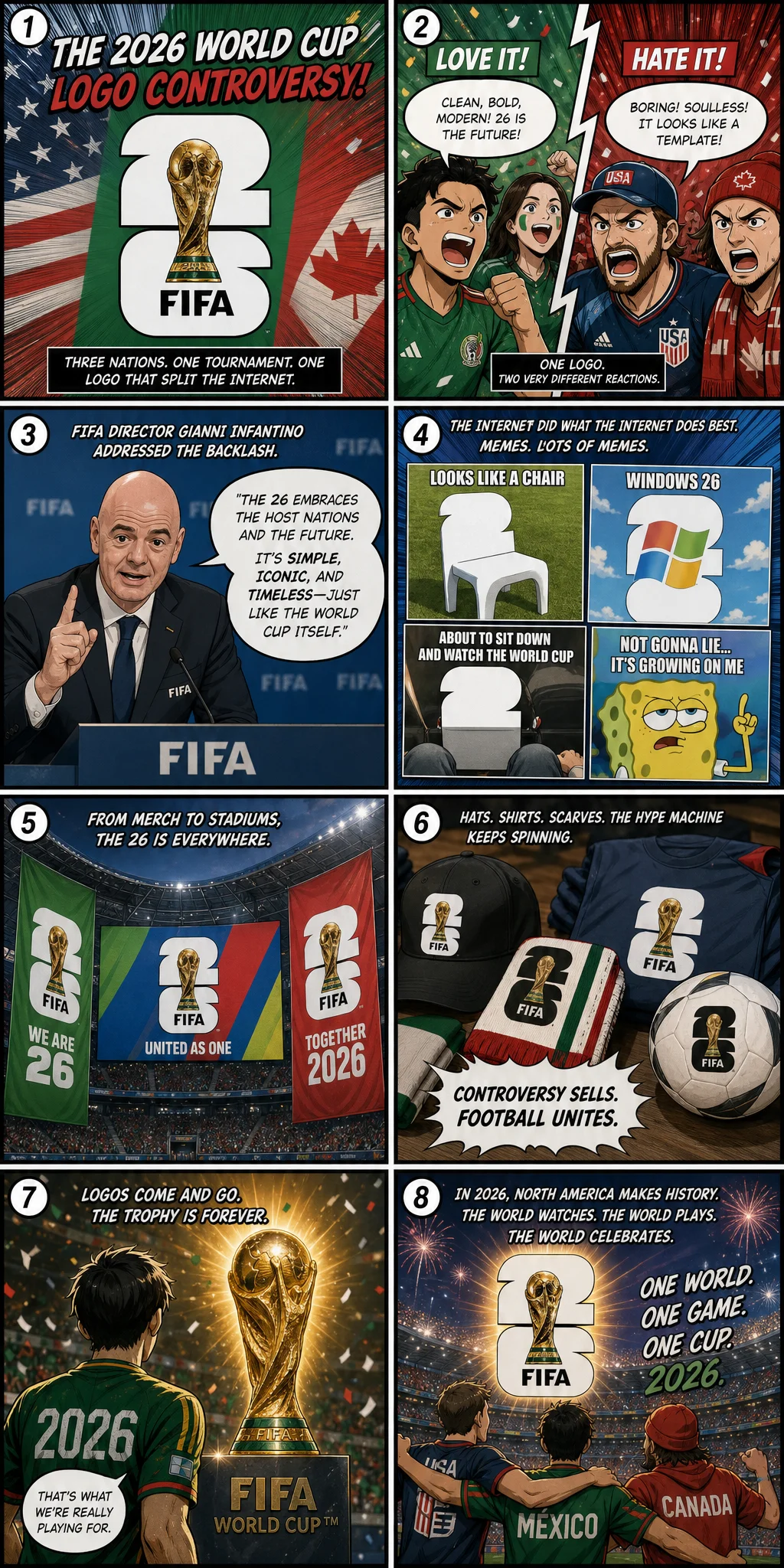
I contenuti dei fumetti e le statistiche delle partite sono solo a scopo di intrattenimento e possono contenere inesattezze. Per i dati precisi, consultare il sito ufficiale di riferimento.
Il logo dei Mondiali 2026 è l'identità visiva più letterale nella storia del torneo, una scelta progettuale così diretta da diventare controversa proprio per il suo rifiuto di essere interessante. Il logo presenta il vero trofeo della Coppa del Mondo — fotografato ad alta risoluzione, isolato su uno sfondo scuro, posizionato sotto l'anno "2026" e accanto alle parole "FIFA WORLD CUP" in un carattere sans-serif sobrio, scelto apparentemente per la leggibilità piuttosto che per la personalità. Non c'è astrazione. Nessuna rappresentazione stilizzata. Nessun grafico multicolore vorticoso progettato da un'agenzia di branding globale dopo diciotto mesi di focus group, consultazioni con le parti interessate e la diluizione iterativa che trasforma un'idea interessante in un compromesso approvato da un comitato. Il trofeo stesso, reso con fedeltà fotografica e autorità inconfondibile, funge da logo. L'argomentazione del design è implicita ma potente: questo oggetto non ha bisogno di interpretazione. La sua sagoma è la forma singola più riconoscibile nello sport globale. Disegnarne una versione sarebbe meno efficace che mostrarlo.
La reazione della comunità del design si è divisa lungo linee prevedibili che rivelano più sul rapporto tra la cultura professionale del design e la cultura sportiva popolare che sul logo stesso. I designer professionisti — in particolare quelli che praticano il design dell'identità del marchio come disciplina con una propria storia, canone e standard di realizzazione creativa — hanno criticato l'approccio come pigro, una resa dell'obbligo fondamentale del designer di interpretare, trasformare e creare significato attraverso il linguaggio visivo. La critica era che il logo 2026 è l'equivalente visivo di un segnaposto che l'agenzia ha dimenticato di sostituire prima della scadenza della presentazione al cliente, che qualsiasi studente di design moderatamente competente avrebbe potuto produrlo in un pomeriggio, che rappresenta l'abdicazione dell'ambizione creativa a favore della scelta più sicura possibile. La critica non era errata in senso tecnico, ma mancava il punto in un modo che rivelava il divario tra ciò che i designer apprezzano e ciò di cui il pubblico sportivo ha bisogno.
I tifosi di calcio hanno ampiamente abbracciato il logo, e il loro abbraccio è stato altrettanto rivelatore. La sagoma del trofeo della Coppa del Mondo — le due figure umane stilizzate che tengono un globo, rese in oro, create dallo scultore italiano Silvio Gazzaniga nel 1974 per sostituire il trofeo Jules Rimet che il Brasile aveva ritirato definitivamente — è probabilmente l'oggetto singolo più riconoscibile nello sport globale. La sua sagoma è universale attraverso lingue, culture e livelli di alfabetizzazione calcistica. Un bambino nel Senegal rurale, un tifoso in un bar di Buenos Aires, uno spettatore occasionale a Tokyo che non ha mai visto una partita intera — tutti riconoscono il trofeo e tutti comprendono l'istituzione che rappresenta. Qualsiasi tentativo di astrarre o stilizzare questo oggetto produrrebbe necessariamente qualcosa di meno iconico dell'originale, qualcosa che richiederebbe spiegazioni anziché riconoscimento immediato, qualcosa che darebbe priorità all'espressione creativa del designer rispetto alla comprensione immediata del pubblico. L'argomentazione del logo 2026 è che alcuni simboli non richiedono reinterpretazione perché il loro significato è già completo.
Il contrasto con i precedenti loghi dei Mondiali è istruttivo e colloca il design 2026 nell'evoluzione della filosofia dell'identità visiva della FIFA attraverso i decenni. Il logo dei Mondiali 2014 in Brasile raffigurava tre mani — verde, gialla e blu — che sollevano il trofeo in un gesto che combinava i colori nazionali con l'immagine universale del trionfo, un design che comunicava gioia e inclusività pur mantenendo il trofeo come ancoraggio visivo. Il logo 2018 in Russia posizionava il trofeo sopra una rappresentazione stilizzata dei successi del programma spaziale russo, con un motivo radiale che suggeriva sia un pallone da calcio che un casco da cosmonauta, una fusione concettuale ambiziosa che richiedeva spiegazioni significative ma premiava l'osservazione attenta. Il logo 2022 in Qatar rendeva il trofeo con linee fluide astratte ispirate al numero otto — il numero di stadi — e al simbolo dell'infinito, con colori marrone e oro tratti da motivi culturali qatarioti, un design elegante, concettualmente sofisticato e quasi del tutto incomprensibile per chi non avesse letto il comunicato stampa di accompagnamento. Il logo 2026 rappresenta una reazione contro questa traiettoria di crescente astrazione — un ritorno al letteralismo che il mercato nordamericano, con la sua preferenza per la comunicazione diretta rispetto alla sottigliezza concettuale, ha quasi certamente richiesto.
Il designer il cui nome è stato associato al progetto — commissionato tramite l'agenzia di branding della FIFA piuttosto che selezionato attraverso un concorso aperto, come è stata la prassi della FIFA per diversi cicli di tornei — ha difeso la decisione in una singola intervista che è diventata la dichiarazione definitiva sulla controversia: "Tutti sanno che aspetto ha il trofeo della Coppa del Mondo. Perché dovremmo disegnarne una versione quando possiamo mostrare la cosa reale?" L'argomentazione è disarmantemente semplice e difficile da confutare nei suoi stessi termini. Dà priorità al riconoscimento rispetto all'espressione, all'universalità rispetto all'originalità e alla comprensione del pubblico rispetto alla creatività del designer. Queste priorità sono l'opposto di ciò che l'educazione al design insegna e di ciò che la cultura del design premia. Sono anche, probabilmente, le priorità corrette per un'identità visiva che deve funzionare in duecento paesi, dozzine di lingue e ogni forma concepibile di media, dagli striscioni degli stadi alle notifiche dei telefoni cellulari.
La domanda che il logo solleva — se il letteralismo sia un fallimento del design o una strategia di design — non ha una risposta oggettiva, e il dibattito stesso è la caratteristica più interessante del design. Ciò che è certo è che il logo 2026 sarà riconosciuto all'istante da ogni persona che lo vede, in ogni paese in cui appare, senza spiegazioni o traduzione culturale. Se quel riconoscimento costituisca buon design o solo comunicazione efficace è una domanda che occuperà i critici del design molto tempo dopo la fine del torneo. Al logo non importa la risposta. Mostra il trofeo. Dice l'anno. Nomina l'evento. Comunica tutto ciò che deve comunicare e niente di più. La frustrazione della comunità del design per questo approccio è comprensibile. L'efficacia dell'approccio è innegabile. Il divario tra queste due affermazioni è lo spazio in cui vive il logo dei Mondiali 2026, imperturbabile dalla controversia, mostrando il trofeo al mondo e aspettando che il calcio inizi.