

Il pallone con la foglia d’acero del Canada, l’aquila del Messico e le stelle degli Stati Uniti
Il pallone ufficiale dei Mondiali 2026 porta sulla sua superficie tre emblemi nazionali, una sfida progettuale che nessun pallone da torneo aveva mai affrontato. Da quando l’era moderna dei palloni da gara con nome, marchio e marketing meticoloso è iniziata con
Pubblicato: June 6, 2026
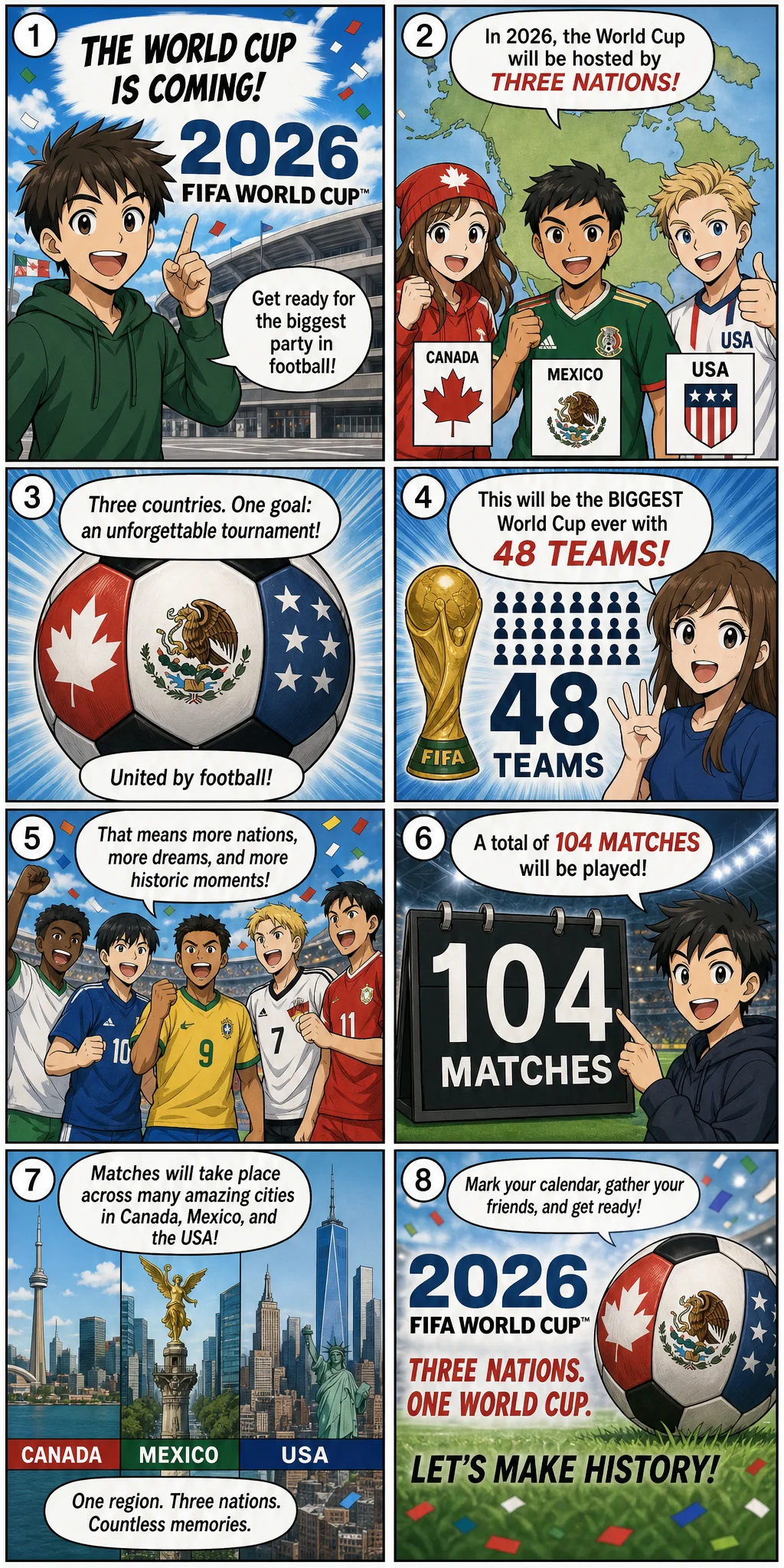
I contenuti dei fumetti e le statistiche delle partite sono solo a scopo di intrattenimento e possono contenere inesattezze. Per i dati precisi, consultare il sito ufficiale di riferimento.
Il pallone ufficiale del Mondiale 2026 presenta tre emblemi nazionali disposti sulla sua superficie, una sfida progettuale mai affrontata da nessun pallone da torneo precedente. Dall'era moderna dei palloni da gara con nome, marchio e marketing meticoloso, iniziata con l'Adidas Telstar nel 1970 — il celebre design bianco e nero creato appositamente per migliorare la visibilità nelle trasmissioni televisive in bianco e nero che ancora raggiungevano la maggior parte del pubblico globale — ogni pallone dei Mondiali ha rappresentato una singola nazione ospitante, traducendo i colori, l'iconografia e l'identità visiva di quel paese su una tela sferica. Il pallone del 2026 deve rappresentare tre ospiti contemporaneamente: la foglia d'acero del Canada, l'emblema dell'aquila e del serpente del Messico e le stelle degli Stati Uniti. Tre distinti linguaggi visivi nazionali, tre diverse tavolozze cromatiche, tre insiemi di significati simbolici, tutti esigenti uguale peso visivo e presenza simbolica nei limiti di un oggetto di circa ventidue centimetri di diametro, suddiviso in un numero finito di pannelli.
La soluzione progettuale è sottilmente intelligente in modi che premiano un esame attento. I tre simboli non competono per il predominio sulla superficie del pallone né lottano per la posizione come potrebbero fare emblemi nazionali disposti su un oggetto condiviso se il designer avesse tentato una disposizione simmetrica o un'area visiva uguale. Invece, sono disposti lungo le cuciture strutturali del pallone — i solchi aerodinamici che definiscono la configurazione moderna dei pannelli — ciascuno occupa il proprio pannello, ognuno ha il proprio spazio, collegati da una linea fluida che suggerisce, a seconda dell'interpretazione e della disposizione dell'osservatore, confini continentali condivisi, un percorso calcistico comune o semplicemente la logica progettuale di un oggetto sferico la cui superficie deve accogliere movimento e impatto insieme al simbolismo. I simboli sono resi in oro su sfondo bianco tradizionale, una scelta cromatica che li collega visivamente al trofeo stesso e afferma la loro equivalenza nell'impresa condivisa di ospitare: tre partner alla pari, nessuno subordinato agli altri, nessuno con primato visivo sugli altri. Il design sostiene implicitamente ciò che l'accordo di ospitalità a tre nazioni dichiara esplicitamente: questo torneo appartiene a tutte e tre le nazioni, non a un partner dominante con due ospiti la cui partecipazione è tollerata piuttosto che celebrata.
Le caratteristiche tecniche del pallone da gara rappresentano la continuazione dell'evoluzione decennale di Adidas, dalle sfere di cuoio cucite dell'era premoderna alle costruzioni sintetiche termosaldate del calcio contemporaneo. Il Telstar del 1970 introdusse la configurazione a trentadue pannelli di esagoni e pentagoni che divenne il vocabolario progettuale predefinito per i palloni da calcio nei successivi quattro decenni, un pattern così universale da apparire sugli stemmi dei club calcistici e diventare il simbolo visivo generico dello sport stesso. Il Teamgeist del 2006 ridusse il numero di pannelli a quattordici e introdusse la termosaldatura come alternativa alla cucitura, producendo un pallone con superficie più liscia e comportamento aerodinamico più prevedibile. Lo Jabulani del 2010 ridusse i pannelli a otto e divenne il pallone dei Mondiali più controverso dagli anni '60, con la sua traiettoria di volo imprevedibile nell'aria rarefatta delle sedi ad alta quota sudafricane, provocando lamentele dei portieri per cui i test aerodinamici di Adidas non avevano replicato le condizioni reali. Il Brazuca del 2014 tornò a una configurazione di pannelli più convenzionale e ripristinò in gran parte la fiducia dei portieri. Il Telstar 18 del 2018 e l'Al Rihla del 2022 continuarono la tendenza verso una maggiore texture superficiale e ottimizzazione aerodinamica, con ogni iterazione che produceva miglioramenti marginali nella consistenza del volo del pallone a diverse velocità di tiro e rotazioni.
Il pallone del 2026 incorpora la tecnologia del pallone connesso — sistemi di sensori integrati nella struttura del pallone che trasmettono dati in tempo reale su posizione, velocità, accelerazione e impatto agli ufficiali di gara e ai sistemi di trasmissione. Questa tecnologia, introdotta sperimentalmente nel pallone Al Rihla del torneo 2022, ha contribuito direttamente alle decisioni sul fuorigioco e alle determinazioni sulla linea di porta che hanno definito diverse partite a eliminazione diretta. L'iterazione del 2026 perfeziona il pacchetto di sensori, migliora la velocità di trasmissione dei dati e integra la tecnologia in modo più fluido nel design strutturale del pallone, riducendo le variazioni di peso ed equilibrio che i primi prototipi mostravano. I sensori non influenzano le caratteristiche di volo del pallone. Ne tracciano il movimento con sufficiente precisione da determinare, entro millimetri, l'esatto momento di contatto tra scarpino e pallone, informazioni che il sistema semiautomatico di fuorigioco utilizza per stabilire se un attaccante era in posizione di fuorigioco al momento del passaggio. Questa tecnologia ha eliminato una categoria di controversie arbitrali che ha afflitto i Mondiali per decenni. Ha anche introdotto una categoria di dibattito filosofico sul fatto che uno sport le cui regole sono state scritte per il giudizio umano debba essere arbitrato da sistemi la cui precisione supera la percezione umana.
La sfida progettuale del pallone trinazionale si estende oltre la disposizione degli emblemi, coinvolgendo la tavolozza cromatica, la texture superficiale e l'identità visiva che il pallone proietta quando ruota ad alta velocità — la condizione in cui la maggior parte degli spettatori, guardando in televisione da angolazioni che enfatizzano il movimento rispetto ai dettagli, lo percepirà effettivamente. Un pallone coperto da tre schemi cromatici in competizione apparirebbe come rumore visivo durante la rotazione, un caotico miscuglio di colori che oscura piuttosto che comunicare l'identità del torneo. La sobrietà del design — emblemi dorati su bianco, collegati da un'unica linea fluida, evitando la tentazione di riempire ogni pannello con simbolismo nazionale — non è solo una scelta estetica. È un requisito funzionale per un oggetto la cui identità deve essere leggibile in movimento, a distanza, attraverso telecamere televisive, schermi di smartphone e visuali dello stadio, da un pubblico che vedrà il pallone più spesso come una macchia che come un oggetto fermo. Il pallone non può parlare. Se potesse, direbbe ciò che il design già comunica attraverso la disposizione dei suoi simboli e la sobrietà della sua tavolozza: tutti sono i benvenuti qui, nessuno è secondario, e il torneo appartiene a tutte e tre le nazioni in egual misura. Il calcio deciderà se quella promessa — tre partner alla pari, che ospitano insieme, condividendo il palcoscenico — sopravviverà alla pressione competitiva di un torneo in cui le nazioni competono per il primato per definizione. Il pallone fa la promessa. Le partite metteranno alla prova se può essere mantenuta.