

ثلاث دول، طاولة واحدة، وحفلة غير مسبوقة
كأس العالم 2026 هو الأول في التاريخ الذي تستضيفه ثلاث دول — الولايات المتحدة، كندا، والمكسيك — تحت مظلة تنظيمية موحدة. البنية اللوجستية المطلوبة لإقامة بطولة عبر ثلاث دول ذات سيادة،
نُشر: June 6, 2026
محتوى القصص المصورة وإحصائيات المباريات هي لأغراض ترفيهية فقط وقد تحتوي على معلومات غير دقيقة. للحصول على بيانات دقيقة، يرجى الرجوع إلى الموقع الرسمي للمرجع.
# ثلاث دول، بطولة واحدة: الهندسة غير المسبوقة للاستضافة المشتركة
تُعد كأس العالم 2026 الأولى في التاريخ التي تستضيفها ثلاث دول — الولايات المتحدة وكندا والمكسيك — تحت مظلة تنظيمية موحدة. إن البنية اللوجستية المطلوبة لإقامة بطولة عبر ثلاث دول ذات سيادة، مع ثلاثة أنظمة هجرة منفصلة، وثلاث مجموعات من قوانين العمل، وثلاث منظومات بث وطنية، وستة عشر ملعبًا موزعة عبر قارة بأكملها، هي أمر غير مسبوق في تاريخ الرياضة. وما إذا كانت هذه البنية تمثل مستقبل استضافة الأحداث الكبرى أم أنها مجرد استثناء لمرة واحدة يتناسب مع الظروف الجغرافية والسياسية الفريدة لأمريكا الشمالية، هو أحد الأسئلة المحورية التي ستجيب عليها البطولة.
الملف الموحد، الذي قُدم رسميًا إلى الفيفا في مارس 2018 تحت شعار "يونايتد 2026"، بُني على فرضية واضحة: تمتلك أمريكا الشمالية البنية التحتية القائمة لاستضافة كأس عالم بمشاركة 48 فريقًا دون الحاجة إلى مشاريع بناء ملاعب بمليارات الدولارات التي أثقلت كاهل المستضيفين السابقين. امتد الملف إلى 534 صفحة غطت مواصفات الملاعب، والبنية التحتية للنقل، وبروتوكولات الأمن، وطاقة الإقامة، وتوقعات الأثر الاقتصادي. وجادل الملف بأن المزيج الفريد للقارة من الملاعب ذات السعة الكبيرة — معظم الملاعب الستة عشر المختارة كانت ملاعب قائمة لدوري كرة القدم الأمريكية أو كرة القدم الجامعية الكبرى، وتتطلب فقط تعديلات طفيفة لكرة القدم — وتطور سوق البث، ومنظومات الرعاية التجارية، والقدرة المثبتة على استضافة أحداث رياضية ضخمة، يجعلها المرشح الوحيد القادر على تقديم بطولة موسعة ناجحة تجاريًا. منحت لجنة التقييم في الفيفا الملف الموحد 4.0 من 5.0، وهي أعلى درجة تُمنح على الإطلاق. حصل المغرب، المرشح الوحيد الآخر، على 2.7. صوت مؤتمر الفيفا بأغلبية 134 مقابل 65 لصالح أمريكا الشمالية في 13 يونيو 2018، أي قبل يوم من انطلاق كأس العالم 2018 في روسيا.
يعكس توزيع المباريات داخل الشراكة ديناميكيات القوى بين المستضيفين الثلاثة بدقة رياضية. ستُلعب ستون مباراة من أصل مباريات دور المجموعات والأدوار الإقصائية المبكرة في الولايات المتحدة. وعشر مباريات في كل من كندا والمكسيك. جميع المباريات من دور ربع النهائي فصاعدًا ستُلعب في ملاعب أمريكية، وهو قرار يعكس كلاً من المخزون غير المسبوق للولايات المتحدة من الملاعب عالية السعة والمنطق التجاري الذي يضع أكثر مباريات البطولة قيمة في الدولة المضيفة التي تمتلك أكبر سوق بث محلي. سيستضيف ملعب أزتيكا في مكسيكو سيتي المباراة الافتتاحية — وهي لفتة رمزية تجاه الملعب الوحيد في كرة القدم العالمية الذي استضاف نهائيين سابقين لكأس العالم، الأرض المقدسة التي فاز فيها بيليه بلقبه الثالث عام 1970 وسجل فيها مارادونا هدف القرن عام 1986. ستُلعب المباراة النهائية على ملعب ميتلايف في نيو جيرسي، وهو قرار مدفوع بحسابات جدولة البث، واعتبارات المنطقة الزمنية لجماهير التلفزيون الأوروبية، وقرب الملعب من سوق الإعلام في نيويورك، وليس لأي تميز معماري أو تاريخي معين.
الهيكل الإداري المطلوب لتشغيل بطولة ثلاثية الدول هو في حد ذاته دراسة حالة في التعقيد المؤسسي. تحتفظ كل دولة مضيفة بلجنتها التنظيمية المحلية، وجهة اتصال حكومية، وهيكل تنسيق أمني خاص بها، وكلها تعمل تحت لجنة مركزية تابعة للفيفا مقرها ميامي. ستقوم ثلاثة أنظمة هجرة منفصلة بمعالجة ملايين الزوار الدوليين — المشجع الذي يحمل تذاكر لمباريات في الدول الثلاث يجب أن يتنقل بين ثلاثة أنظمة تأشيرات منفصلة، وثلاثة أنظمة تصريح سفر إلكتروني منفصلة، وثلاثة أجهزة مراقبة حدودية منفصلة. تفاوضت الفيفا على ترتيبات تأشيرات خاصة بالبطولة مع كل حكومة مضيفة، لكن التجربة العملية للعبور من سان دييغو إلى تيخوانا لحضور مباراة في دور المجموعات، أو من ديترويت إلى تورونتو، تتضمن بروتوكولات أمنية وإجراءات حدودية لم تتطلبها أي كأس عالم سابقة من الجماهير.
يخلق الهيكل الثلاثي أيضًا تعقيدات عمالية وتوظيفية تتجنبها البطولات ذات الدولة الواحدة. يعمل عمال الملاعب في دالاس بموجب قانون العمل في تكساس؛ ويعمل عمال الملاعب في فانكوفر بموجب معايير التوظيف في كولومبيا البريطانية؛ ويعمل عمال الملاعب في مكسيكو سيتي بموجب لوائح العمل الفيدرالية المكسيكية. المتطوعون — عشرات الآلاف من العمال غير المأجورين الذين يشكلون العمود الفقري التشغيلي لكل كأس عالم — يخضعون لتعريفات قانونية مختلفة لوضع المتطوع في كل دولة، مع قواعد مختلفة تحكم ما يمكن أن يُطلب من المتطوعين فعله، وعدد الساعات التي يمكنهم العمل فيها، والحماية التي يحق لهم الحصول عليها. أمضى القسم القانوني في الفيفا سنوات في تنسيق هذه الترتيبات عبر الولايات القضائية، ويُعد جهد التنسيق في حد ذاته إنجازًا مؤسسيًا كبيرًا، لكن التوترات والتناقضات المتبقية لن تظهر إلا عندما تتصادم المتطلبات التشغيلية للبطولة مع ثلاثة أطر قانونية مختلفة في وقت واحد.
السؤال الذي تطرحه كأس العالم 2026 — ما إذا كانت الاستضافة ثلاثية الدول نموذجًا قابلاً للتكرار للبطولات المستقبلية أم أنها مجرد استثناء لمرة واحدة يتناسب مع الظروف الفريدة لأمريكا الشمالية — يعتمد على النجاح التشغيلي للبطولة. إذا عملت الحدود، وإذا اتصلت الرحلات الجوية، وإذا صمدت البنية التحتية، يصبح النموذج الثلاثي قالبًا يمكن للعروض المستقبلية الاستشهاد به. إذا تصدعت الخدمات اللوجستية — إذا أدت التأخيرات الحدودية إلى تقطّع الجماهير، إذا فشلت انتقالات الملاعب، إذا أنتجت المسافات بين المدن المضيفة تشوهات تنافسية تتجنبها البطولات ذات الدولة الواحدة — فسيُتذكر كأس العالم 2026 كتجربة طموحة تجاوز طموحها التنفيذ. بُني الملف الموحد على قدرة أمريكا الشمالية على التنفيذ. وما إذا كانت القدرة ستترجم إلى تنفيذ سيتحدد ليس من خلال وثائق الملف بل من خلال صيف 2026 نفسه.
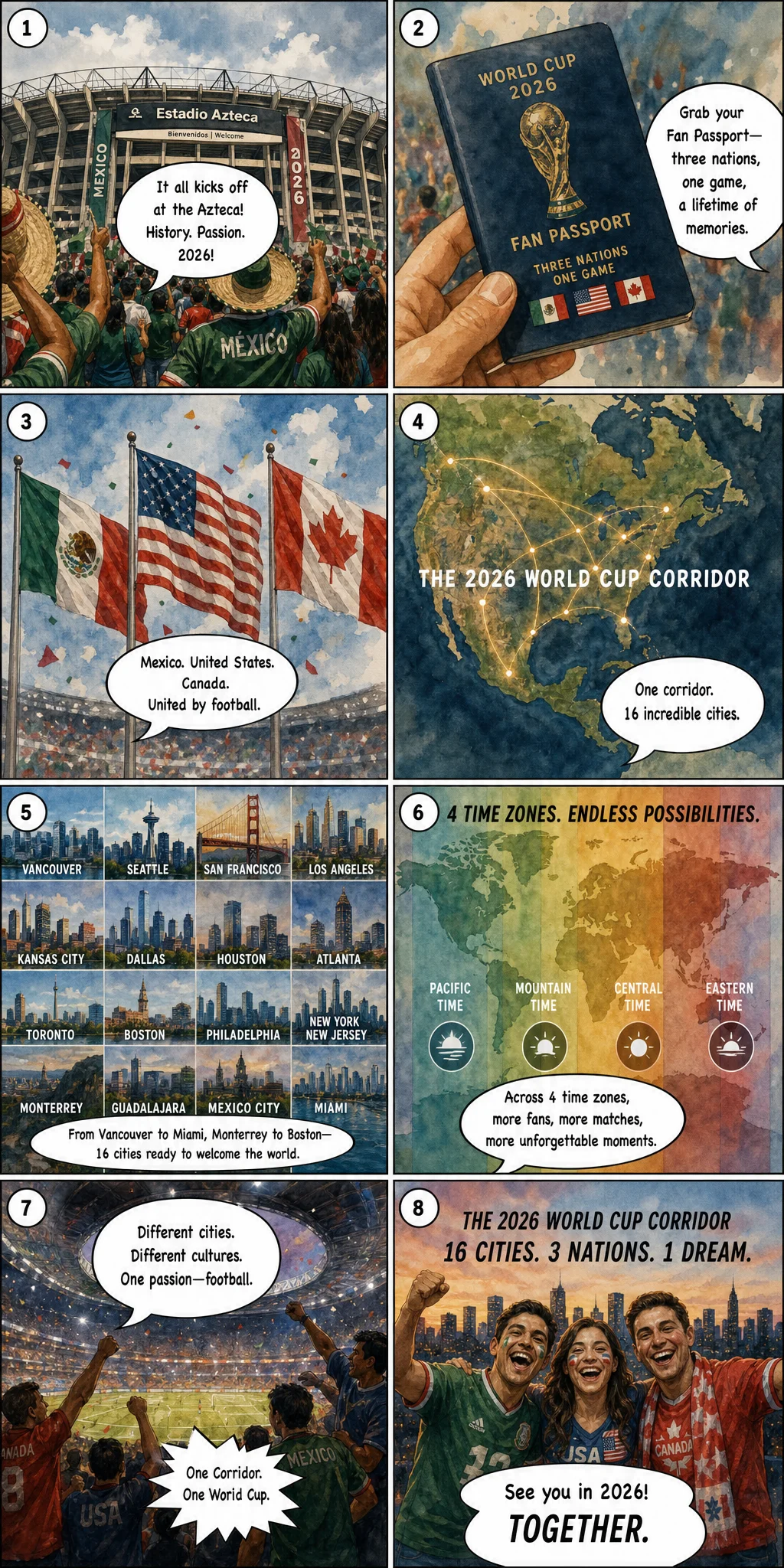
جغرافيا كأس العالم 2026 مذهلة من حيث الحجم وتطرح تحديات تشغيلية لم تواجهها أي بطولة سابقة. تمتد الملاعب الستة عشر المضيفة عبر حوالي 4500 كيلومتر من ملعب أزتيكا في الجنوب إلى ملعب بي سي بليس في فانكوفر في الشمال، وحوالي 4000 كيلومتر من الشرق إلى الغرب عبر الولايات المتحدة القارية. هذه ليست بطولة محصورة في منطقة حضرية واحدة، كما كانت قطر 2022، أو حتى داخل دولة أوروبية متوسطة الحجم. هذه بطولة تُلعب عبر قارة، والمسافات بين الملاعب تخلق متطلبات لوجستية أمضى منظمو البطولة سنوات في نمذجتها والاستعداد لها. المشجع الذي يحاول متابعة منتخبه الوطني خلال دور المجموعات قد يجد نفسه مسافرًا من مكسيكو سيتي إلى سياتل إلى تورونتو على مدى عشرة أيام — رحلة تغطي أكثر من 7000 كيلومتر جوًا، وتعبر حدين دوليين، وتمر عبر ثلاثة نقاط تفتيش جمركية وهجرة منفصلة. البصمة الكربونية لمثل هذه الحركة، مضروبة في ملايين المشجعين، تمثل حسابًا بيئيًا اعترفت به الفيفا علنًا وكافحت سرًا للتوفيق بينه وبين التزاماتها المعلنة بالاستدامة. توقع تقييم الأثر البيئي للبطولة، الذي كلفت به الفيفا ونشر في 2024، أن السفر الجوي للجماهير سيشكل أكثر من ثمانين بالمائة من إجمالي انبعاثات الكربون للبطولة — وهو رقم يسلط الضوء على التوتر بين البصمة الجغرافية الموسعة للبطولة وخطابها البيئي.
كشفت عملية اختيار الملاعب نفسها عن الاقتصادات السياسية المؤثرة داخل الشراكة الثلاثية. ساهمت الولايات المتحدة بإحدى عشر من أصل ستة عشر ملعبًا، وهي هيمنة تعكس كلاً من مخزونها غير المسبوق من الملاعب كبيرة السعة والمنطق التجاري الذي يحرك توقعات إيرادات الفيفا. تقدم ملاعب دوري كرة القدم الأمريكية مثل ملعب إيه تي آند تي في أرلينغتون، وملعب سوفي في لوس أنجلوس، وملعب مرسيدس-بنز في أتلانتا سعات تتجاوز 70,000 متفرج، وأجنحة فاخرة تولد إيرادات ضيافة متميزة، ونوع البنية التحتية — مواقف السيارات، ووصلات النقل العام، ومناطق الترفيه المجاورة — التي يتطلبها الشركاء التجاريون للفيفا. تكاليف تجديد هذه الملاعب ضئيلة مقارنة بالمليارات التي أنفقت على بناء ملاعب جديدة لقطر 2022 أو البرازيل 2014، وهي حقيقة كانت محورية في الحجة الاقتصادية للملف الموحد. يمكن إقامة البطولة دون إرث من الملاعب البيضاء لأن الملاعب لديها بالفعل مستأجرون دائمون، وتدفقات إيرادات دائمة، وأدوار دائمة في مجتمعاتهم. هذا هو في الوقت نفسه أعظم نقاط قوة الملف — تجنب الإنفاق المسرف على البناء — ومصدر أشد انتقاداته: البطولة تُقام في ملاعب مصممة لكرة القدم الأمريكية، ومُعدلة لكرة القدم، وتختلف الطابع المحدد لهذه المساحات اختلافًا جوهريًا عن الملاعب المخصصة لكرة القدم التي استضافت البطولات السابقة.
تمثل مساهمة كندا في الاستضافة شيئًا مختلفًا نوعيًا عن مساهمة أمريكا. استضافت الدولة مباراة واحدة بالضبط في كأس العالم للرجال — مباراة في دور المجموعات خلال كأس العالم 1986 في المكسيك — وتعكس بنيتها التحتية لكرة القدم أمة احتلت فيها الرياضة تاريخيًا موقعًا ثقافيًا ثانويًا خلف هوكي الجليد. تطلب ملعب بي إم أو في تورونتو توسعة كبيرة للوصول إلى الحد الأدنى البالغ 45,000 مقعد الذي تفرضه الفيفا لملاعب كأس العالم، وملعب بي سي بليس في فانكوفر، رغم تميزه المعماري، هو ملعب مقبب مصمم أساسًا لكرة القدم الكندية. إدراج كندا في شراكة الاستضافة لا يتعلق أساسًا بالبنية التحتية للملاعب. إنه يتعلق بالشراكة السياسية، والتضامن القاري، والقيمة الرمزية لتوسيع البصمة الجغرافية لكأس العالم إلى دولة من مجموعة السبع حيث ينمو الحضور الثقافي لكرة القدم أسرع من أي مكان في العالم المتطور. الجمهور الكندي لكرة القدم — متعدد الثقافات، شاب، ومنخرط بشكل متزايد مع اللعبة العالمية — يمثل بالضبط الفئة الديموغرافية التي تستهدفها استراتيجية الفيفا التجارية للنمو طويل الأجل.
تحمل مساهمة المكسيك ثقلًا تاريخيًا لا يمكن لأي جدول بيانات لمواصفات الملاعب التقاطه. ملعب أزتيكا — الذي تم تجديده وتوسعته لبطولة 2026 — هو أرض مقدسة في تاريخ كرة القدم. إنه الملعب الذي فاز فيه بيليه بكأسه العالمي الثالث والأخير عام 1970، والملعب الذي سجل فيه دييغو مارادونا "هدف القرن" و"يد الله" في نفس مباراة ربع النهائي عام 1986، والملعب الوحيد على وجه الأرض الذي شهد نهائيين لكأس العالم. كان قرار منح المباراة الافتتاحية لمكسيكو سيتي بدلاً من لوس أنجلوس أو نيويورك لفتة تجاه هذا التاريخ — اعترافًا بأن عودة كأس العالم إلى أمريكا الشمالية هي أيضًا عودة إلى أكثر ملاعبها شهرة، وأن استمرارية البطولة التاريخية مهمة إلى جانب طموحاتها التجارية. الصدى الرمزي للمباراة الافتتاحية التي تُلعب في الأزتيكا، في الأمة التي استضافت كأسين عالميتين سابقتين والتي كانت السوق الأكثر شغفًا بكرة القدم في أمريكا الشمالية لأجيال، يتجاوز أي حساب اقتصادي.