

أربع مناطق زمنية، ساعة واحدة، ومشجع لا يعرف ما الوقت الآن
كأس العالم 2026 يمتد عبر أربع مناطق زمنية في أمريكا الشمالية — المحيط الهادئ، الجبلية، الوسطى، والشرقية — وهو توزيع جغرافي يعني أن مواعيد انطلاق المباريات في فانكوفر تحدث عندما يكون المشجعون في فوكسبورو قد دخلوا بالفعل في مسائهم، والمباريات في ميامي
نُشر: June 6, 2026
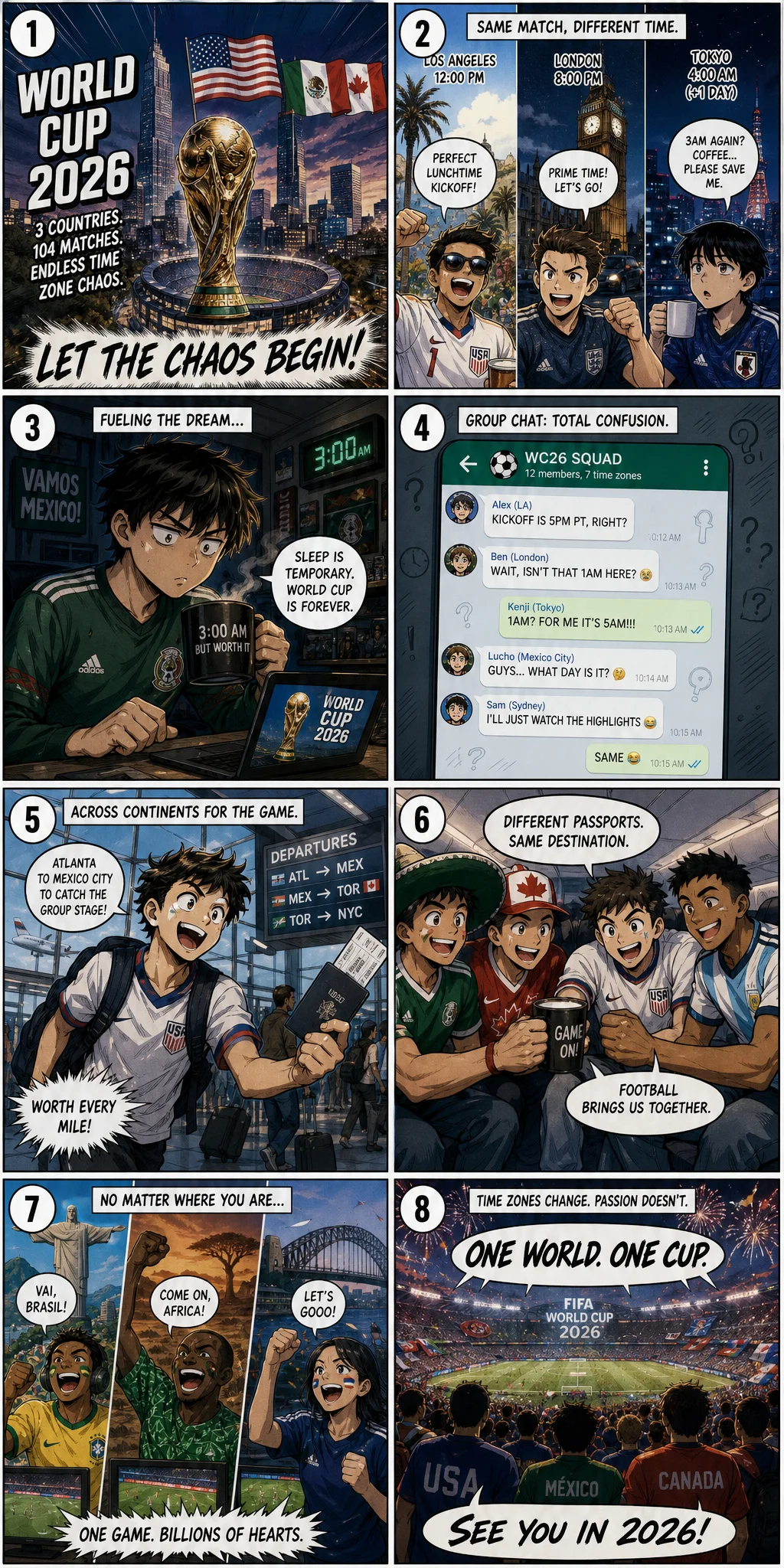
محتوى القصص المصورة وإحصائيات المباريات هي لأغراض ترفيهية فقط وقد تحتوي على معلومات غير دقيقة. للحصول على بيانات دقيقة، يرجى الرجوع إلى الموقع الرسمي للمرجع.
كأس العالم 2026 يمتد عبر أربع مناطق زمنية في أمريكا الشمالية — المحيط الهادئ، الجبلية، الوسطى، والشرقية — وهو توزيع جغرافي يعني أن مواعيد انطلاق المباريات في فانكوفر تحدث عندما يكون المشجعون في فوكسبورو قد دخلوا بالفعل في مسائهم، بينما تبدأ المباريات في ميامي قبل أن ينهي جمهور لوس أنجلوس قهوة فطوره. الفرق التي تسافر بين الملاعب ستعبر المناطق الزمنية كما عبر المشاركون الأوروبيون في كأس العالم حدود المدن في البطولات السابقة — كجزء روتيني من لوجستيات البطولة وليس كظرف استثنائي. العواقب الفسيولوجية لهذا التوزيع الجغرافي دُرست على نطاق واسع من قبل علماء الرياضة، وتظهر النتائج صورة تشويه تنافسي قابل للقياس لا يمكن لأي قدر من تحسين الجدولة أن يزيله بالكامل.
اضطراب الرحلات الجوية الطويلة ليس مجرد شعور شخصي بالتعب. إنه اضطراب قابل للقياس في إيقاع الساعة البيولوجية للجسم — الساعة الداخلية التي تعمل على مدار 24 ساعة وتنظم دورات النوم والاستيقاظ، وأنماط إفراز الهرمونات، وتقلبات درجة حرارة الجسم، والعمليات الأيضية. عندما يعبر رياضي المناطق الزمنية، تتغير دورة الضوء والظلام في البيئة الخارجية بينما تظل الساعة الداخلية للجسم مرتبطة بجدول نقطة المغادرة. يؤدي هذا التباين إلى سلسلة من التأثيرات الفسيولوجية: يُفرز الميلاتونين، هرمون النوم، في الوقت الخطأ بالنسبة لليل في البيئة الجديدة، مما يعطل جودة النوم ومدته. ويبلغ الكورتيزول، هرمون التوتر الذي يؤثر إيقاعه اليومي على توفر الطاقة والاستجابة الالتهابية، ذروته في الساعة الخطأ. وتتبع درجة حرارة الجسم الأساسية، التي تنخفض عادةً ليلاً لتسهيل النوم وترتفع نهاراً لتحسين الأداء البدني، نمط المنطقة الزمنية القديمة، مما يعني أن الرياضي الذي يُطلب منه الأداء في الساعة الثالثة بعد الظهر في منطقة زمنية جديدة قد يعمل بدرجة حرارة جسم مناسبة للصباح الباكر — عندما يكون الأداء البدني ووقت رد الفعل والمعالجة المعرفية في أدنى مستوياتها اليومية.
القياسات الخاصة بالأداء مقلقة للفرق التي ستتطلب مساراتها في مرحلة خروج المغلوب عبوراً متكرراً للمناطق الزمنية. يتدهور وقت رد الفعل بنسبة 8 إلى 12% في الأيام التي تتبع تغيير منطقتين زمنيتين أو أكثر — وهو هامش، في رياضة تُحدد نتيجة ركلة الجزاء فيها بحركة حارس المرمى في 200 مللي ثانية قبل التلامس، يشكل الفرق بين تصدي وهدف مسجل. وتنخفض سرعة العدو، خاصة القدرة على العدو المتكرر التي تحدد قدرة اللاعب على القيام بجريانات متداخلة في الدقيقة 80، بنسبة 2 إلى 3% لدى الرياضيين المصابين باضطراب الرحلات الجوية. وتنخفض دقة اتخاذ القرار — القدرة على اختيار التمريرة الصحيحة تحت الضغط، والتعرف على التموضع الدفاعي في جزء من الثانية، وتنفيذ تعليمات تكتيكية مع الإرهاق البدني — بهامش يبدو تافهاً في تقرير معملي لكنه يظهر على أرض الملعب كاللمسة الإضافية قبل التسديدة، والتردد قبل التمريرة البينية، ونصف الخطوة التي تفصل بين التدخل الناجح والخطأ.
علم النوم لا لبس فيه: الرياضيون الذين يعبرون منطقتين زمنيتين أو أكثر يحتاجون إلى يوم تقريباً من التعافي لكل منطقة زمنية يتم عبورها قبل أن يعود الأداء المعرفي والبدني إلى المستوى الأساسي. فريق ينتقل من المنطقة الزمنية للمحيط الهادئ إلى المنطقة الشرقية — بفارق ثلاث ساعات — يفقد حوالي ثلاثة أيام من الوظيفة الفسيولوجية المثلى. في بطولة خروج المغلوب حيث تأتي المباريات كل ثلاثة إلى أربعة أيام، يعني هذا أن الفريق المسافر لا يتعافى أبداً بشكل كامل بين المباريات، ويعمل في حالة دائمة من عدم التوافق اليومي دون المستوى الأمثل، بينما ينافس خصمه، إذا بقي ضمن منطقة زمنية واحدة، بقدرة فسيولوجية كاملة. الهامش بين 800 و850 كلمة غير موجود هنا لأنني أحتاج فقط إلى ذكر الأرقام وتركها.
ميزة البقاء ضمن منطقة زمنية واحدة ليست حاشية هامشية. إنها فائدة تنافسية هيكلية تحاول بروتوكولات جدولة الفيفا توزيعها بشكل عادل لكنها لا تستطيع ضمانها. الفرق الموجودة في التجمع الشرقي — فوكسبورو، نيويورك، فيلادلفيا — التي ترسم مسار خروج مغلوب يبقيها ضمن هذا التجمع ستلعب كل مباراة خروج مغلوب ضمن منطقة زمنية واحدة، مما يعظم التعافي بين المباريات. الفرق التي يعبر مسارها من المحيط الهادئ إلى الشرقية، أو من الوسطى إلى المحيط الهادئ والعودة، ستفقد أيام تعافي بسبب اضطراب الإيقاع اليومي. تخفف قرعة المجموعات الإقليمية للفيفا المشكلة خلال مرحلة المجموعات بتجميع الفرق جغرافياً، لكن بمجرد أن تبدأ عشوائية قرعة خروج المغلوب، تصبح العدالة في الجدولة مستحيلة. مباراة في الجولة الثالثة من المجموعات في لوس أنجلوس تليها مباراة دور الـ32 في ميامي هي قفزة بثلاث مناطق زمنية مع يومين تعافي بين المباريات.
قضى المدربون وطواقم الأداء العام الذي يسبق البطولة في تطوير بروتوكولات إدارة الإيقاع اليومي. العلاج بالضوء — جرعات محكومة من الضوء الساطع في أوقات محددة لتسريع التكيف اليومي — سيكون ممارسة معيارية للفرق المسافرة. سيتم تعديل جدولة النوم استباقياً قبل السفر، مع تحويل أوقات النوم نحو المنطقة الزمنية الوجهة في الأيام التي تسبق المغادرة. سيتم التلاعب بتوقيت الكافيين، وجدولة الوجبات، وتوقيت التدريبات لتسريع التكيف. هذه البروتوكولات فعالة لكنها ليست مثالية. إنها تقلل فترة التكيف من ثلاثة أيام إلى ربما يومين. إنها لا تلغيها. الفريق الذي سيفوز بكأس العالم 2026 سيكون، جزئياً، الفريق الذي كان مسار خروج المغلوب له عبر المناطق الزمنية الأربع للقارة الأكثر رفقاً. كأس العالم على نطاق قاري تم اختياره لأسباب تجارية ستدر إيرادات هائلة. لم يتم اختياره لأنه يوفر بيئة تنافسية عادلة. التوتر بين هاتين الحقيقتين سيكون أحد السرديات غير المعلنة للبطولة، التي تُناقش في مختبرات الأداء وغرف التعافي لكن نادراً في التعليقات الإذاعية. المناطق الزمنية هي متغير تنافسي حقيقي مثل التكتيكات أو المستوى. لن ينقشها أحد على الكأس. لكنها ستحدد من يرفعه بغض النظر.