

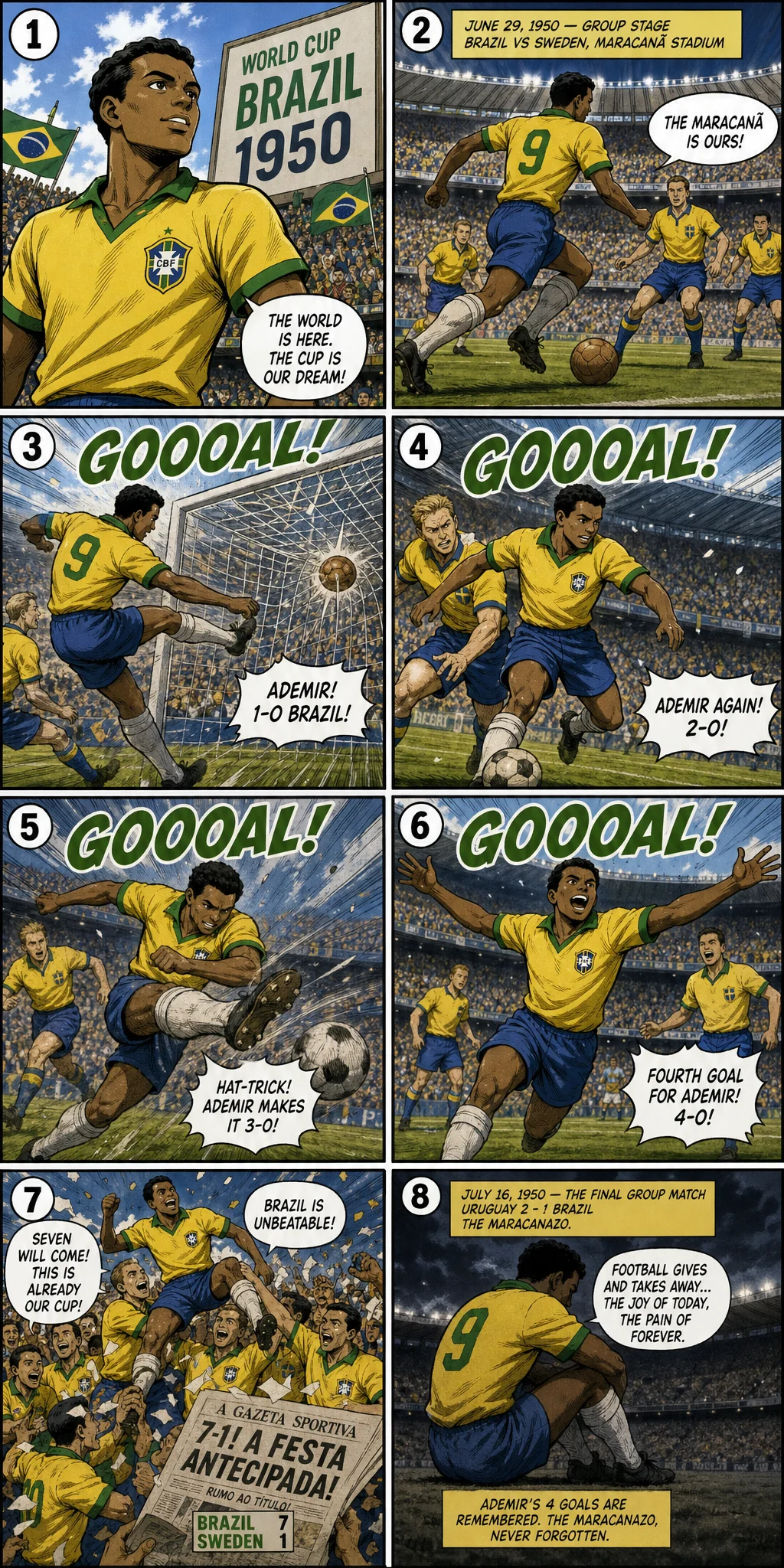
البرازيل 7-1 السويد: المذبحة التي جعلت أمة تعتقد أنها فازت
ماراكانازو 1950 — خسارة البرازيل 2-1 أمام الأوروغواي أمام ما يقرب من 200 ألف متفرج في ملعب ماراكانا، وهي الهزيمة الأكثر تدميراً في تاريخ كرة القدم — طاردت كرة القدم البرازيلية لمدة ثماني سنوات. القمصان البيضاء التي ارتديت في ذلك الظهيرة أصبحت بشكل دائم
نُشر: June 6, 2026
محتوى القصص المصورة وإحصائيات المباريات هي لأغراض ترفيهية فقط وقد تحتوي على معلومات غير دقيقة. للحصول على بيانات دقيقة، يرجى الرجوع إلى الموقع الرسمي للمرجع.
# البرازيل 5-2 السويد: نصف النهائي الذي طرد شبح "ماراكانازو"
كارثة ماراكانازو عام 1950 — خسارة البرازيل 2-1 أمام الأوروغواي أمام ما يقرب من 200 ألف متفرج في ملعب ماراكانا، الهزيمة الأكثر تدميراً في تاريخ كرة القدم — طاردت كرة القدم البرازيلية لثماني سنوات. القمصان البيضاء التي ارتُديت بعد ظهر ذلك اليوم أُحيلت إلى التقاعد الدائم، واعتُبرت ملعونة من قبل أمة لم تستطع فصل صدمة الهزيمة عن الملابس التي ارتداها لاعبوها أثناء خوضها. الأمة التي اخترعت "الجوغو بونيتو"، اللعبة الجميلة التي كانت تتحول بسرعة إلى اختصار للهوية الجمالية لكرة القدم البرازيلية، لم تفز أبداً بكأس العالم. الثقل النفسي لهذا الفشل، المضاعف بالصدمة المحددة لخسارة النهائي الفعلي على أرض الوطن أمام أكبر حشد جماهيري شُهد على الإطلاق، أصبح السمة المميزة لهوية كرة القدم البرازيلية — الجرح الذي حمله كل منتخب برازيلي لاحق إلى أرض الملعب. ثم جاء عام 1958، ونصف النهائي أمام السويد.
البرازيل 5، السويد 2. لم تكن المباراة مجرد انتصار، رغم أن النتيجة تسجل فوزاً شاملاً على الدولة المضيفة. كانت المباراة طرداً للأرواح — تم علناً، بقمصان الفريق الجديدة الصفراء والزرقاء والخضراء، أمام جمهور عالمي، ضد الأمة التي نظمت البطولة. القمصان كانت الفائزة في مسابقة تصميم وطنية، ابتكرها رسام صحفي يبلغ من العمر تسعة عشر عاماً يُدعى ألدير غارسيا شلي، واختيرت الألوان لتضم جميع العناصر الأربعة للعلم البرازيلي. لم يكن للقمصان تاريخ. لم تحمل أي صدمة. كانت جديدة، والجديد كان بالضبط ما تحتاجه كرة القدم البرازيلية.
كان بيليه في السابعة عشرة من عمره — لا يزال ينمو في جسد سيحمل في النهاية ثقل كونه أشهر رياضي على وجه الأرض، ولا يزال يطور الصفات البدنية التي ستجعله لا يُقهر، ويظهر بالفعل الذكاء المكاني الذي لا يمكن لأي تطور بدني محاكاته. هاتريكه في نصف النهائي ضد فرنسا أعلن وصوله. النهائي ضد السويد سيؤكد استمراريته. لكن نصف النهائي كان المباراة التي أرست النموذج: المراهق من باورو، اللاعب الذي أوصى طبيب الفريق النفسي بعدم اختياره، يعمل بمستوى جعل النجوم الراسخين حوله يبدون كممثلين مساعدين.
كان غارينشيا لا يُقهر. الطائر الصغير ذو الأرجل المعوجة — الوصف الجسدي ليس ازدرائياً بل دقيقاً تشريحياً، كانت أرجل غارينشيا معوجة بطريقة كان ينبغي أن تجعل الأداء الرياضي النخبوي مستحيلاً، وبدلاً من ذلك جعلته أحد أكثر المراوغين تدميراً في تاريخ كرة القدم — اعتُبر أيضاً غير لائق نفسياً من قبل طبيب الفريق النفسي. اللاعبان اللذان رفضهما الطبيب النفسي شكلا العمود الفقري الهجومي الذي دمر الدولة المضيفة. أمضى المدافعون السويديون المباراة وهم يطاردون ظلالاً ترتدي قمصاناً صفراء، ظلالاً تغير اتجاهها بفجأة لم تواجهها كرة القدم السويدية من قبل، ظلالاً بدت وكأنها موجودة في بُعد زمني مختلف عن المدافعين المكلفين بتعقبهم.
كان الفوز 5-2 في نصف النهائي هو الجسر بين الصدمة والانتصار. أثبتت البرازيل، في أكثر منتدى عام متاح، أن ماراكانازو لم يكن قدراً محتوماً. وأن القمصان البيضاء لم تكن ملعونة بل غير محظوظة فقط. وأن قدرة كرة القدم البرازيلية على التألق لم تكن منقوصة بهزيمة واحدة، مهما كانت مدمرة. النهائي، أيضاً ضد السويد — الشكل غير المعتاد لبطولة 1958 جمع نفس الفريقين في نصف النهائي والنهائي — أنتج فوزاً آخر 5-2، التتويج الذي أكد ما أثبته طرد الأرواح. سجل بيليه هدفين في النهائي، وأصبح المراهق بطلاً. أصبحت القمصان الصفراء دائمة، وارتباطها بالنصر محى ذكرى القمصان البيضاء وارتباطها بالصدمة. لم يكن نصف نهائي 1958 مجرد مباراة كرة قدم. كان استعادة كرة القدم البرازيلية لمستقبلها من شبح ماضيها. نجح طرد الأرواح. لم يرحل شبح 1950 بالكامل أبداً — لا ترحل أي صدمة كرة قدم برازيلية بالكامل أبداً — لكنه يعيش في ظل 1958 منذ ذلك الحين.
التحضير النفسي — أو، بشكل أكثر دقة، الثورة النفسية — التي سبقت حملة البرازيل عام 1958 تستحق التقدير كواحدة من أهم الابتكارات المؤسسية في تاريخ كرة القدم. كلف الاتحاد البرازيلي لكرة القدم، المصاب بصدمة ماراكانازو عام 1950 والخروج المخيب من ربع النهائي عام 1954، بإجراء تقييم نفسي للفريق بأكمله من قبل الدكتور جواو كارفاليش، رائد علم النفس الرياضي الذي كانت منهجيته متقدمة بعقود على عصرها. أجرى كارفاليش مجموعة من الاختبارات — تقييمات الذكاء، قوائم الشخصية، تقييمات المهارات الحركية — لكل لاعب قيد النظر للمنتخب الوطني، وكانت توصياته قاطعة. بيليه، خلص إلى أنه غير ناضج جداً، متخلف عاطفياً جداً، وهش نفسياً جداً لتحمل ضغط كأس العالم. غارينشيا كان أسوأ: عدواني، مندفع، غير قادر على اتخاذ القرارات المنضبطة التي تتطلبها كرة القدم في البطولات. أوصى كارفاليش بعدم اختيار كلا اللاعبين. تجاوزه الجهاز الفني البرازيلي بقيادة فيسنتي فيولا — قرار شكل السنوات السبعين التالية من تاريخ كرة القدم. اللاعبان اللذان اعتُبرا غير لائقين نفسياً لمنافسات كأس العالم أصبحا الأساس الذي بُني عليه أول انتصار برازيلي في كأس العالم، والطبيب النفسي الذي أوصى بعدم اختيارهما ظل يُذكر، بلطف وغير منصف، كالرجل الذي كاد يمنع البرازيل من اكتشاف مصيرها الكروي.
المنتخب السويدي الذي فككت البرازيل في نصف النهائي يستحق سياقه الخاص لأنه لم يكن، كما قد توحي النتيجة، خصماً ضعيفاً يمكن لأي فريق لائق هزيمته. السويد في عام 1958 كانت الدولة المضيفة، تلعب على أرضها أمام جمهور متحيز في ملعب أوليفي في غوتنبرغ، تحمل الزخم المحدد لفريق اجتاز مرحلة المجموعات وهزم حامل اللقب ألمانيا الغربية للوصول إلى نصف النهائي. ضم الفريق السويدي لاعبين كانوا محترفين في الدوري الإيطالي — الدوري الأكثر تنافسية في العالم في ذلك الوقت — بمن فيهم نيلس ليدهولم، الذي سيسجل هدف السويد الافتتاحي في النهائي، وغونار غرين، الذي شكل ثلث ثلاثي غري-نو-لي الأسطوري في ميلان. كانت السويد قوة كروية شرعية، فريقاً استحق مكانه في نصف النهائي من خلال أداء تنافسي وليس قرعة مواتية، وكان التوقع — في السويد بالتأكيد، وبدرجة أقل عالمياً — أن الدولة المضيفة ستنافس بجدية على البطولة. نتيجة 5-2 لم تكن تفاوتاً بين فريق عظيم وفريق ضعيف. كانت تفاوتاً بين فريق عظيم يعمل بمستوى غير مسبوق وفريق جيد جداً لم يكن لديه إجابة للتألق المحدد الذي كان يواجهه. لم يُذل اللاعبون السويديون؛ هُزموا على يد فريق كان سيهزم أي خصم في تلك الأمسية، يلعب كرة قدم لم يستطع أي خصم في تلك الحقبة احتواؤها.
التألق المحدد لغارينشيا في هذه المباراة — وطوال بطولة 1958 — يستحق الوصف بالتفصيل لأن السجل المكتوب واللقطات المحدودة المتاحة لا يمكنها التقاط ما أفاد المعاصرون بمشاهدته. مراوغة غارينشيا لم تكن الحيل الحديثة من الخطوات الوهمية والخدع، التسلسل المنسق للحركات الذي صقله لاعبو الأجنحة المعاصرون إلى علم. كانت شيئاً أكثر جوهرية وأكثر إزعاجاً: تغيير في الاتجاه بدا وكأنه ينتهك فيزياء الحركة البشرية، قدرة على تحويل وزن جسده فورياً من اتجاه إلى الاتجاه المعاكس دون الحركة الانتقالية التي يعتمد عليها المدافعون لتعقب المهاجمين. المدافعون السويديون — لاعبو كرة قدم محترفون يلعبون على أعلى مستوى تقدمه الرياضة — لم يكونوا غير أكفاء. كانوا يواجهون رياضياً لا يمكنهم معالجة أنماط حركته، لا تتوافق قدراته البدنية مع أي خصم واجهوه سابقاً. الأرجل المعوجة التي تسببت في شك كارفاليش في لياقة غارينشيا النفسية لم تكن إعاقة؛ كانت ميزة تنافسية، تنتج ملفاً بيوميكانيكياً جعل حركة غارينشيا غير متوقعة حرفياً. لم يستطع المدافعون توقع اتجاهه لأن جسده لم يوجه الاتجاه بالطريقة التي توجه بها الأجسام البشرية الطبيعية الاتجاه. نصف نهائي 1958 كان المباراة التي اكتشف فيها العالم هذا، والاكتشاف غيّر الافتراضات التكتيكية التي نُظمت عليها كرة القدم الدولية.
تمتد أهمية نصف نهائي 1958 إلى ما هو أبعد بكثير من النتيجة المحددة التي أنتجها. لقد أسس نموذجاً — المنتخب البرازيلي كحامل لواء الجمالية في كرة القدم العالمية، اللعبة الجميلة كهدية البرازيل للرياضة — الذي حدد هوية كرة القدم البرازيلية لسبعة عقود. كل منتخب برازيلي منذ 1958 قُورن بالمعيار الذي أُسس في السويد: الإبداع، الفرح، القدرة المحددة على إنتاج كرة قدم فعالة وجميلة في آن واحد. عبء هذا المعيار هائل، والمنتخبات البرازيلية التي فشلت في تحقيقه — فريق 1974 القوي جسدياً لكن المحدود جمالياً، فريق 1994 المنظم دفاعياً لكن المقيد إبداعياً، فريق 2014 الذي عانى من صدمته الوطنية بهزيمة 7-1 أمام ألمانيا — انتُقدت ليس لفشلها في الفوز بل لفشلها في الفوز بجمال. نصف نهائي 1958 خلق هذا التوقع. فوز 5-2 على السويد أظهر أن كرة القدم البرازيلية يمكن أن تكون منتصرة ومتعالية في آن واحد، والمزيج المحدد من النصر والجمال كان المعيار الذي حوكم عليه كل جيل برازيلي لاحق. نصف نهائي 1958 كان طرداً للأرواح. كان أيضاً خلق معيار لم يتمكن أي فريق لاحق — ولا حتى فريق 1970 الذي يُعتبر على نطاق واسع أعظم فريق في تاريخ كرة القدم — من تحقيقه بالكامل. طُرد شبح 1950. شبح 1958 — توقع الكمال، الطلب على الجمال، العبء المحدد لكونك الفريق الذي يحدد ما يمكن أن تكون عليه كرة القدم — طارد كرة القدم البرازيلية منذ ذلك الحين.