

三か国、一つのテーブル、そして前例なき祭典
2026年ワールドカップは、史上初めてアメリカ、カナダ、メキシコの三か国が統一された組織体制のもとで開催する大会である。三つの主権国家にまたがる大会を実現するために必要な物流の枠組みは、
公開日: June 6, 2026
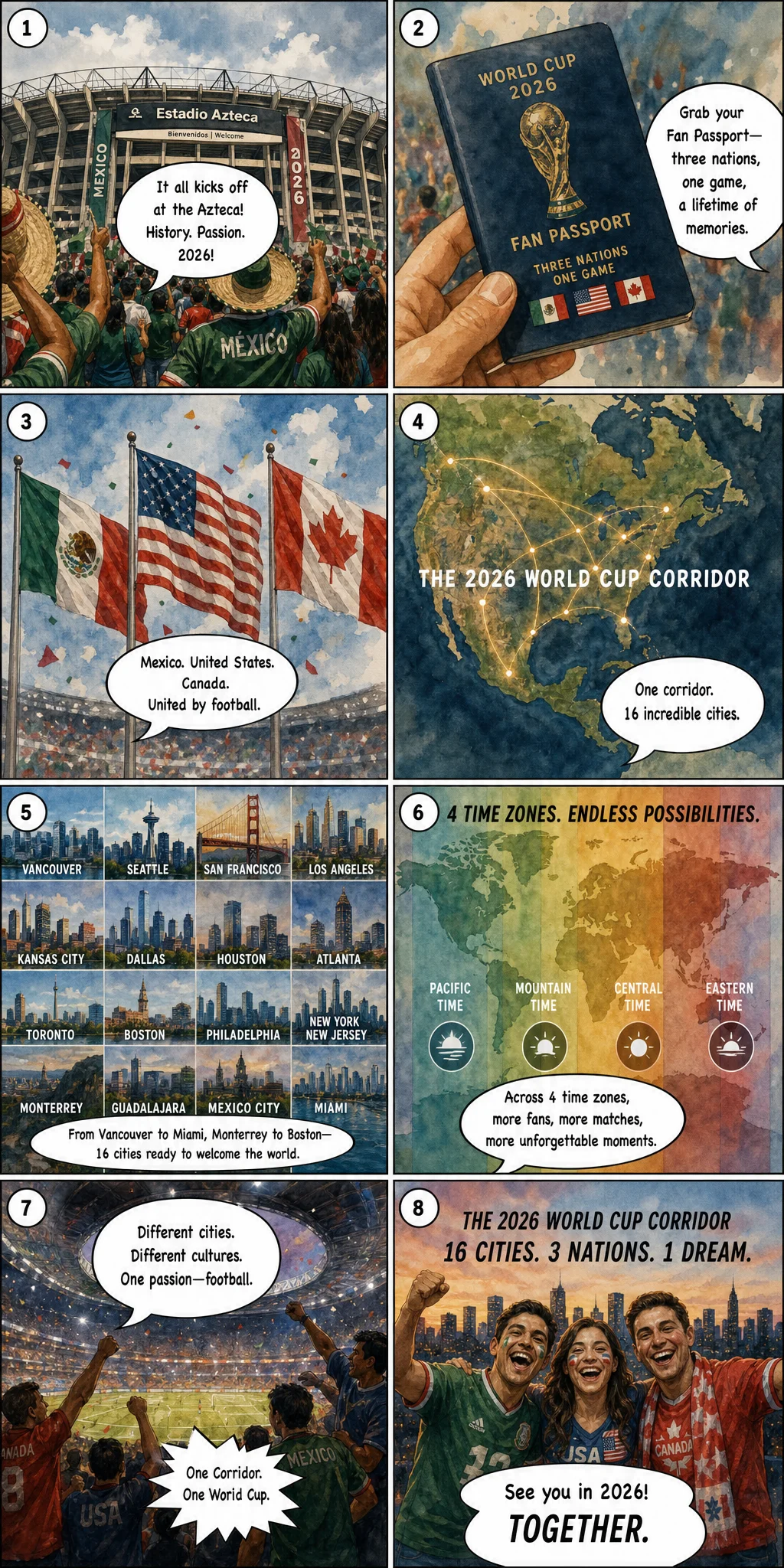
コミックの内容と試合統計は娯楽目的のみであり、不正確な情報を含む可能性があります。正確なデータについては、参照元の公式ウェブサイトをご確認ください。
# 三国共襄盛举:联合主办的前所未有之架构
2026年世界杯是历史上首次由三个国家——美国、加拿大和墨西哥——在统一组织框架下联合主办。要在三个主权国家、三套移民体系、三套劳动法规、三个全国性广播生态系统以及遍布整个大陆的十六座体育场之间完成赛事交付,其后勤架构在体育史上前所未有。这一架构究竟是大型赛事主办的未来模式,还是对北美独特地理与政治环境的一次性妥协,将是本届赛事所要回答的核心问题之一。
2018年3月,联合申办方以"United 2026"为旗帜正式向国际足联提交申办方案,其核心理念简单明了:北美拥有现成的基础设施,能够承办48支球队的世界杯,无需像此前主办国那样投入数十亿美元新建体育场。申办文件长达534页,涵盖体育场规格、交通基础设施、安保方案、住宿容量及经济影响预测。文件指出,北美拥有无与伦比的大型场馆资源——16座入选体育场中大部分为现有NFL或大学橄榄球设施,仅需适度改造即可用于足球比赛——加之广播市场成熟度、企业赞助生态系统以及举办大型体育赛事的既有能力,使其成为唯一能够交付商业成功的扩军版世界杯的候选者。国际足联评估委员会给予联合申办方4.0分(满分5.0分),这是有史以来的最高评分。另一候选国摩洛哥仅得2.7分。2018年6月13日,即2018年俄罗斯世界杯开幕前一天,国际足联大会以134票对65票通过北美主办方案。
赛事场次在三方之间的分配以数学般的精确反映了主办国之间的权力格局。80场小组赛及早期淘汰赛中有60场将在美国举行,加拿大和墨西哥各10场。从四分之一决赛开始的所有比赛均在美国体育场进行,这一决定既反映了美国无与伦比的大型场馆储备,也体现了将赛事最具价值的场次安排在国内广播市场最大的主办国的商业逻辑。墨西哥城的阿兹特克体育场将承办揭幕战——这是对世界足坛唯一一座举办过两届世界杯决赛的体育场的象征性致敬,也是贝利于1970年夺得第三冠、马拉多纳于1986年上演"世纪进球"的圣地。决赛将在新泽西州的大都会人寿体育场举行,这一决定更多基于转播排期数学、欧洲电视观众的时区考量以及该体育场毗邻纽约媒体市场的区位优势,而非其建筑或历史特色。
运营三国联合赛事所需的治理结构本身就是制度复杂性的典型案例。每个主办国都设有自己的地方组委会、政府联络处和安保协调机构,全部在位于迈阿密的国际足联中央委员会领导下运作。三套独立的移民系统将处理数百万国际游客——持有三国比赛门票的球迷必须应对三种签证制度、三种电子旅行授权系统和三种边境管控官僚体系。国际足联已与各主办国政府协商了特殊的赛事签证安排,但从圣地亚哥前往蒂华纳观看小组赛,或从底特律前往多伦多的实际体验,将涉及此前任何一届世界杯都未曾要求观众面对的安全协议和边境手续。
三国结构还带来了单一主办国所避免的劳动与就业复杂性。达拉斯的体育场工作人员受德克萨斯州劳动法管辖;温哥华的体育场工作人员受不列颠哥伦比亚省就业标准约束;墨西哥城的体育场工作人员则受墨西哥联邦劳动法规管理。志愿者——构成每届世界杯运营骨干的数万名无薪工作者——在每个国家对志愿者身份的法律定义各不相同,关于志愿者可被要求从事的工作、工作时长以及应享保护的规定也各有差异。国际足联法律部门花费多年时间协调各司法管辖区的安排,这一协调努力本身就是一项重大的制度成就,但残留的紧张关系和矛盾只有在赛事运营需求同时与三套不同法律框架碰撞时才会显现。
2026年世界杯提出的问题——三国联合主办是可复制的未来模式,还是对北美独特环境的一次性妥协——取决于赛事的运营成功与否。如果边境运转顺畅,航班衔接有序,基础设施经受考验,那么三国模式将成为未来申办方可引用的范本。如果后勤体系出现裂痕——边境延误导致观众滞留,场馆转换失败,主办城市之间的距离造成单一主办国赛事所避免的竞争失衡——那么2026年世界杯将被铭记为一场雄心超越执行的实验。联合申办方案建立在北美的交付能力之上。能力能否转化为现实,不取决于申办文件,而取决于2026年夏天本身。
2026年世界杯的地理跨度令人震惊,其运营挑战是此前任何一届赛事都未曾面对的。16座主办体育场从南部的阿兹特克体育场到北部的温哥华BC广场,横跨约4500公里;从东到西横跨美国本土近4000公里。这不是像2022年卡塔尔那样局限于单一都会区的赛事,甚至不是局限于一个中等规模欧洲国家的赛事。这是一场横跨整个大陆的比赛,场馆之间的距离产生了赛事组织者多年来建模和准备的物流需求。试图追随本国球队征战小组赛的球迷,可能需要在十天内从墨西哥城前往西雅图再到多伦多——空中行程超过7000公里,穿越两个国际边境,经过三处独立的海关和移民检查站。这种移动的碳足迹,乘以数百万观众,构成了国际足联公开承认并私下努力与其可持续发展承诺相协调的环境计算。国际足联委托并于2024年发布的赛事环境影响评估预测,观众航空旅行将占赛事总碳排放量的80%以上——这一数字凸显了赛事扩大地理足迹与其环保言论之间的张力。
体育场选址过程本身揭示了三国伙伴关系中的政治经济格局。美国贡献了16座场馆中的11座,这一主导地位既反映了其无与伦比的大型场馆储备,也体现了驱动国际足联收入预测的商业逻辑。AT&T体育场(阿灵顿)、SoFi体育场(洛杉矶)和梅赛德斯-奔驰体育场(亚特兰大)等NFL场馆容量超过7万人,拥有产生高端款待收入的豪华包厢,以及国际足联商业合作伙伴所需的配套设施——停车场、公共交通连接、毗邻的娱乐区。这些场馆的改造费用与卡塔尔2022年或巴西2014年新建体育场花费的数十亿美元相比微不足道,这一事实是联合申办方案经济论点的核心。赛事可以在没有"白象"场馆遗留问题的情况下举办,因为这些体育场已有永久租户、永久收入来源和永久社区角色。这既是申办方案的最大优势——避免了浪费性的建设支出——也是其最尖锐批评的来源:赛事在专为美式橄榄球设计、为足球改造的场馆中举行,这些空间的特定性质与以往赛事专用的足球场馆有着根本区别。
加拿大的主办贡献在性质上与美国的贡献截然不同。该国此前仅举办过一场男子世界杯比赛——1986年墨西哥世界杯期间的一场小组赛——其足球基础设施反映了一个冰球历史上占据文化次要地位的国家的现状。多伦多的BMO球场需要大幅扩建才能达到国际足联对世界杯场馆要求的4.5万个座位最低标准;温哥华的BC广场虽建筑风格独特,但主要设计用于加拿大式橄榄球。加拿大加入主办伙伴关系主要并非出于场馆基础设施考虑,而是基于政治伙伴关系、大陆团结以及将世界杯地理足迹扩展到一个足球文化发展速度超过任何发达国家的七国集团成员国的象征价值。加拿大足球观众——多元文化、年轻且日益关注全球赛事——正是国际足联商业战略瞄准长期增长的人口群体。
墨西哥的贡献承载着任何体育场规格表格都无法捕捉的历史分量。为2026年赛事翻新扩建的阿兹特克体育场是足球史上的圣地。这里是贝利于1970年赢得第三届也是最后一届世界杯的球场,是迭戈·马拉多纳在1986年同一场四分之一决赛中上演"世纪进球"和"上帝之手"的球场,是地球上唯一见证过两届世界杯决赛的球场。将揭幕战授予墨西哥城而非洛杉矶或纽约的决定,是对这段历史的致敬——承认世界杯重返北美也是重返其最具传奇色彩的场馆,承认赛事的历史延续性与商业雄心同样重要。在阿兹特克体育场、在曾举办两届世界杯、在数代以来一直是北美最狂热足球市场的国家举行揭幕战的象征意义,超越了任何经济计算。