

四つのタイムゾーン、一つの時計、そして今が何時かまったくわからないファン
2026年のワールドカップは、北米の四つのタイムゾーン——太平洋時間、山岳部時間、中部時間、東部時間——にまたがって開催される。この地理的な分布により、バンクーバーでのキックオフ時刻は、フォックスボロのサポーターがすでに夜を迎えている時間帯にあたり、マイアミでの試合は…
公開日: June 6, 2026
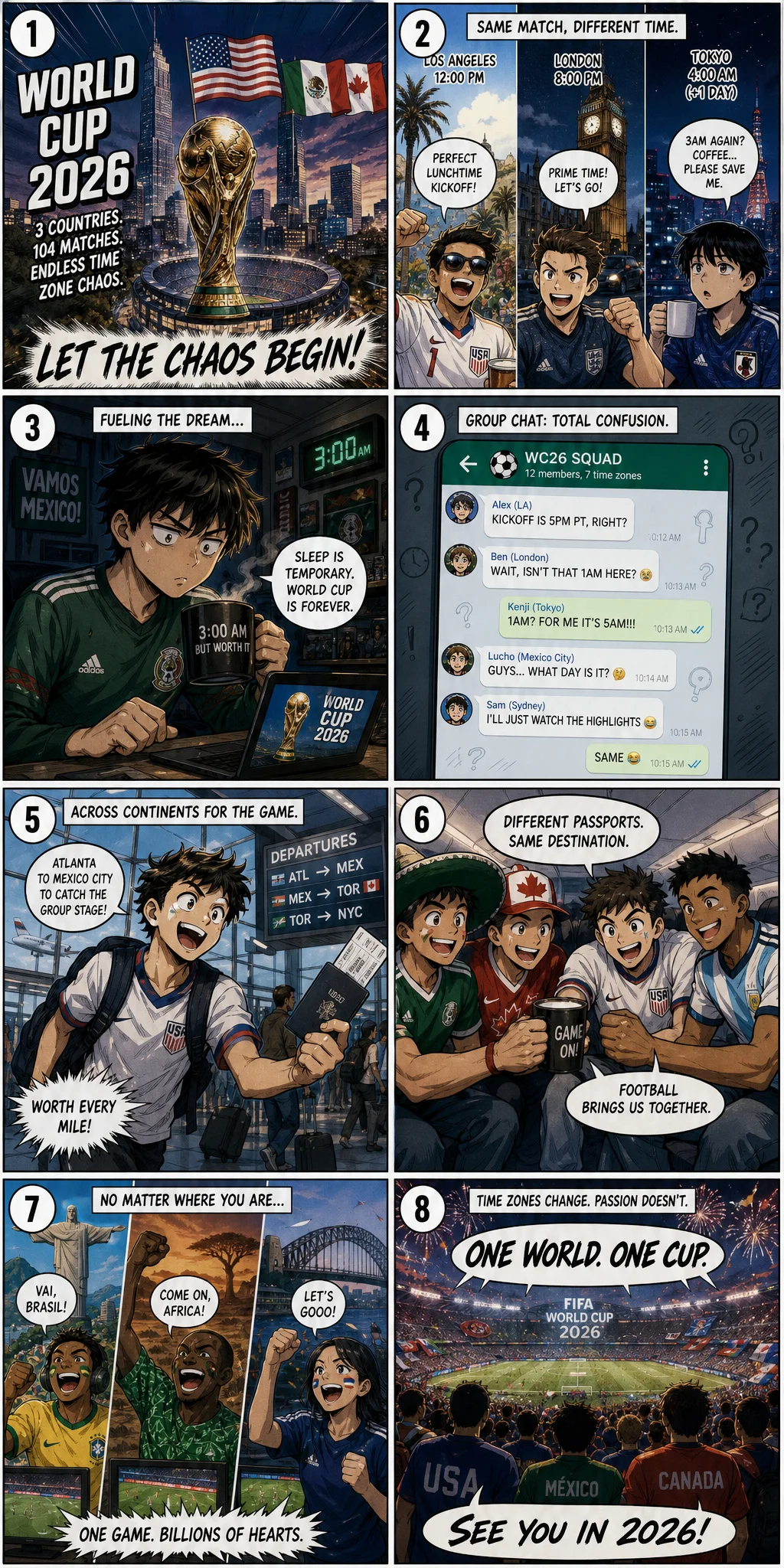
コミックの内容と試合統計は娯楽目的のみであり、不正確な情報を含む可能性があります。正確なデータについては、参照元の公式ウェブサイトをご確認ください。
2026年世界杯横跨北美四个时区——太平洋时区、山地时区、中部时区和东部时区——这种地理分布意味着,当温哥华的比赛开球时,福克斯堡的支持者已进入夜晚;而迈阿密的比赛开始时,洛杉矶的早餐人群尚未喝完咖啡。球队在不同赛地间穿梭时,跨越时区将如同往届欧洲世界杯参赛者穿越城市边界一般——成为赛事后勤的常规特征,而非例外情况。体育科学家已对这种地理分布的生理影响进行了广泛研究,结果描绘出一幅可量化的竞争失衡图景,任何赛程优化都无法完全消除这种失衡。
时差并非主观的疲劳感,而是身体昼夜节律的可测量紊乱——这种内在的二十四小时时钟调节着睡眠-觉醒周期、激素释放模式、体温波动和代谢过程。当运动员跨越时区时,外部环境的光暗周期发生改变,而身体的内在时钟仍锚定在出发地的时间表上。这种错位引发了一系列生理效应:睡眠激素褪黑素在新环境的夜晚错误时间释放,扰乱睡眠质量和时长;压力激素皮质醇的日常节律影响能量可用性和炎症反应,却在错误时间达到峰值;核心体温本应在夜间下降以促进睡眠、白天上升以优化体能表现,却仍遵循旧时区的模式——这意味着,要求运动员在新时区的下午三点发挥最佳状态时,其体温可能仍处于清晨水平——而清晨正是体能表现、反应时间和认知处理能力处于每日最低点的时刻。
对于淘汰赛阶段需要反复跨越时区的球队而言,与表现相关的具体数据令人警醒。在跨越两个或更多时区后的数天内,反应时间会下降8%至12%——在足球运动中,点球的结果取决于门将在触球前200毫秒内的移动,这一差距正是扑救成功与失球之间的分水岭。冲刺速度,尤其是决定球员在第80分钟能否进行重叠跑动的反复冲刺能力,在受时差影响的运动员中下降2%至3%。决策准确性——在压力下选择正确传球的能力、在瞬间识别防守站位的能力、在体能耗尽时执行战术指令的能力——下降幅度在实验室报告中看似微不足道,但在球场上却表现为射门前的多余触球、直塞球前的犹豫、以及铲球与犯规之间的半步之差。
睡眠科学明确表明:跨越两个或更多时区的运动员,每跨越一个时区需要大约一天的恢复时间,才能使认知和体能表现回归基线。一支球队从太平洋时区移动到东部时区——三小时的时差——将损失大约三天的理想生理功能。在每三到四天进行一场比赛的淘汰赛中,这意味着旅行中的球队永远无法在两场比赛之间完全恢复,始终处于次优的昼夜节律对齐状态;而如果对手保持在单一时区内,则能以完全生理能力参赛。此处无需纠结于800至850字的篇幅,只需陈述这些数字,让它们自己说话。
保持在单一时区内的优势并非微不足道的脚注,而是一种结构性竞争优势。国际足联的赛程安排协议试图公平分配这种优势,但无法保证。位于东部集群——福克斯堡、纽约、费城——的球队,如果抽到的淘汰赛路径使其留在该集群内,那么每场淘汰赛都将在单一时区内进行,从而最大化比赛间的恢复时间。而路径从太平洋时区跨越到东部时区,或从中部时区到太平洋时区再返回的球队,则会因昼夜节律紊乱而损失恢复天数。国际足联的区域化小组抽签在小组赛阶段通过地理分组缓解了这一问题,但一旦淘汰赛抽签的随机化开始,赛程公平就变得不可能。在洛杉矶进行第三轮小组赛后,紧接着在迈阿密进行32强赛,意味着三小时的时差跳跃,而两场比赛之间只有两天的恢复时间。
主教练和表现团队在赛前一年就开始制定昼夜节律管理方案。光疗——在特定时间控制强光剂量以加速昼夜节律调整——将成为旅行球队的标准做法。睡眠时间表将在旅行前预先调整,在出发前几天将就寝时间向目的地时区偏移。咖啡因摄入时间、用餐时间和训练时间都将被操控以加速适应。这些方案有效但不完美。它们将适应期从三天缩短到大约两天,但无法完全消除。赢得2026年世界杯的球队,部分原因将是其穿越北美四个时区的淘汰赛路径最为仁慈。这片大陆级世界杯的举办是出于商业考量,将带来巨额收入,而非因为它提供了公平的竞争环境。这两个事实之间的张力将成为赛事中未被言说的叙事之一,在表现实验室和恢复室中被讨论,却很少出现在转播评论中。时区是一个与战术或状态同样真实的竞争变量。没有人会将其刻在奖杯上,但它们将决定谁最终举起它。