

Browse all comics in focus
Long-form features and deep analysis of World Cup 2026 that go far beyond the final score. Tactical dissections of key matchups, cultural commentary on what football means to different nations, manager profiles, player spotlights, and the broader narratives shaping the tournament. Our Focus series brings you the stories that demand more than ninety minutes to tell, written with the depth and insight that passionate football fans deserve from the sport's biggest stage.
 ★
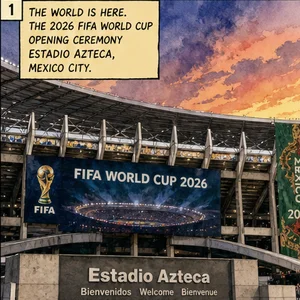
★Mexico 2026: The Opening Ceremony That Shook the Azteca
On June 11, 2026, Shakira, Andrea Bocelli, and the ghosts of Pelé and Maradona converged on the Estadio Azteca for the third opening ceremony in its history — a night of mariachi, fireworks, and 48 flags that launched the biggest World Cup ever played.
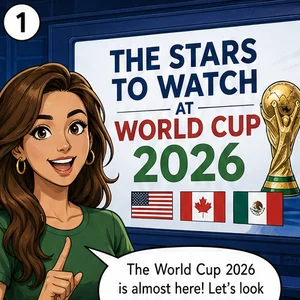 ★
★The Stars to Watch at World Cup 2026
World Cup 2026 showcases the planet's most electrifying talent — superstars, emerging prodigies, and tournament specialists whose performances will define this edition for decades. This feature profiles must-watch players across every position and confederation: established icons chasing immortality, 21-year-olds about to announce themselves, and cult heroes who always save their best for the World Cup stage.
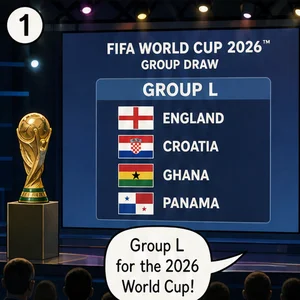 ★
★Group L Power Analysis: England, Croatia, Ghana, Panama
Group L completes the expanded tournament's first-round puzzle with a quartet representing football's global breadth. This analytical preview examines each team's qualification journey, tactical identities and key individuals, group-stage dynamics, climate and travel variables affecting performance, and what the group's composition reveals about FIFA's vision for a truly global World Cup.
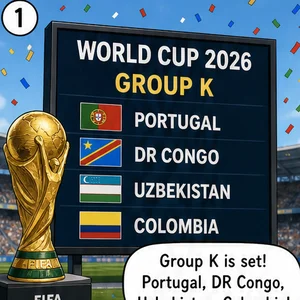 ★
★Group K Power Analysis: Portugal, DR Congo, Uzbekistan, Colombia
Group K is a cartographic argument disguised as a football draw. Portugal, the westernmost nation of continental Europe, a small rectangle of Iberian coast that has produced more world-class footballers per capita than any country except Uruguay and
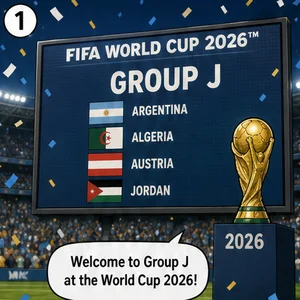 ★
★Group J Power Analysis: Argentina (champion), Algeria, Austria, Jordan
The moment the draw results for Group J of the 2026 World Cup were announced, I was sitting in an old café in Buenos Aires called "El Viejo Almacén." Outside, the sound of traffic on Avenida 9 de Julio mingled with the melody of tango. The owner, M
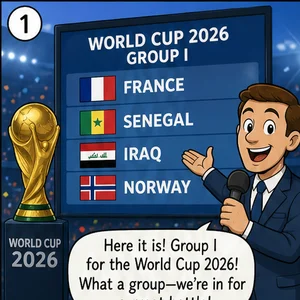 ★
★Group I Power Analysis: France, Senegal, Iraq, Norway
I was in Doha when Kylian Mbappe scored three goals in a World Cup final and still lost. The Lusail Stadium emptied slowly that night, Argentine celebrations rolling through the concourses, and somewhere in the exodus was a French forward who had jus
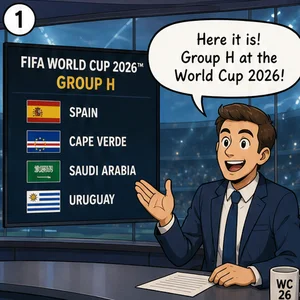 ★
★Group H Power Analysis: Spain, Cabo Verde, Saudi Arabia, Uruguay
The draw for Group H of the World Cup reads like a precise tactical proposition: traditional possession hegemony, emerging African counter-attacking force, oil-capital-driven system reconstruction, and South America's most extreme experimental revolu
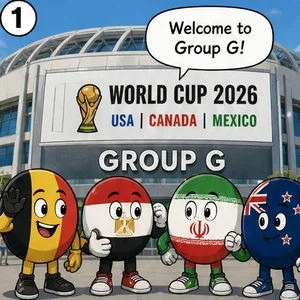 ★
★Group G Power Analysis: Belgium, Egypt, Iran, New Zealand
Group G assembles Belgium, Egypt, Iran, and New Zealand into a configuration that the 48-team format's mathematical logic was specifically designed to produce: one former superpower in managed decline, one continental contender built around a single
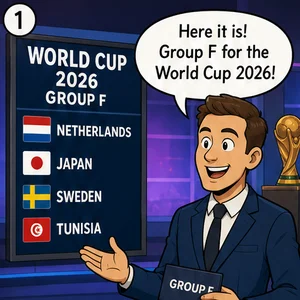 ★
★Group F Power Analysis: Netherlands, Japan, Sweden, Tunisia
World Cup 2026, Group F draw is out. Netherlands, Japan, Sweden, Tunisia. A group full of tactical details, technical collisions, and physical confrontations. Not a definitive group of death, but every step could be fatal. Let's break down these four
★Mexico 2026: The Opening Ceremony That Shook the Azteca
On June 11, 2026, Shakira, Andrea Bocelli, and the ghosts of Pelé and Maradona converged on the Estadio Azteca for the third opening ceremony in its history — a night of mariachi, fireworks, and 48 flags that launched the biggest World Cup ever played.
★The Stars to Watch at World Cup 2026
World Cup 2026 showcases the planet's most electrifying talent — superstars, emerging prodigies, and tournament specialists whose performances will define this edition for decades. This feature profiles must-watch players across every position and confederation: established icons chasing immortality, 21-year-olds about to announce themselves, and cult heroes who always save their best for the World Cup stage.
★Group L Power Analysis: England, Croatia, Ghana, Panama
Group L completes the expanded tournament's first-round puzzle with a quartet representing football's global breadth. This analytical preview examines each team's qualification journey, tactical identities and key individuals, group-stage dynamics, climate and travel variables affecting performance, and what the group's composition reveals about FIFA's vision for a truly global World Cup.
★Group K Power Analysis: Portugal, DR Congo, Uzbekistan, Colombia
Group K is a cartographic argument disguised as a football draw. Portugal, the westernmost nation of continental Europe, a small rectangle of Iberian coast that has produced more world-class footballers per capita than any country except Uruguay and
★Group J Power Analysis: Argentina (champion), Algeria, Austria, Jordan
The moment the draw results for Group J of the 2026 World Cup were announced, I was sitting in an old café in Buenos Aires called "El Viejo Almacén." Outside, the sound of traffic on Avenida 9 de Julio mingled with the melody of tango. The owner, M
★Group I Power Analysis: France, Senegal, Iraq, Norway
I was in Doha when Kylian Mbappe scored three goals in a World Cup final and still lost. The Lusail Stadium emptied slowly that night, Argentine celebrations rolling through the concourses, and somewhere in the exodus was a French forward who had jus
★Group H Power Analysis: Spain, Cabo Verde, Saudi Arabia, Uruguay
The draw for Group H of the World Cup reads like a precise tactical proposition: traditional possession hegemony, emerging African counter-attacking force, oil-capital-driven system reconstruction, and South America's most extreme experimental revolu
★Group G Power Analysis: Belgium, Egypt, Iran, New Zealand
Group G assembles Belgium, Egypt, Iran, and New Zealand into a configuration that the 48-team format's mathematical logic was specifically designed to produce: one former superpower in managed decline, one continental contender built around a single
★Group F Power Analysis: Netherlands, Japan, Sweden, Tunisia
World Cup 2026, Group F draw is out. Netherlands, Japan, Sweden, Tunisia. A group full of tactical details, technical collisions, and physical confrontations. Not a definitive group of death, but every step could be fatal. Let's break down these four
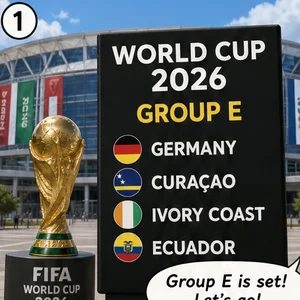 ★
★Group E Power Analysis: Germany, Curacao, Ivory Coast, Ecuador
Group E assembles the United States as co-host favorite, Japan as Asia's most technical squad, Sweden as Europe's most balanced dark horse — creating a group where every match feels like a knockout. This breakdown examines contrasting tactical philosophies, the individual stars defining the group, and why the final matchday could produce qualification scenarios of unprecedented complexity.
Group E Power Analysis: Germany, Curacao, Ivory Coast, Ecuador
Group E assembles the United States as co-host favorite, Japan as Asia's most technical squad, Sweden as Europe's most balanced dark horse — creating a group where every match feels like a knockout. This breakdown examines contrasting tactical philosophies, the individual stars defining the group, and why the final matchday could produce qualification scenarios of unprecedented complexity.
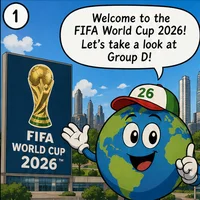
Group D Power Analysis: United States (co-host), Paraguay, Australia, Turkey
Group D brings together South American heavyweights Uruguay and Ecuador, European dark horse Turkey, and defending champion Argentina — an early candidate for the Group of Death. This detailed preview analyzes every tactical clash, altitude and travel factors, historical rivalries adding emotional charge, and why surviving this group may leave the victors either battle-hardened or physically depleted.
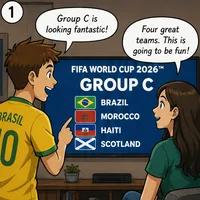
Group C Power Analysis: Brazil, Morocco, Haiti, Scotland
Group C pits Brazil's pursuit of a sixth star against Morocco's continental pride, Haiti's improbable fairy tale, and Scotland's rekindled belief — narratives so rich no screenwriter would invent them. This preview dissects tactical identities, group-stage matchups, knockout-round implications, and the possibility this group produces the tournament's biggest shock before the knockout rounds begin.
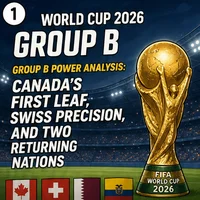
Group B Power Analysis: Canada's First Leaf, Swiss Precision, and Two Returning Nations
Group B presents a fascinating collision: Canada's co-host momentum, Bosnia's dragon spirit, Qatar's Asian Cup confidence, and Switzerland's tournament-proven organization. This preview analyzes tactical matchups, travel and climate factors affecting group play, the players deciding qualification, and why this group represents the expanded format's most intriguing balance of pedigree and rising ambition.
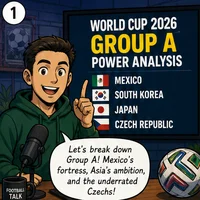
Group A Power Analysis: Mexico's Fortress, Asia's Ambition, and the Underrated Czechs
Group A delivers immediate drama: Mexico carrying co-host pressure, South Africa's athletic ambition, South Korea's relentless intensity, and Czechia's disciplined organization. This analytical preview examines each team's tactical identity, head-to-head dynamics, likely qualification scenarios, must-watch duels, and why the opening group may produce the round's most unpredictable qualification battle across three high-stakes matchdays.
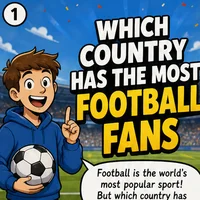
Which Country Has the Most Football Fans
Which countries boast the most genuine football fans — not viewers or social followers, but people for whom the game is central to daily identity? This global survey maps fandom by population, passion intensity, and cultural integration, revealing surprising leaders the television contracts overlook and what true supporter density means for football's future beyond commercial metrics.

Which Powerhouse Clubs Do World Cup Players Come From
Which football clubs supply the most players to World Cup 2026? The answer reveals the architecture of global talent development — academies, scouting networks, and professional pathways funneling athletes toward football's biggest stage. This data-driven feature ranks clubs by representation, analyzes talent concentration among Europe's elite, and explores what the numbers tell us about inequality in football's production line.

World Cup Favorite Team Crests: Five Badges, Five National Identities
Every World Cup nation wears a crest distilling national history, football heritage, and visual identity into a few square centimeters of embroidery. This feature analyzes the heraldry, symbolic animals and stars, typographic choices, political histories embedded in simple emblems, and what the 2026 collection of crests reveals about how nations want the world to see them.
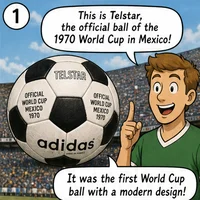
World Cup Official Match Balls: From Pig Bladder to Microchip
From the brown leather Tiento of 1930 to the microchip-embedded ball of 2026, the World Cup match ball mirrors football's technological revolution. This visual feature traces every official tournament ball — the iconic Telstar and Tango designs, aerodynamic breakthroughs, controversies over unpredictable flight — and how a simple sphere became an engineering marvel measuring spin rate in real time.
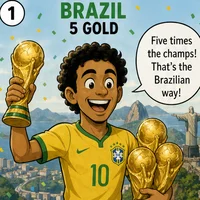
World Cup Title Rankings: The System Behind the Stars
World Cup title rankings tell football's global power structure — Brazil's five stars, Germany and Italy's four, Argentina's three — shaping national identity and fueling generational ambition. This analytical feature examines the championship table, nations knocking on the door, historical patterns of dominance, and what rankings reveal about who will likely add a star in 2026.
Group D Power Analysis: United States (co-host), Paraguay, Australia, Turkey
Group D brings together South American heavyweights Uruguay and Ecuador, European dark horse Turkey, and defending champion Argentina — an early candidate for the Group of Death. This detailed preview analyzes every tactical clash, altitude and travel factors, historical rivalries adding emotional charge, and why surviving this group may leave the victors either battle-hardened or physically depleted.
Group C Power Analysis: Brazil, Morocco, Haiti, Scotland
Group C pits Brazil's pursuit of a sixth star against Morocco's continental pride, Haiti's improbable fairy tale, and Scotland's rekindled belief — narratives so rich no screenwriter would invent them. This preview dissects tactical identities, group-stage matchups, knockout-round implications, and the possibility this group produces the tournament's biggest shock before the knockout rounds begin.
Group B Power Analysis: Canada's First Leaf, Swiss Precision, and Two Returning Nations
Group B presents a fascinating collision: Canada's co-host momentum, Bosnia's dragon spirit, Qatar's Asian Cup confidence, and Switzerland's tournament-proven organization. This preview analyzes tactical matchups, travel and climate factors affecting group play, the players deciding qualification, and why this group represents the expanded format's most intriguing balance of pedigree and rising ambition.
Group A Power Analysis: Mexico's Fortress, Asia's Ambition, and the Underrated Czechs
Group A delivers immediate drama: Mexico carrying co-host pressure, South Africa's athletic ambition, South Korea's relentless intensity, and Czechia's disciplined organization. This analytical preview examines each team's tactical identity, head-to-head dynamics, likely qualification scenarios, must-watch duels, and why the opening group may produce the round's most unpredictable qualification battle across three high-stakes matchdays.
Which Country Has the Most Football Fans
Which countries boast the most genuine football fans — not viewers or social followers, but people for whom the game is central to daily identity? This global survey maps fandom by population, passion intensity, and cultural integration, revealing surprising leaders the television contracts overlook and what true supporter density means for football's future beyond commercial metrics.
Which Powerhouse Clubs Do World Cup Players Come From
Which football clubs supply the most players to World Cup 2026? The answer reveals the architecture of global talent development — academies, scouting networks, and professional pathways funneling athletes toward football's biggest stage. This data-driven feature ranks clubs by representation, analyzes talent concentration among Europe's elite, and explores what the numbers tell us about inequality in football's production line.
World Cup Favorite Team Crests: Five Badges, Five National Identities
Every World Cup nation wears a crest distilling national history, football heritage, and visual identity into a few square centimeters of embroidery. This feature analyzes the heraldry, symbolic animals and stars, typographic choices, political histories embedded in simple emblems, and what the 2026 collection of crests reveals about how nations want the world to see them.
World Cup Official Match Balls: From Pig Bladder to Microchip
From the brown leather Tiento of 1930 to the microchip-embedded ball of 2026, the World Cup match ball mirrors football's technological revolution. This visual feature traces every official tournament ball — the iconic Telstar and Tango designs, aerodynamic breakthroughs, controversies over unpredictable flight — and how a simple sphere became an engineering marvel measuring spin rate in real time.
World Cup Title Rankings: The System Behind the Stars
World Cup title rankings tell football's global power structure — Brazil's five stars, Germany and Italy's four, Argentina's three — shaping national identity and fueling generational ambition. This analytical feature examines the championship table, nations knocking on the door, historical patterns of dominance, and what rankings reveal about who will likely add a star in 2026.