

Browse all comics in knowledge
Everything you need to understand about World Cup 2026 before a ball is kicked. The forty-eight-team format explained in detail, the one hundred and four matches spread across thirty-nine days, the three-nation hosting arrangement and its logistical complexities, Asia's expanded qualification allocation, the global debutants arriving at their first tournament, and every structural innovation that makes this the most ambitious World Cup ever staged.
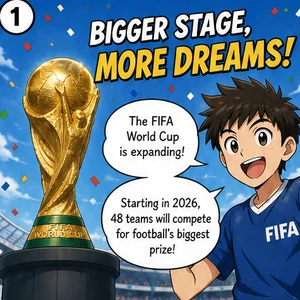

Forty-Eight Teams Walk Into a World Cup
The vote was cast on January 10, 2017, at FIFA headquarters in Zurich. The FIFA Council — the thirty-seven-member body that had replaced the disgraced Executive Committee after the 2015 corruption scandal that brought down Sepp Blatter and much of FI
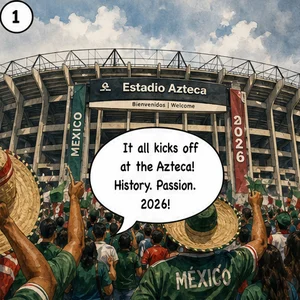
Three Countries, One Table, and an Unprecedented Party
The 2026 World Cup is the first in history to be hosted by three nations — the United States, Canada, and Mexico — under a unified organizational umbrella. The logistical architecture required to deliver a tournament across three sovereign countries,
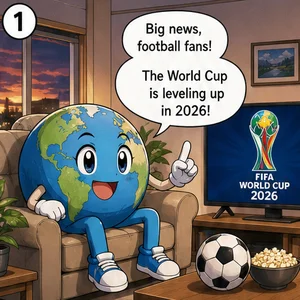
104 Matches, 39 Days, and a Planet Sleeping on the Couch
The 2026 World Cup will feature 104 matches across 39 days in 16 stadiums spanning three countries and four time zones. These figures represent a complete structural reimagining of what the World Cup is, how it is consumed, and what it demands from t
Thirty-Nine Days: Your Couch Will Hate You, But You'll Thank It
The 2026 World Cup will span thirty-nine days — the longest men's tournament in history. Qatar 2022 was compressed into twenty-nine days. Russia 2018 spanned thirty-two. The 1970 World Cup that produced Pelé's immortal final lasted just nineteen. The
Twelve Groups, Eight Third-Placed Teams, and a Global Excel Meltdown
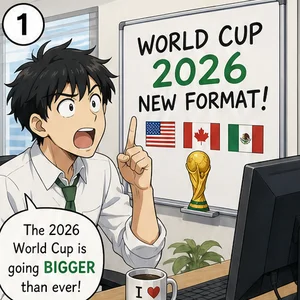
The forty-eight-team World Cup format introduces a qualification mechanism unprecedented in tournament history: the eight best third-placed finishers from sixteen three-team groups will advance to the knockout stage alongside all group winners and ru
Eight Matches to Be King: The Extra Step on the Staircase
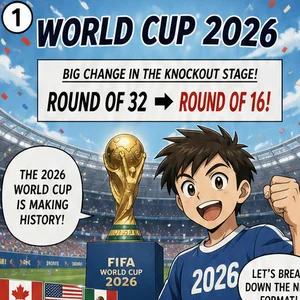
Every World Cup champion in history played seven matches or fewer to win the tournament. Uruguay in 1930 played four. Brazil in 1970 played six. Argentina in 2022 played seven — the standard format since 1998: three group-stage matches followed by th
Sixteen Cities, Eleven in America, and Canada's Silence
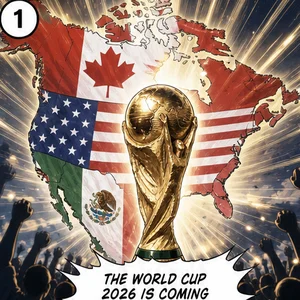
The 2026 World Cup will be staged across sixteen stadiums in sixteen cities spread over three nations, a geographic footprint that stretches from Vancouver on the Pacific coast to Foxborough on the Atlantic, from Toronto near the Canadian Shield to M
The Parking Lot That Stole the Final: New York vs Los Angeles
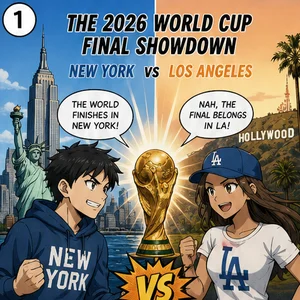
In February 2024, FIFA announced that MetLife Stadium in East Rutherford, New Jersey — a functional NFL venue wedged between the New Jersey Turnpike and the Meadowlands marsh, with no retractable roof, no immersive screen technology, and no Hollywood
The Azteca Temple Opens Its Doors for the Third Time
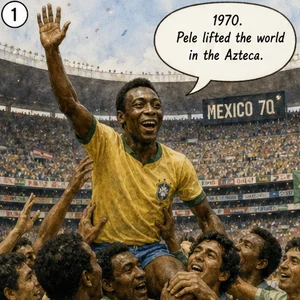
The Estadio Azteca in Mexico City is the only stadium in world football to have hosted three men's World Cup tournaments — 1970, 1986, and 2026 — arriving at astonishingly regular sixteen-year intervals that feel less like coincidence and more like a
Forty-Eight Teams Walk Into a World Cup
The vote was cast on January 10, 2017, at FIFA headquarters in Zurich. The FIFA Council — the thirty-seven-member body that had replaced the disgraced Executive Committee after the 2015 corruption scandal that brought down Sepp Blatter and much of FI
Three Countries, One Table, and an Unprecedented Party
The 2026 World Cup is the first in history to be hosted by three nations — the United States, Canada, and Mexico — under a unified organizational umbrella. The logistical architecture required to deliver a tournament across three sovereign countries,
104 Matches, 39 Days, and a Planet Sleeping on the Couch
The 2026 World Cup will feature 104 matches across 39 days in 16 stadiums spanning three countries and four time zones. These figures represent a complete structural reimagining of what the World Cup is, how it is consumed, and what it demands from t
Thirty-Nine Days: Your Couch Will Hate You, But You'll Thank It
The 2026 World Cup will span thirty-nine days — the longest men's tournament in history. Qatar 2022 was compressed into twenty-nine days. Russia 2018 spanned thirty-two. The 1970 World Cup that produced Pelé's immortal final lasted just nineteen. The
Twelve Groups, Eight Third-Placed Teams, and a Global Excel Meltdown
The forty-eight-team World Cup format introduces a qualification mechanism unprecedented in tournament history: the eight best third-placed finishers from sixteen three-team groups will advance to the knockout stage alongside all group winners and ru
Eight Matches to Be King: The Extra Step on the Staircase
Every World Cup champion in history played seven matches or fewer to win the tournament. Uruguay in 1930 played four. Brazil in 1970 played six. Argentina in 2022 played seven — the standard format since 1998: three group-stage matches followed by th
Sixteen Cities, Eleven in America, and Canada's Silence
The 2026 World Cup will be staged across sixteen stadiums in sixteen cities spread over three nations, a geographic footprint that stretches from Vancouver on the Pacific coast to Foxborough on the Atlantic, from Toronto near the Canadian Shield to M
The Parking Lot That Stole the Final: New York vs Los Angeles
In February 2024, FIFA announced that MetLife Stadium in East Rutherford, New Jersey — a functional NFL venue wedged between the New Jersey Turnpike and the Meadowlands marsh, with no retractable roof, no immersive screen technology, and no Hollywood
The Azteca Temple Opens Its Doors for the Third Time
The Estadio Azteca in Mexico City is the only stadium in world football to have hosted three men's World Cup tournaments — 1970, 1986, and 2026 — arriving at astonishingly regular sixteen-year intervals that feel less like coincidence and more like a
Dallas Gets Nine Matches: The City That Stole the Most Games
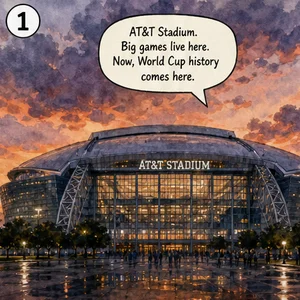
Dallas will host nine World Cup matches in 2026 — more than any other city in the tournament, including Mexico City with its cathedral of football, Los Angeles with its five-billion-dollar architectural marvel, and the New York metropolitan area that
Dallas Gets Nine Matches: The City That Stole the Most Games
Dallas will host nine World Cup matches in 2026 — more than any other city in the tournament, including Mexico City with its cathedral of football, Los Angeles with its five-billion-dollar architectural marvel, and the New York metropolitan area that
Canada's First Time: Things Nobody Thought Would Happen Here
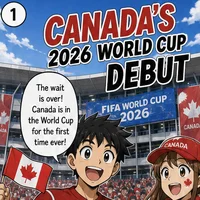
Canada is hosting its first men's World Cup matches in 2026, a milestone in a football journey that has unfolded almost entirely through immigration and diaspora rather than through the organic development pathways — the schoolyard culture, the stree
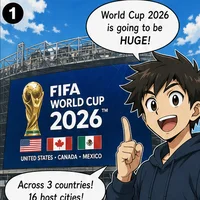
Four Thousand Five Hundred Kilometres of Madness
The 2026 World Cup will be played across a geographic span exceeding four thousand five hundred kilometers — from Vancouver on the Pacific coast to Mexico City at altitude, from Los Angeles in the southwest to Foxborough in the northeast. This is not
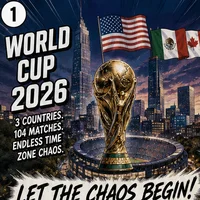
Four Time Zones, One Watch, and a Fan Who Has No Idea What Time It Is
The 2026 World Cup spans four North American time zones — Pacific, Mountain, Central, and Eastern — a geographic distribution that means kickoff times in Vancouver occur when supporters in Foxborough are already into their evening, and matches in Mia

The Foxborough Traffic Nightmare: When the World Cup Meets American Suburbia
Gillette Stadium, host of six World Cup matches in 2026 including a quarterfinal, is not located in Boston. It is located in Foxborough, Massachusetts — a town of approximately eighteen thousand residents situated forty-eight kilometers southwest of
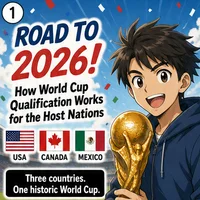
Three Hosts, Zero Qualifiers, and a Test That Was Skipped
The United States, Canada, and Mexico qualified automatically for the 2026 World Cup as host nations — a privilege as old as the tournament itself, dating to Uruguay's automatic entry in the inaugural 1930 edition, and one that has survived every ref
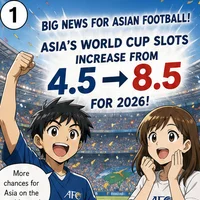
Asia's Slots Just Doubled: A Continent's Turnaround Starts at 8.5
Asia's World Cup qualifying allocation expanded from four-and-a-half spots to eight-and-a-half for the 2026 tournament — the most significant single-confederation increase in World Cup history, more than doubling Asia's guaranteed presence at footbal
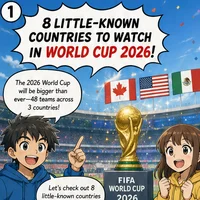
The Countries You Have Never Heard Of
The forty-eight-team World Cup brings nations to the tournament whose flags most football fans cannot identify, whose players will walk unrecognized through the arrival halls of North American airports, and whose participation in the world's most-wat
The Man Carrying the Trophy Into 2026
The World Cup trophy arrives at the opening ceremony in the arms of a representative of Argentina, the defending champion, the nation that claimed the golden statuette in Qatar on December 18, 2022, in what is widely and reasonably considered the gre
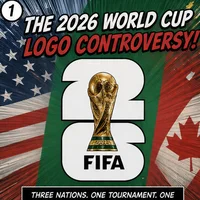
The Designer Who Put the Trophy Right On the Logo
The 2026 World Cup logo is the most literal visual identity in tournament history, a design decision so straightforward that it became controversial precisely because of its refusal to be interesting. The logo features the actual World Cup trophy — p
Canada's First Time: Things Nobody Thought Would Happen Here
Canada is hosting its first men's World Cup matches in 2026, a milestone in a football journey that has unfolded almost entirely through immigration and diaspora rather than through the organic development pathways — the schoolyard culture, the stree
Four Thousand Five Hundred Kilometres of Madness
The 2026 World Cup will be played across a geographic span exceeding four thousand five hundred kilometers — from Vancouver on the Pacific coast to Mexico City at altitude, from Los Angeles in the southwest to Foxborough in the northeast. This is not
Four Time Zones, One Watch, and a Fan Who Has No Idea What Time It Is
The 2026 World Cup spans four North American time zones — Pacific, Mountain, Central, and Eastern — a geographic distribution that means kickoff times in Vancouver occur when supporters in Foxborough are already into their evening, and matches in Mia
The Foxborough Traffic Nightmare: When the World Cup Meets American Suburbia
Gillette Stadium, host of six World Cup matches in 2026 including a quarterfinal, is not located in Boston. It is located in Foxborough, Massachusetts — a town of approximately eighteen thousand residents situated forty-eight kilometers southwest of
Three Hosts, Zero Qualifiers, and a Test That Was Skipped
The United States, Canada, and Mexico qualified automatically for the 2026 World Cup as host nations — a privilege as old as the tournament itself, dating to Uruguay's automatic entry in the inaugural 1930 edition, and one that has survived every ref
Asia's Slots Just Doubled: A Continent's Turnaround Starts at 8.5
Asia's World Cup qualifying allocation expanded from four-and-a-half spots to eight-and-a-half for the 2026 tournament — the most significant single-confederation increase in World Cup history, more than doubling Asia's guaranteed presence at footbal
The Countries You Have Never Heard Of
The forty-eight-team World Cup brings nations to the tournament whose flags most football fans cannot identify, whose players will walk unrecognized through the arrival halls of North American airports, and whose participation in the world's most-wat
The Man Carrying the Trophy Into 2026
The World Cup trophy arrives at the opening ceremony in the arms of a representative of Argentina, the defending champion, the nation that claimed the golden statuette in Qatar on December 18, 2022, in what is widely and reasonably considered the gre
The Designer Who Put the Trophy Right On the Logo
The 2026 World Cup logo is the most literal visual identity in tournament history, a design decision so straightforward that it became controversial precisely because of its refusal to be interesting. The logo features the actual World Cup trophy — p