

Browse all comics in record
The numbers, milestones, and statistical monuments that define World Cup history. From Miroslav Klose's sixteen goals and Just Fontaine's unbreakable thirteen in a single tournament, to Brazil's five stars and perfect attendance at all twenty-two editions, to Germany's eight finals and the Netherlands' eternal near-miss. These are the records that shaped football's collective memory and the standards that every World Cup generation measures itself against.

Four Stars, Two Missed World Cups, and a Country That Refuses to Be Forgotten
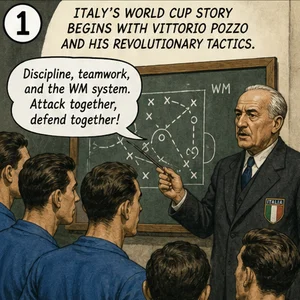
Italy has won four World Cups — 1934, 1938, 1982, 2006. Only Brazil, with five, has more. The four stars embroidered above the Azzurri crest represent a century of footballing excellence, a tradition that includes Vittorio Pozzo's back-to-back champi
Four Times They Came Second, and Four Times They Came Back
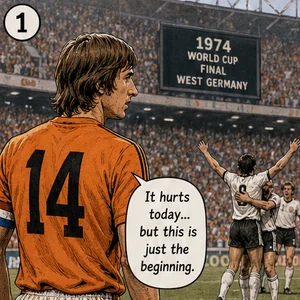
The Netherlands has reached three World Cup finals — 1974, 1978, 2010 — and lost all three. No nation without a World Cup title has come closer on more occasions. The Dutch relationship with football's most important trophy is not a statistical recor
Sixteen Yellow Cards, Four Red Cards, and a Referee Who Lost Control
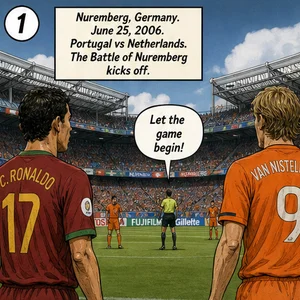
The 2006 World Cup round of sixteen match between Portugal and the Netherlands produced a disciplinary record that will stand as long as the tournament exists: sixteen yellow cards and four red cards distributed across ninety minutes of football that
One Hundred Seventy-Three Thousand People Watched a Country Die
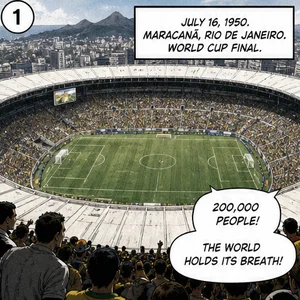
July 16, 1950. The Maracana Stadium, Rio de Janeiro. Brazil versus Uruguay — effectively the World Cup final in the tournament's eccentric final-round format that replaced knockout brackets with a four-team group to determine the champion. The offici
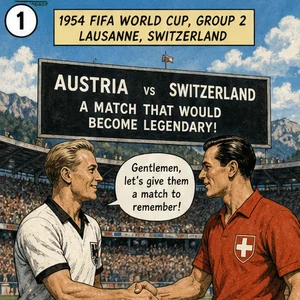
Twelve Goals, Forty Degrees, and a Match That Refused to End
Twelve goals in a single World Cup match. Austria 7, Switzerland 5. The 1954 quarterfinal in Lausanne, played on June 26 in conditions that no modern tournament would permit. The temperature exceeded forty degrees Celsius — 104 degrees Fahrenheit — a
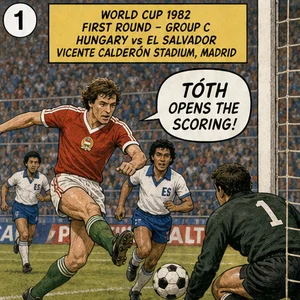
Ten-One: The Day Football Became a Massacre
Hungary 10, El Salvador 1. June 15, 1982. El Molinon stadium, Gijon, on the northern coast of Spain. The largest margin of victory in the history of the men's World Cup. A record that has survived more than four decades — persisting through tournamen

Forty-Five Years Old, and He Saved a Penalty
The oldest player in World Cup history is not Italian, German, Brazilian, or Argentine. He is Egyptian. Essam El Hadary was forty-five years and 161 days old when he walked onto the pitch at the Volgograd Arena on June 25, 2018. But the statistical f
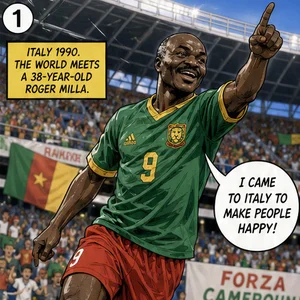
Forty-Two Years Old, and He Still Did the Dance
Roger Milla was forty-two years and thirty-nine days old when he scored against Russia at the 1994 World Cup — still the oldest goalscorer in the competition's history, a record that has resisted every approach across three decades of tournaments tha
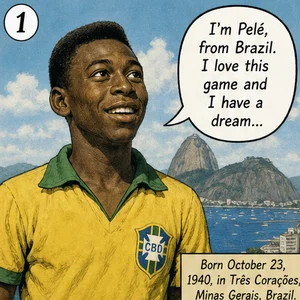
Seventeen Years, 239 Days: The Boy Who Broke Football
Pele was seventeen years and 239 days old when he scored twice in the 1958 World Cup final against Sweden. He remains the youngest goalscorer in a World Cup final, the youngest player to appear in a final, and the youngest World Cup champion in the t
Four Stars, Two Missed World Cups, and a Country That Refuses to Be Forgotten
Italy has won four World Cups — 1934, 1938, 1982, 2006. Only Brazil, with five, has more. The four stars embroidered above the Azzurri crest represent a century of footballing excellence, a tradition that includes Vittorio Pozzo's back-to-back champi
Four Times They Came Second, and Four Times They Came Back
The Netherlands has reached three World Cup finals — 1974, 1978, 2010 — and lost all three. No nation without a World Cup title has come closer on more occasions. The Dutch relationship with football's most important trophy is not a statistical recor
Sixteen Yellow Cards, Four Red Cards, and a Referee Who Lost Control
The 2006 World Cup round of sixteen match between Portugal and the Netherlands produced a disciplinary record that will stand as long as the tournament exists: sixteen yellow cards and four red cards distributed across ninety minutes of football that
One Hundred Seventy-Three Thousand People Watched a Country Die
July 16, 1950. The Maracana Stadium, Rio de Janeiro. Brazil versus Uruguay — effectively the World Cup final in the tournament's eccentric final-round format that replaced knockout brackets with a four-team group to determine the champion. The offici
Twelve Goals, Forty Degrees, and a Match That Refused to End
Twelve goals in a single World Cup match. Austria 7, Switzerland 5. The 1954 quarterfinal in Lausanne, played on June 26 in conditions that no modern tournament would permit. The temperature exceeded forty degrees Celsius — 104 degrees Fahrenheit — a
Ten-One: The Day Football Became a Massacre
Hungary 10, El Salvador 1. June 15, 1982. El Molinon stadium, Gijon, on the northern coast of Spain. The largest margin of victory in the history of the men's World Cup. A record that has survived more than four decades — persisting through tournamen
Forty-Five Years Old, and He Saved a Penalty
The oldest player in World Cup history is not Italian, German, Brazilian, or Argentine. He is Egyptian. Essam El Hadary was forty-five years and 161 days old when he walked onto the pitch at the Volgograd Arena on June 25, 2018. But the statistical f
Forty-Two Years Old, and He Still Did the Dance
Roger Milla was forty-two years and thirty-nine days old when he scored against Russia at the 1994 World Cup — still the oldest goalscorer in the competition's history, a record that has resisted every approach across three decades of tournaments tha
Seventeen Years, 239 Days: The Boy Who Broke Football
Pele was seventeen years and 239 days old when he scored twice in the 1958 World Cup final against Sweden. He remains the youngest goalscorer in a World Cup final, the youngest player to appear in a final, and the youngest World Cup champion in the t
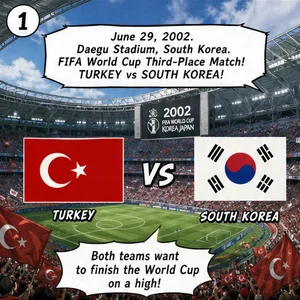
Eleven Seconds: The Fastest Goal in History
There is a clock at the Daegu World Cup Stadium in South Korea — or there was, in 2002, when the tournament was happening in Asia for the first time and everything about it felt like the beginning of something. On June 29 of that year, in the strange
Eleven Seconds: The Fastest Goal in History
There is a clock at the Daegu World Cup Stadium in South Korea — or there was, in 2002, when the tournament was happening in Asia for the first time and everything about it felt like the beginning of something. On June 29 of that year, in the strange
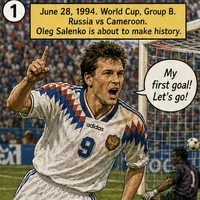
Five Goals in One Game: The Russian Who Stole a World Cup
I have spent a lot of time thinking about Oleg Salenko — more time, I suspect, than Salenko has spent thinking about Salenko in the years since his career ended and he faded into the specific category of post-Soviet football obscurity that has claime
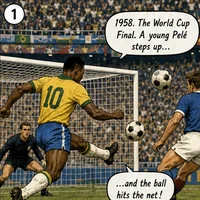
Three World Cups. One Man. Zero Doubts.
Pele won three World Cups. 1958, 1962, 1970. The record has stood for fifty-six years, and the structural conditions of modern tournament football — eight-match knockout campaigns, competitive parity that makes repeat victories exponentially more dif
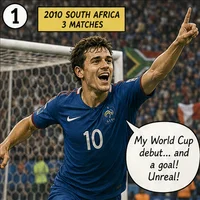
Twenty-Six Matches, One Man, and the Weight of a Nation
I remember the exact moment I understood what Lothar Matthaus was. It was not the 1990 final, though that was the obvious answer — the captain lifting the trophy in Rome, the last West German World Cup. It was the 1998 quarterfinal against Croatia in
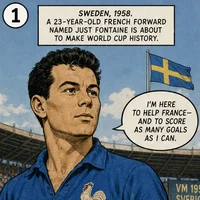
Thirteen Goals in Six Matches: The Record That Will Never Fall
I first heard about Just Fontaine in a bar in Toulouse — not a football bar, just a bar, the kind of place where old men play belote in the corner and the proprietor keeps a bottle of Armagnac behind the counter for the regulars who have earned it. F
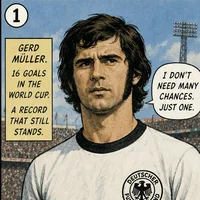
The Man Who Scored Sixteen Times and Never Smiled Once
Miroslav Klose scored sixteen World Cup goals across four tournaments — 2002, 2006, 2010, 2014. More than Ronaldo Nazario, whose fifteen goals had been the record since 2006 and whose individual brilliance defined a generation of striking excellence.
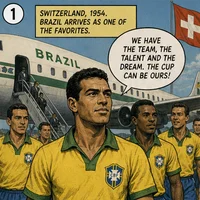
Five Matches, Twenty-Seven Goals
Hungary scored twenty-seven goals in five matches at the 1954 World Cup. The arithmetic is stark: an average of 5.4 goals per game, sustained across the tournament's most demanding competitive contexts — a group match against a major football power,
Eight Finals, Four Wins, Four Wounds
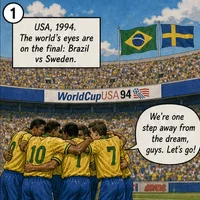
Germany has played in eight World Cup finals. Four won, four lost. On the surface, this is a ledger of equilibrium — a football nation that, in the sport's decisive moments, has received precisely as much as it has surrendered. The symmetry is seduct
Twenty-Two World Cups. Zero Absences.
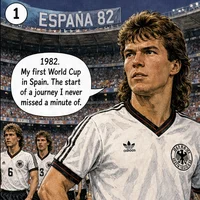
Twenty-two World Cups. Twenty-two appearances. Zero absences. In ninety-six years of tournament football, through military coups, hyperinflation, dictatorship, democratic transition, and the constant churn of a footballing culture that consumes and r
Germany: The Machine That Never Breaks
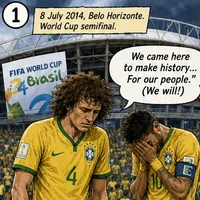
There is a German word that football does not use but should: Wiederkehrprinzip. The principle of return. It describes the specific quality that separates Germany from every other football nation in history -- not the number of trophies, though four
Five Goals in One Game: The Russian Who Stole a World Cup
I have spent a lot of time thinking about Oleg Salenko — more time, I suspect, than Salenko has spent thinking about Salenko in the years since his career ended and he faded into the specific category of post-Soviet football obscurity that has claime
Three World Cups. One Man. Zero Doubts.
Pele won three World Cups. 1958, 1962, 1970. The record has stood for fifty-six years, and the structural conditions of modern tournament football — eight-match knockout campaigns, competitive parity that makes repeat victories exponentially more dif
Twenty-Six Matches, One Man, and the Weight of a Nation
I remember the exact moment I understood what Lothar Matthaus was. It was not the 1990 final, though that was the obvious answer — the captain lifting the trophy in Rome, the last West German World Cup. It was the 1998 quarterfinal against Croatia in
Thirteen Goals in Six Matches: The Record That Will Never Fall
I first heard about Just Fontaine in a bar in Toulouse — not a football bar, just a bar, the kind of place where old men play belote in the corner and the proprietor keeps a bottle of Armagnac behind the counter for the regulars who have earned it. F
The Man Who Scored Sixteen Times and Never Smiled Once
Miroslav Klose scored sixteen World Cup goals across four tournaments — 2002, 2006, 2010, 2014. More than Ronaldo Nazario, whose fifteen goals had been the record since 2006 and whose individual brilliance defined a generation of striking excellence.
Five Matches, Twenty-Seven Goals
Hungary scored twenty-seven goals in five matches at the 1954 World Cup. The arithmetic is stark: an average of 5.4 goals per game, sustained across the tournament's most demanding competitive contexts — a group match against a major football power,
Eight Finals, Four Wins, Four Wounds
Germany has played in eight World Cup finals. Four won, four lost. On the surface, this is a ledger of equilibrium — a football nation that, in the sport's decisive moments, has received precisely as much as it has surrendered. The symmetry is seduct
Twenty-Two World Cups. Zero Absences.
Twenty-two World Cups. Twenty-two appearances. Zero absences. In ninety-six years of tournament football, through military coups, hyperinflation, dictatorship, democratic transition, and the constant churn of a footballing culture that consumes and r
Germany: The Machine That Never Breaks
There is a German word that football does not use but should: Wiederkehrprinzip. The principle of return. It describes the specific quality that separates Germany from every other football nation in history -- not the number of trophies, though four